
15 Must-Track Digital Marketing Metrics 

Featured image of blog post "15 Must-Track Digital Marketing Metrics "

As a business owner, you’re likely managing social media campaigns, sending newsletters, and tackling search engine optimization challenges—and everything at the same time. Amidst all this, it’s easy to feel swamped by the sea of key indicators you’re supposed to track, leaving you unsure of how to separate the general digital marketing metrics from the ones that truly steer you toward your business goals.

Luckily, we’ve compiled a list of the 15 most important metrics to measure your marketing performance. We’ll break down the purpose of each metric and guide you on how to interpret the numbers, empowering you to make data-driven decisions that enhance your overall digital marketing strategy.

Plus, we’ve included a free downloadable with actionable tips for when a metric excels or falls short, helping you quickly adjust your tactics and maximize your return on investment.

[37]

What Are Digital Marketing Metrics?

Digital marketing metrics are measurable data points used to track the performance of online efforts across different marketing channels, including social media, website, app, search engines, email marketing, and more. They are essential for assessing effectiveness, optimizing strategies, and guiding decision-making.

By analyzing the numbers behind your efforts, you can identify which webpages are captivating visitors and which ones are causing them to leave. You can also discern what makes your paid ads successful, uncover reasons why your organic traffic might be underperforming, and gain a deeper understanding of your overall marketing performance.

In a nutshell, these metrics empower you to fine-tune your marketing efforts to better meet the needs of your target audience, transforming interested visitors into loyal, paying customers.

15 Important Digital Marketing Metrics 

Here are the most important metrics that digital marketers use to evaluate the effectiveness of their marketing initiatives and optimize their advertising spend.

1. Impressions

If you’ve dabbled in digital marketing, then impressions are likely familiar to you. As one of the most commonly used metrics, impressions indicate your brand’s exposure by measuring the number of times your content, whether a social media post or a paid ad, appears on users’ screens, capturing every instance of exposure.

The number of impressions can be found within the analytics or reporting tools provided by the platform where your content is being displayed.

For example, If your post appears in the feeds of 10,000 people, that would count as 10,000 impressions, regardless of whether the content was clicked or not.

High impressions are a green flag for your digital marketing campaigns, hinting that your content is being widely shown, which leads to increased brand visibility and awareness. Conversely, low impressions might indicate limited exposure, possibly due to targeting issues or insufficient budget for ad spend, if you opted for paid digital advertising. 

2. Click-Through Rate (CTR)

You’ve probably heard about click-through rate, or simply CTR, in the context of email marketing metrics, but it’s also applicable at website level. CTR serves as a key performance indicator, reflecting how well your content resonates with your target audience. 

As a digital marketing metric, the click-through rate measures the percentage of people who click on a link compared to the total number of people who viewed it—including links within emails, social media posts, search engine results, display ads, or any other digital content where a link is presented.

Generally speaking, a higher click-through rate indicates that your audience is engaging rather than just browsing. However, keep in mind that CTR benchmarks vary based on content type, channel, and the action you’re prompting. 

For Email Marketing:
Click-Through Rate = ( Number of Unique Clicks / Number of Emails Delivered ) x 100

For Paid Social Advertising and Paid Search Ads: 
Click-Through Rate = ( Total Clicks / Total Impressions ) x 100

3. Sessions

While getting viewers to see and click on your content is good, understanding how to maintain their interest while on your platform is equally important. This is where the digital marketing metric of sessions comes into play.

A session begins when a user lands on your website and wraps up when they leave (usually after 30 minutes of inactivity). Think of it as a container for all activities a user performs on your site within that time frame, such as browsing pages, conducting searches, or adding items to their cart.

You can find the number of sessions in the analytics or reporting tools provided by your website’s hosting platform or through search engine analytics tools.

A longer session duration is generally seen as positive, indicating that users are spending more time engaging meaningfully with your content or features. However, it’s essential to interpret this metric in context.

For instance, a news website might experience shorter session durations as users quickly read articles and move on. In contrast, an ecommerce site might benefit from longer visits as users browse products and make purchases. Additionally, factors such as design and usability, content relevance and quality, and user intent or behavior can influence how long visitors stay on your site.

4. Pageviews

Turning our attention to another essential digital marketing metric—pageviews. It measures the total number of times a web page is loaded or reloaded in a browser. Unlike sessions, which count each visitor within a timeframe once, pageviews can include the same user multiple times, in that a single visitor can view multiple pages during their session. 

Pageviews provide insight into the overall interest in your content. For example, if the average page on your website receives 100 pageviews a month, but then you have this killer blog post that is receiving 1,000 pageviews a month, it’s a pretty good indicator that people are really feeling the content in that particular post.

Another way to use pageviews is for spotting trends, such as traffic spikes from ad campaigns or seasonal swings, which can help you plan your next move.

Indeed, while high pageviews might look impressive, without context, they don’t always translate to meaningful engagement. To get the full picture of user behavior and site performance, combine pageviews with other engagement metrics like bounce rate, conversion rate, and average time on page—our next topic of discussion.

5. Average Time on Page (ATP)

Average time on page measures how long a visitor stays on a specific page during a single session. Not surprisingly, a high average time on page suggests that users like the content. As a result, you can assume that you targeted the right audience and they are finding your information relevant and compelling.

On the flip side, if they leave the page quickly, it could mean you missed the mark with your audience, set the wrong expectations, or that your content just isn’t cutting it. Or, sadly, it could just mean that your site or that page just aren’t user friendly. 

You can find metrics like the number of pageviews and average time on page within analytics or reporting tools such as Google Analytics.

6. Engagement Rate

Social media is a metric-filled world of its own. So instead of average time on page, we’ve got the engagement rate. 

Both metrics are similar in that they help you assess whether users are vibing with your content. While average time on page measures how long visitors stay on a specific page, engagement rate captures how users interact with a social media post, such as through likes, shares, comments, or clicks.

Engagement Rate = ( Total Number of Interactions on a Post / Reach of That Post ) x 100

A high engagement rate indicates that your content is compelling and relevant, which can lead to the generation of marketing qualified leads (MQLs). These are potential customers who have demonstrated interest in your company’s products or services through your marketing efforts and are more likely to become actual customers.

Conversely, a low engagement rate might indicate that your content isn’t hitting the mark. In such cases, it’s time to revisit and refine your strategy to ensure your content speaks to your target audience and aligns with your future campaigns.

7. Bounce Rate

When a browser lands on your website and leaves without interacting with any additional pages or elements, it is considered a single-page visit or a “bounce.” Therefore, bounce rate measures how many users visit your site and then leave without clicking a link, filling out a form, or making a purchase.

Bounce Rate = Single-Page Sessions / Total Sessions

A high bounce rate might be waving a red flag about your user experience, suggesting that your landing pages need a little TLC or your site navigation feels like a maze without a map. But don’t worry—sometimes a high bounce rate isn’t all doom and gloom!

For instance, if an educational blog post effectively answers a visitor’s question, a high bounce rate might actually reflect the success of demonstrating your business’s expertise. On the other hand, a high bounce rate on a product page before checkout likely points to a problem.

To turn those bounces into delightful visits, focus on creating a seamless and engaging journey for your users. Start by ensuring your website loads quickly, as slow load times can frustrate visitors and lead to an immediate exit, affecting your overall digital marketing metrics.

Next, give your site navigation a makeover. A clear, intuitive menu will help users easily find related content, encouraging them to explore further. Additionally, incorporating internal links within your content can guide visitors to other relevant pages, keeping them engaged. 

KEEP IN MIND

Exit rate is a metric that measures the percentage of visitors who leave your site from a specific page, regardless of how many pages they have visited beforehand. While it might seem similar to bounce rate, exit rate specifically provides insight into which pages are the last ones viewed before users exit your site.

8. Conversion Rate

Imagine you’ve created a seamless user experience with engaging content and well-placed calls to action that drive action and lead to conversions. 

It’s important to understand that a conversion isn’t limited to a transaction; it represents the completion of any desired action, whether it’s making a purchase, signing up for a newsletter, downloading a resource, or filling out a contact form. Consequently, the conversion rate indicates the percentage of visitors who take that specific action on your platform.

It helps measure the effectiveness of marketing campaigns and website performance.

Conversion Rate = ( Number of Conversions / Total Number of Visitors ) x 100

A low conversion rate could mean your content isn’t effectively persuading users to take action. Maybe it doesn’t quite align with what they’re looking for, or your CTAs aren’t doing the job—they might be unclear, not in the right spot, or just not compelling enough to get users to take action.

9. Average Order Value (AOV)

Your website traffic is going strong, and conversion rates remain steady—everything seems to be progressing smoothly. As the end of the month approaches, you review the details and identify an opportunity to enhance order values, or the amount customers spend at checkout. 

Average Order Value = Total Revenue / Number of Orders Placed

Focusing on average order value is a smart way to improve your revenue growth without the need to draw in more visitors or ramp up your total website traffic. By optimizing how much each customer spends, you can effectively increase earnings while making the most of your marketing budget and existing customer base.

For instance, if your AOV is $30, and you sell t-shirts at $20, you can offer free shipping on orders over $40. This encourages customers to add more items to their cart, thereby increasing their total spend.

As you see, AOV also provides insights into customer purchasing behavior and can indicate the effectiveness of pricing strategies, product bundling, and upselling efforts. 

10. Repeat Purchase Rate (RPR)

While a one-time purchase is great, having customers return for more is even better. This is where the repeat purchase rate comes into play. It measures the percentage of customers who come back to make additional purchases after their initial transaction. It’s a key performance indicator of how well a business retains its customer base. 

Repeat Purchase Rate = (Number of Repeat Customers /  Total Number of Customers) x 100

A good RPR is relative and should be evaluated against industry standards, historical company data, and business objectives. As a general rule of thumb, a high repeat purchase rate suggests that customers are satisfied with their experience and are likely to continue buying from your brand. Whereas a decline might indicate customer dissatisfaction with product quality, customer service or increased competition. 

If you’ve done everything right, you’ll surely be swimming in sales by now. But are you profitable? Let’s look at some key digital metrics that will help you determine this.

11. Customer Lifetime Value (CLV)

Customers are converting, spending, and returning for more. It’s a dream scenario for any business. But how do you quantify the value of these loyal customers? This is where the digital marketing metric known as customer lifetime value becomes important.

It’s a metric that estimates  how much revenue an average customer generates over a specified period of time. It takes into account factors like how much a customer typically spends per purchase, how often they make purchases, and how long they remain a customer, to give you an overview of how much a new customer will bring.

Customer Lifetime Value = Average Customer Lifetime Span x Average Customer Value

To put this knowledge into practice, imagine you have a customer that spends an average of $100 per year and remains loyal to your brand for five years. So their CLV would be $500.

As you can guess, a higher CLV indicates that customers are generating more revenue over time. But if you see a decline, it might be time to spoil your customers with personalized offers and enticing loyalty program preferences. Additionally, using a customer relationship management (CRM) tool can help streamline processes such as managing customer data, and automating communication for better engagement.

12. Cost Per Click (CPC)

The cost per click (CPC) metric is indispensable when it comes to managing advertising budgets effectively, as it measures the amount spent by a digital marketer each time a user clicks on their ad.

By understanding this metric, you can assess how efficiently your marketing budget is being used to attract potential customers.

Cost Per Click = Ad Cost / Number of Clicks

A high CPC can feel like your budget is slipping through your fingers, especially if those clicks aren’t turning into sales. It might suggest you’re in a competitive keyword arena, your ad could use a little more polish, or it’s simply not resonating with your audience.

Conversely, a lower CPC is like getting more mileage out of your budget, with each click bringing you closer to your goals. It typically indicates your ad campaigns are finely tuned, featuring interesting content and smart targeting strategies.

It’s important to note that the cost per click can vary based on factors like the competitiveness of the keywords being targeted, the ad quality, and the industry.

13. Cost Per Lead (CPL)

This next marketing metric, cost per lead, reveals the total cost for converting site visitors either through organic traffic or advertising campaigns into potential customers. 

Cost Per Lead =  Total Money Spent on a Marketing Activity / Number of Leads

For instance, if you spend $500 on a campaign and acquire 50 leads, your CPL would be $10. This metric doesn’t focus on the people who clicked on your ad but rather the ones who took action—like booking a demo or downloading a guide. 

Now, if your cost per click looks promising but conversions are playing hard to get and your budget is vanishing into thin air, the culprit might be your CPL. A lower CPL means your lead generation strategies are attracting potential customers efficiently, but they’re not quite making the leap.

To tackle this, consider refining your landing pages to ensure they’re engaging and aligned with your ad’s promises. Also, evaluate your call to action to make sure it’s compelling and clear.

14. Customer Acquisition Cost (CAC)

Now that you’ve gathered your leads, it’s time to convert them into clients. This is where the customer acquisition cost, in short—CPL, shines. It measures the total expense incurred to acquire a new customer and includes all marketing and sales expenses, such as advertising costs, salaries, software, and any other resources used.

This marketing metric essentially indicates whether your digital marketing efforts contributed to your campaign’s success or failure.

Customer Acquisition Cost = Total Cost of Sales and Marketing / Number of New Customers Acquired

For example, if your company invests $10,000 in a month to acquire 100 customers, your CAC would be $100. So, if your average order value is approximately $500, this indicates that your campaigns are profitable. However, it’s important to also factor in product costs and other expenses to obtain a comprehensive financial overview.

A high customer acquisition cost (CAC) might suggest that you need to optimize your targeting, messaging, or choice of marketing channels to attract customers more cost-effectively. Conversely, a low CAC indicates that you are acquiring customers efficiently at a lower cost, which can enhance your profit margins and give you the flexibility to reinvest in different growth initiatives.

15. Return on Investment (ROI)

We’ve saved the best for last—the most crucial digital marketing metric: return on Investment (ROI). This essential performance indicator is a must-know for any business, as it assesses the profitability of your marketing efforts by comparing the revenue generated to the costs incurred.

Return on Investment = ( Total Revenue – Cost of Investment / Cost of Investment ) x 100

Let’s say that you spend $1,000 on a marketing campaign and generate $5,000 in revenue, then your return on investment would be 400%.

A higher marketing ROI indicates that your marketing efforts are doing the job, bringing in more cash relative to the costs. A low or even negative ROI, on the other hand, is a real bummer, because it obviously tells you that what you’re doing simply isn’t working. That means it’s time to reassess your marketing tactics so that your budget is more efficiently used to get better results. 

To improve return on investment, set clear, measurable marketing goals for your campaigns so that every dollar is dialed with your business objectives. This might involve targeting specific customer segments or focusing on high-impact channels.

You can also experiment with different ad formats, messaging, or promotional offers that can lead to better engagement and conversion rates, and of course, a better ROI. Long story short: get creative and get strategic!

Following Through on Digital Marketing Metrics 

Understanding and tracking the right digital marketing metrics is not just a good idea—it’s an essential step for your business to succeed, as they provide insights into the effectiveness of your digital marketing efforts.

By keeping an eye on important indicators such as social media engagement, total website traffic, and conversion rate, you can identify trends, anticipate market shifts, and adapt your strategies accordingly. Our free downloadable offers actionable insights to help you navigate these changes, enabling you to quickly adjust your tactics and maximize your return on investment.

Remember, whether you’re jazzing up your email campaigns, leveling up your social media presence, or fine-tuning your website’s user experience, these metrics ensure your ad spend hits the mark and your digital marketing strategies shine.

Scaling a Business for Growth: 9 Effective Strategies

Abstract image of scaling a business

This article was originally published in February 2025, and then updated in September 2025.

The difference between a thriving small business and an industry leader often comes down to one word: scaling. True transformation happens when leaders dare to think bigger. But what does it mean to scale a business, and how can you do it effectively? This guide will provide actionable strategies to help you scale your business and achieve long-term growth.

What Is Scaling a Business and Why Is It Key for Growth?

Scaling a business refers to setting the stage for your company to grow without being hampered by resource limitations. Imagine software that can serve 10,000 users as easily as it serves 100, or an online course that educates thousands with the same effort it takes to teach dozens. Think of Netflix streaming to millions versus a traditional movie theater adding more screens and staff. 

Scaling a business seems deceptively similar to growing one, but there’s a big difference. Growth follows a predictable pattern: invest more, earn more. You add salespeople, expand your office space, or expand your products, and your revenue climbs accordingly. It’s straightforward but very resource-intensive. 

Note that not each and every business is scalable. Some entrepreneurs thrive running smaller ventures—like a quality local restaurant or a specialized consulting practice that can provide a comfortable income for their owners. There’s real value in staying small and focused. 

But for those with bigger ambitions, scaling offers a path to exponential growth. As your business scales, you’ll have the opportunity to expand your impact, opening up many new possibilities.

How to Scale Your Business: 9 Effective Strategies

Scaling a business requires a thoughtful approach. Let’s go through seven strategies that could help you scale your business effectively.

1. Develop a Scalable Growth Plan

Scaling starts with a roadmap. Without a clear plan, growth becomes reactive and messy. Your growth plan should align your long-term vision with concrete steps your team can act on.

Action steps:

  • Define specific growth goals (e.g., new revenue targets, markets to enter, or customer segments to reach).
  • Break those goals into milestones with timelines.
  • Map out which growth levers (products, services, or marketing channels) will get you there.
  • Anticipate possible obstacles and outline contingency plans.
  • Assign ownership so every task has a responsible lead.

Think of your growth plan as a living framework. As you work through the strategies in this guide—from refining your value proposition to expanding into new markets—add insights and adjustments to your plan. This way, it grows with your business and stays relevant at every stage of scaling.

2. Create a Clear Value Proposition

Your value proposition is the unique promise you make to customers about the benefits they’ll receive from your product or service. It is also the foundation of a scalable and growing business and to do it effectively, ensure your value proposition is clear, compelling, and replicable across larger audiences, different markets, and customer segments.

Note that it will possibly even have to shift and adapt to them to address new challenges. Scaling requires more than just understanding what you offer, it’s about refining how that promise is communicated as your business grows. Here are some ways how your value proposition can scale effectively as your business evolves:

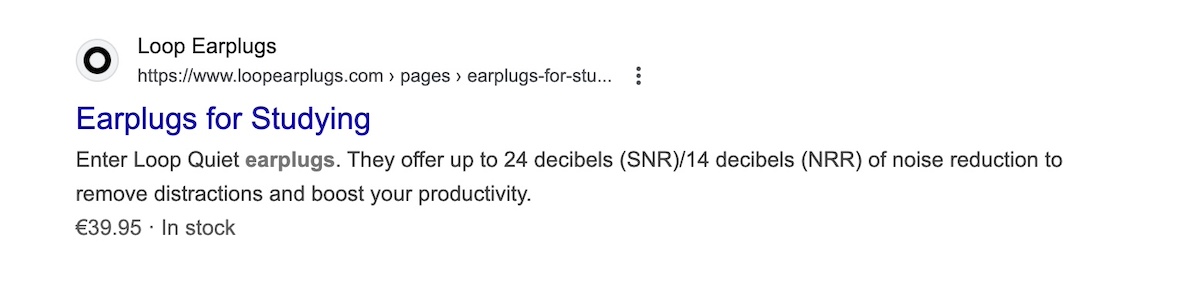
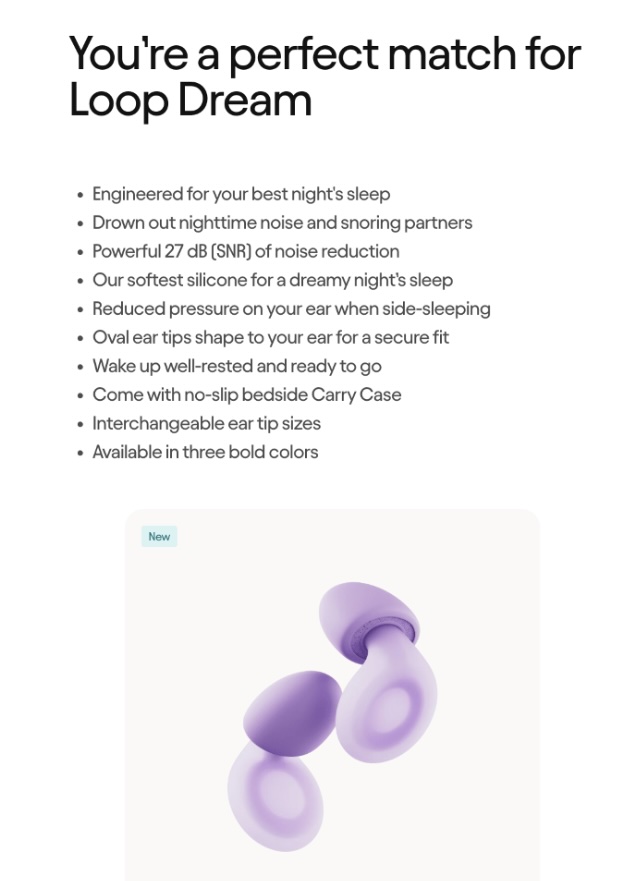
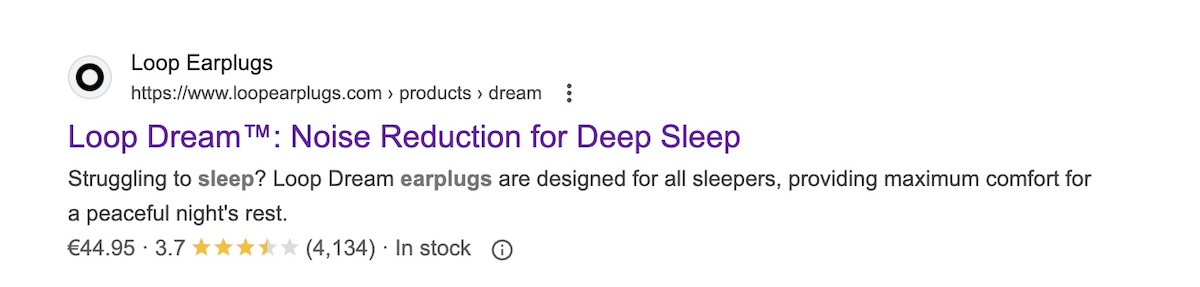
  • Refine it for new audiences. As you expand into new customer segments, consider whether your value proposition still addresses each audience’s unique needs. For example, Loop Earplugs were initially marketed to consumers who were looking for deep sleep, but now the business also targets students who seek to improve productivity. This kind of shift may require repositioning in order to appeal to distinct audiences and address specific needs. In doing so, this might also call for an adjustment to a business’s value proposition.
Example of scaling business targeting a new market for those needing sleep
Example of scaling business targeting a new market for students
  • Adjust for different markets. When expanding into new regions, it’s important to understand the local context and cultural nuances that could impact how your value proposition is received. A product that solves one problem in one country might meet a different need in another. 
  • Be consistent. Whether you’re creating a landing page, expanding with franchises, or growing a team, your value proposition should remain clear and consistent. Your brand should be instantly recognizable and aligned with your promises, no matter how your business growth.

3. Optimize Your Sales Process

An efficient sales process is also a vital part of how to scale your business. It should keep running smoothly whether you’re handling 10 customers or 1,000. The idea is to create a process that multiplies your success without multiplying your effort.

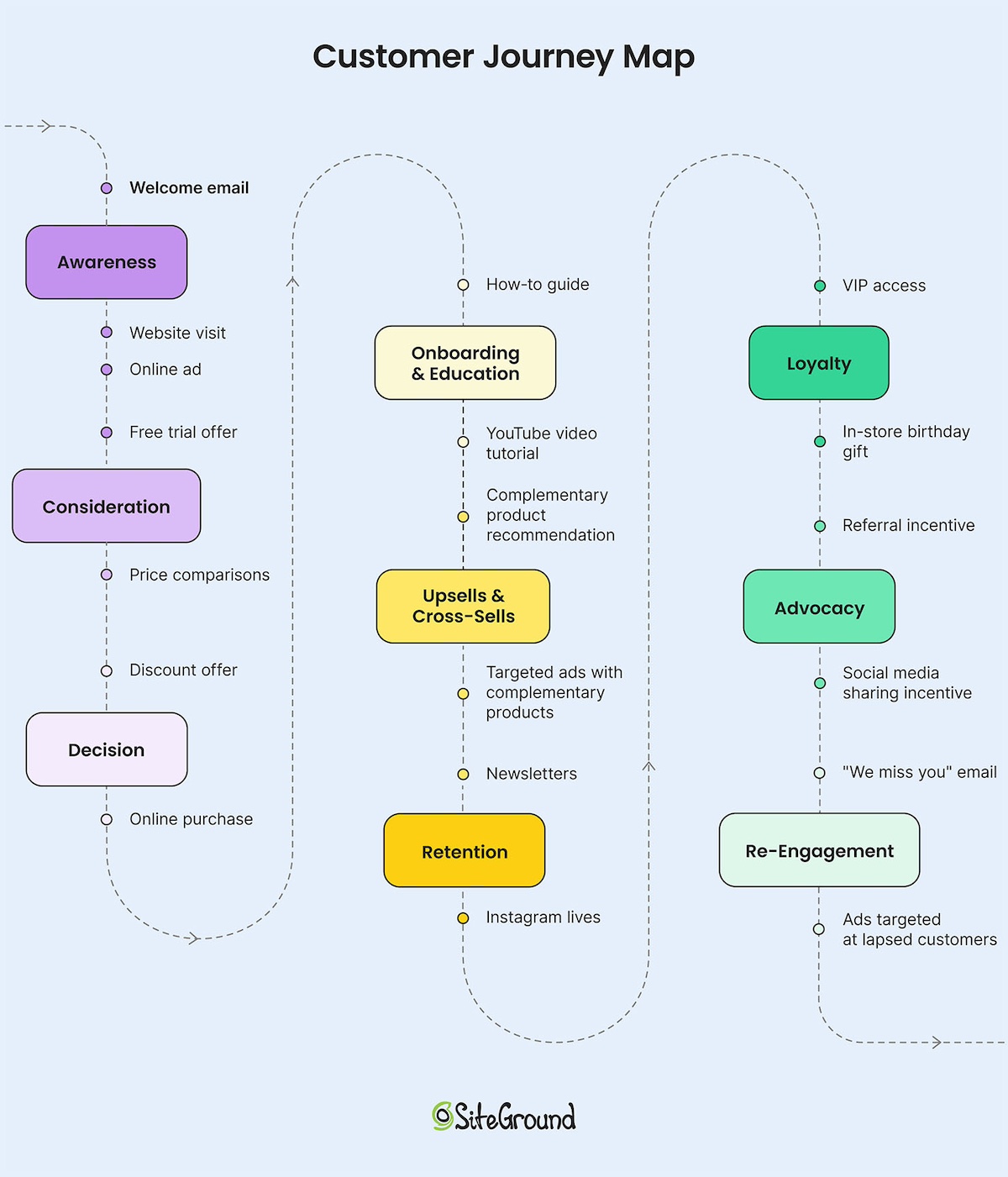
Start by mapping out every step of your customer’s journey, from first contact to closed deal or purchase made. For ecommerce, this could mean tracking the journey from website visit to checkout. For service-based businesses, it might involve everything from initial inquiry to signed contract.

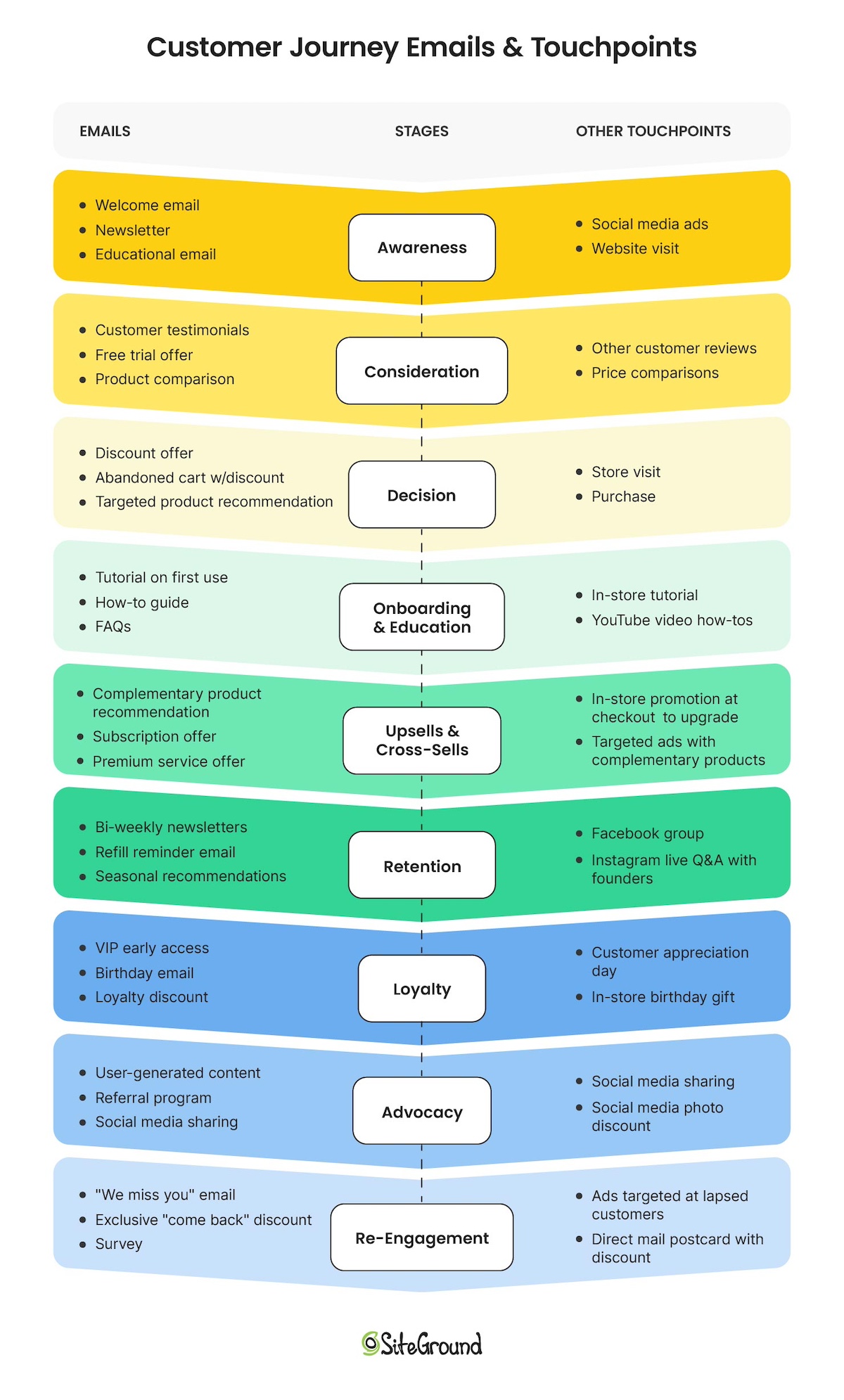
Customer Journey Map and Touch points

Identifying places where your internal process or potential customers get stuck or completely stopped. These are your opportunities for improvement. Maybe the checkout process is too long, or you have product descriptions that aren’t clear enough. Or perhaps long, personal consultations are taking away from your time to actually produce. Address these issues before they turn into bigger problems during your scaling process.

Automation is a powerful tool in this process. For online stores, this might involve automating emails for abandoned carts, order confirmations, or product recommendations. For service-based businesses, automating follow-ups or appointment reminders can save time and improve the customer experience. There are a variety of CRM (customer relationship management) marketing automation tools that can help you nurture leads, build stronger customer relationships with minimal effort, and, notably, scale!

Finally, standardize your internal processes. Document your workflows, from how leads enter your system to how they become paying customers. This is essential whether you have a sales team or not, because clear documentation ensures consistency and scalability through your growth plan.

4. Strengthen Your Financial Strategy

Even the best growth plan will fail without strong financial foundations. Scaling requires disciplined financial management that balances ambition with sustainable growth.

Here’s how to strengthen your financial planning:

  • Audit your cash flow. Review income and expenses monthly, and ensure you have at least 6–12 months of runway for planned investments.
  • Create financial forecasts. Model different growth scenarios (optimistic, realistic, conservative) so you know how scaling impacts cash flow, expenses, and profitability.
  • Set a budget for scaling. Allocate funds to marketing, tech, and hiring before growth accelerates—not after you’re already stretched.
  • Explore funding options early. Research whether you’ll bootstrap, take a business loan, or pursue investors. Preparing in advance avoids panic fundraising.
  • Monitor key financial metrics. Track gross margins, customer acquisition cost (CAC), and lifetime value (LTV) to ensure growth remains profitable.

With a solid financial strategy, you’ll be able to seize growth opportunities confidently, and without jeopardizing long-term stability.

5. Invest in Technology & Automation

We mentioned that you can benefit from a CRM tool to streamline your sales processes, but technology can do the heavy lifting in other aspects of your business too. This is especially important since an essential part of successfully scaling your business is implementing repeatable, standardized workflows that allow you to produce more with less effort. And technology will be your best friend in making this possible. Here’s how:

Streamline Workflows With Task Management & Collaboration Tools

Scaling requires structured processes that teams can follow seamlessly. Task management platforms like Trello and Asana help create repeatable workflows, track progress, and ensure accountability, reducing miscommunication and inefficiencies. By standardizing how projects are assigned and completed, businesses can scale operations without losing control.

Automate & Optimize With AI

Intelligent automation can help your scaling business eliminate manual bottlenecks, enabling you to do more with less. From AI-powered chatbots that provide instant customer support to predictive analytics that offer valuable insights into market trends, AI can help your business increase efficiency and ensure operations scale smoothly as demand grows.

Adopt Cloud-Based Solutions for Scalability

Scaling requires flexible, accessible-from-anywhere solutions. Cloud-based platforms like Google Workspace and Microsoft 365 allow teams to collaborate in real time, eliminating redundant manual processes and ensuring information is always up-to-date. Moving to the cloud standardizes document sharing, communication, and workflow management, making growth frictionless.

Analyze and Redesign for Scalability

As you scale and implement the above technology, you must continuously evaluate and refine their processes. Always look for opportunities to streamline workflows, eliminate redundancies, and automate repetitive tasks. Ask yourself: Can this task be simplified or automated? Are there avoidable steps slowing things down? Will this system hold up as demand increases? By proactively identifying inefficiencies and restructuring operations for scalability and efficiency, you create a foundation that can support long-term business growth while reducing workload.

Speaking of the cloud, with over 20 years of expertise, SiteGround offers fast, secure, and scalable hosting solutions powered by Google Cloud. Adopting cloud-based hosting ensures your business can scale seamlessly, with the flexibility and reliability needed to handle growth. Whether you’re launching a new site, managing a thriving e-store, or scaling a small business, SiteGround’s cloud hosting delivers high performance and exceptional support to optimize your online presence at every stage.

6. Expand or Outsource Your Team Strategically

As your business scales, you’ll need more talent to fuel sustainable growth, but rushing to hire full-time employees, or even bring in new business owners, isn’t always the smartest move. The key is being strategic about who you bring on board and how you structure your team.

Start by mapping out which functions are truly core to your business versus those that could be handled externally. By outsourcing some functions and even teams to specialized agencies or freelancers, you can access expertise while keeping your overhead manageable. Remote teams can also scale up or down in a more flexible way than traditional office setups, perfect for handling project-based work or seasonal campaigns.

However, building a distributed team comes with its own challenges. You’ll need solid systems for communication, project management, and otherwise. Invest time in creating detailed onboarding processes and documentation that will help you maintain consistency. 

Culture also remains important even with a distributed workforce. Regular video calls, clear company values, and structured check-ins help keep everyone aligned and engaged. The goal is to build a team that can grow with your business, whether they’re in-house, remote, or outsourced. Remember, the most scalable businesses aren’t necessarily the ones with the biggest teams, but those with the most efficient mix of talent deployed in the right ways.

And, again, don’t forget that AI business tools can often help you with tasks that you might have previously needed to outsource. Tasks like social media planning, data analysis, newsletter ideas, and so much more, can all be done quickly and effectively. 

7. Broaden Your Offerings and Diversify Revenue Streams

Another strategy to consider in order to scale your business effectively is expanding your offerings to reach new customers and reduce reliance on a single product only. Start by introducing complementary products or services that align with your core business. 

For instance, a fitness trainer might add virtual classes or meal plans, while a web designer could offer branding consultations. This approach strengthens your value proposition and keeps your offerings relevant to your audience.

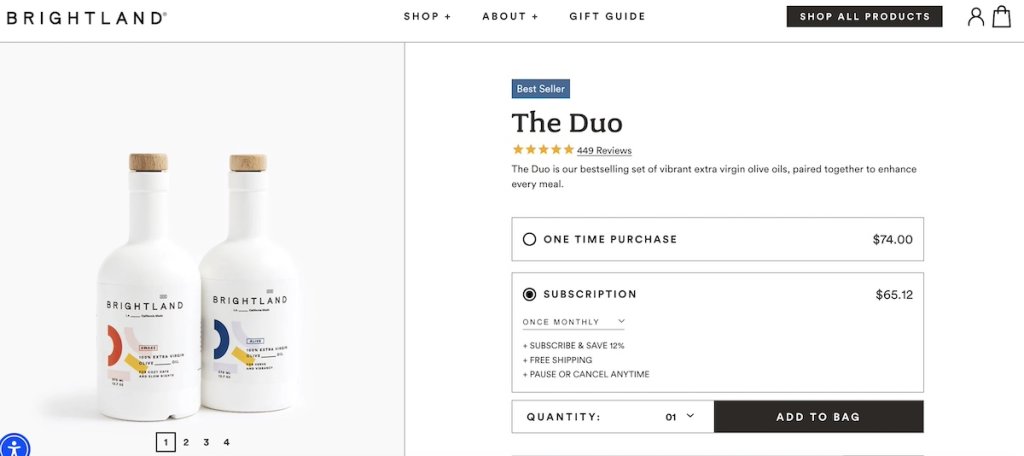
You can also explore subscription models to create a predictable income. Whether it’s a membership program, maintenance package, or exclusive content, these models foster customer loyalty while improving cash flow. Digital products like eBooks or templates are highly scalable as well, allowing you to serve more customers without a proportional increase in resources.

Example of offering a subscription to scale a business

8. Enter New Markets

Expanding into new markets is an impactful way to scale your business, but it requires careful planning and execution. For small business owners, entering a new market could involve targeting a different geographic area, offering products through new channels, or marketing your product for a different purpose to a new segment altogether (as was the case in the Loop Earplugs example above).

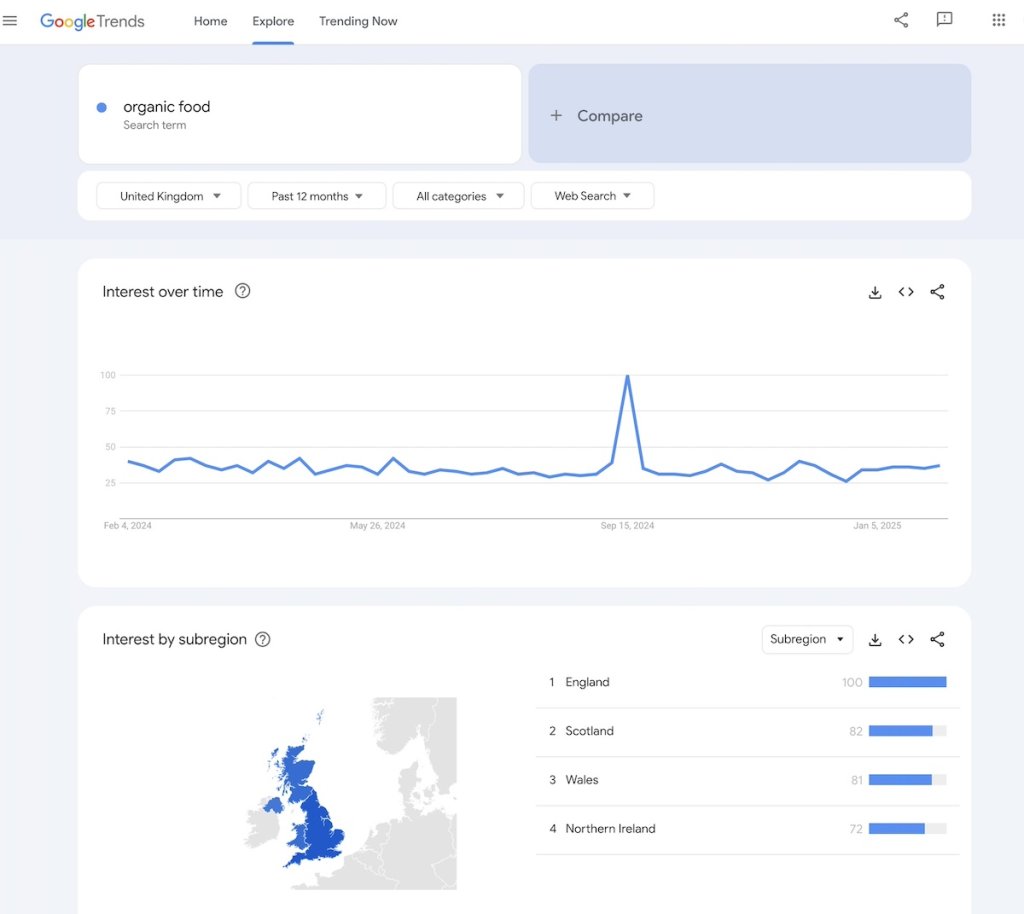
Start with research. When it comes to small business marketing, it’s essential to understand the needs, preferences, and buying habits of your new target audience. Tools like Google Trends or surveys can help you gauge interest and identify potential challenges. If you’re moving into a new geographic market, familiarize yourself with local regulations, cultural nuances, and competition.

Google trends dashboard image

Consider starting small with a test launch. For instance, if you’re opening in a new city, begin with an online offering or a pop-up event to build awareness before committing fully. Similarly, if you’re targeting a new demographic, focus on tailored marketing campaigns to resonate with this audience.

Partnerships can also ease your entry into new markets and tap into fresh opportunities without overextending resources. Collaborating with local businesses or influencers can help establish credibility and make your transition smoother.

9. Stay Agile and Adapt to Change

In the journey to business scaling, flexibility is just as important as strategy. Markets evolve, customer needs shift, and unexpected challenges arise so it is important to be agile. 

Stay attuned to customer feedback, industry trends, and even competitor moves. Use this insight to make informed decisions quickly, whether it’s tweaking your product line, updating marketing strategies, or changing other processes.

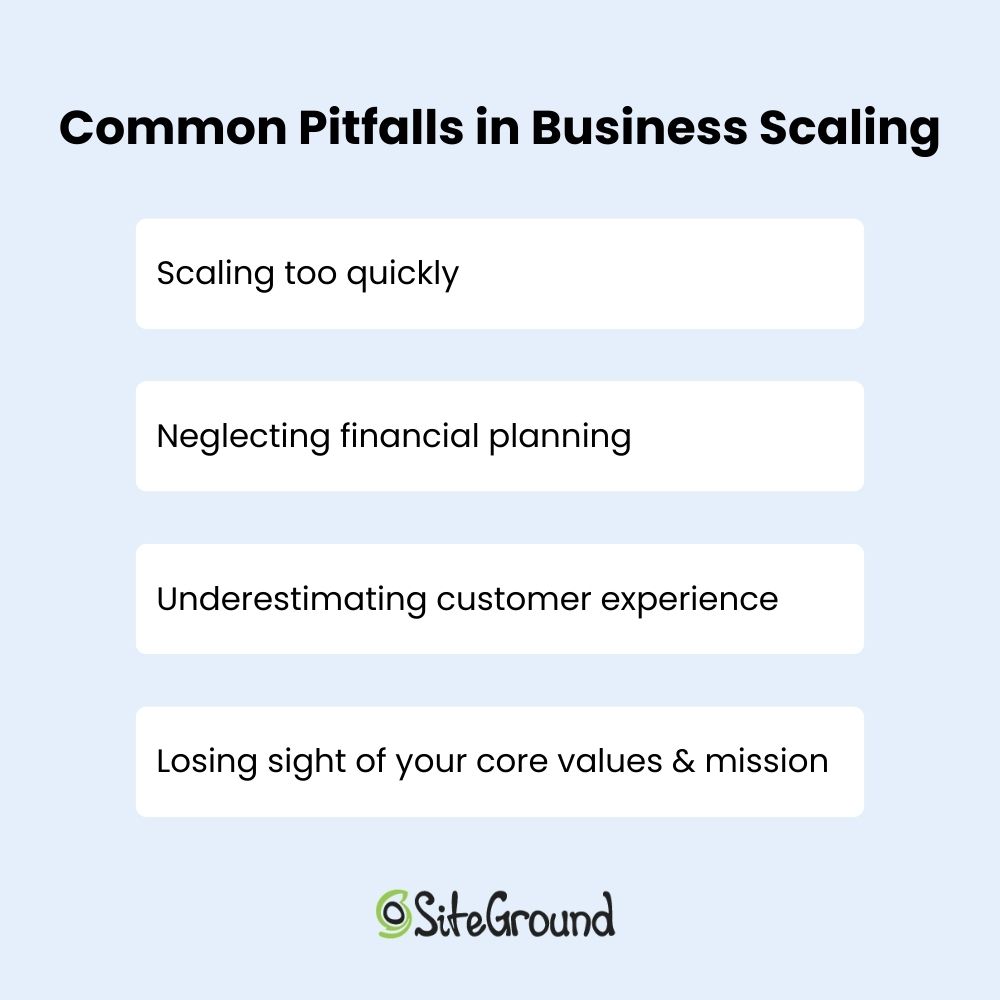
Common Pitfalls in Business Scaling

Scaling a business is an exciting endeavor, but it’s not without its challenges. Without careful planning, the same growth that promises success can expose vulnerabilities in your operations, finances, or strategy. Understanding and avoiding common pitfalls can help you scale sustainably.

Common pitfalls of business scaling

⚠️ Scaling too quickly 

It’s tempting to chase rapid growth, but expanding without the necessary infrastructure can strain resources and lead to inefficiencies. Whether it’s hiring too many employees or launching in new markets without preparation, moving too fast can result in a loss of control and lowered customer satisfaction.

⚠️ Neglecting financial planning

Scaling often requires significant investment, whether it’s in technology, marketing, or personnel. Without a clear understanding of your cash flow and profitability, you risk overextending your resources.

⚠️ Underestimating the importance of maintaining customer experience

As you grow, it can become harder to deliver the personalized service or product quality that made your business successful. Prioritize systems and processes that ensure consistency, even as demand increases.

⚠️ Losing sight of your core values and mission 

In the rush to scale, some businesses shift focus too drastically, diluting their brand and alienating loyal customers. Stay true to what makes your business unique.

Start Planning Your Business Scalability Today

Scaling a business is both an exciting opportunity and a challenge. It requires clear vision, careful planning, and a commitment to adaptability. Evaluate your current operations, identify areas for improvement, and start implementing the changes needed to support growth. Remember, scaling isn’t about doing everything at once, it’s about smart, incremental progress toward your bigger goal! 

Make your online journey a success with SiteGround

Small Business Marketing Essentials on a Budget

Abstract image of small business marketing

Small business marketing isn’t what it used to be—gone are the days of needing a big budget, a marketing department, and a fancy agency. Now even the tiniest ventures can go head-to-head with industry giants thanks to the accessibility of social media, email marketing, AI, and more. But with so many small business marketing methods out there, it’s easy to feel overwhelmed. How do you figure out which tactics to pursue and which ones to leave behind?

In this blog post, we’re breaking it all down. We’ll walk you through the most effective marketing methods and ideas for small businesses, offering practical advice on how to amplify your brand, engage your audience, grow your business, and, importantly, do so without breaking the bank. Let’s get started!

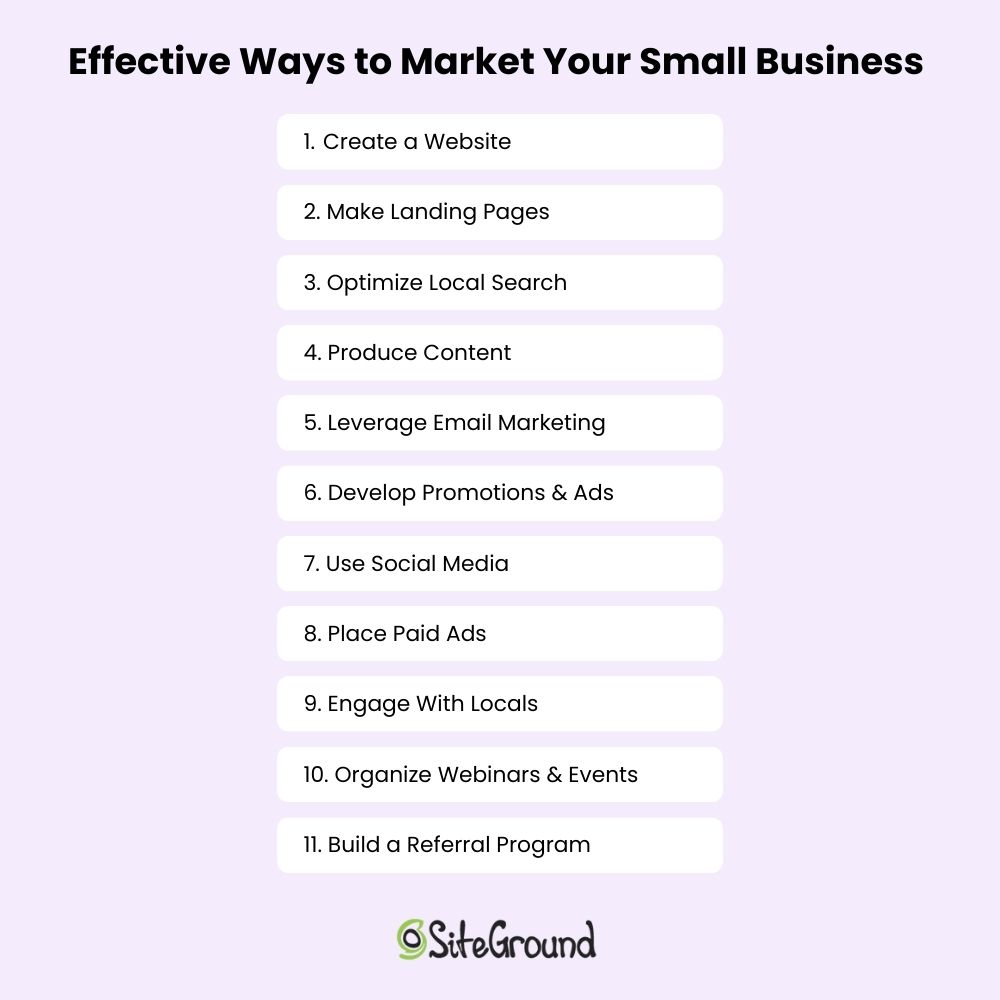
11 Effective Ways to Market Your Small Business

Whether you’re working with a limited budget or looking to maximize your reach, the following marketing methods offer a blend of traditional and digital techniques to effectively promote your brand. Perhaps just as important, these tactics are affordable (if not free!) and accessible for businesses of all sizes.

1. Create a Website

For small businesses, making a website is no longer optional—it’s the foundation of your digital presence, and, these days, for your brand in general. A well-designed, user-friendly site acts as a virtual storefront, showcasing your products or services. More than that, it’s a platform for sharing your brand and story, and really creating a relationship with your customers. 

But perhaps the idea of creating a website seems intimidating—maybe you’ve thought you need to hire a designer, or be tech savvy. Fortunately, this is no longer the case. Start by selecting an easy-to-use site builder that makes designing and launching your site simple and straightforward. You may also wish to consider following a website checklist to make sure you’ve got all your bases covered before and after your site launch. 

Ultimately, creating an attractive, customer-friendly website is well within reach of all businesses. So if you don’t have a website for your small business yet, or you feel like yours needs some sprucing up, then now’s the time to put your energy toward making your site a success.

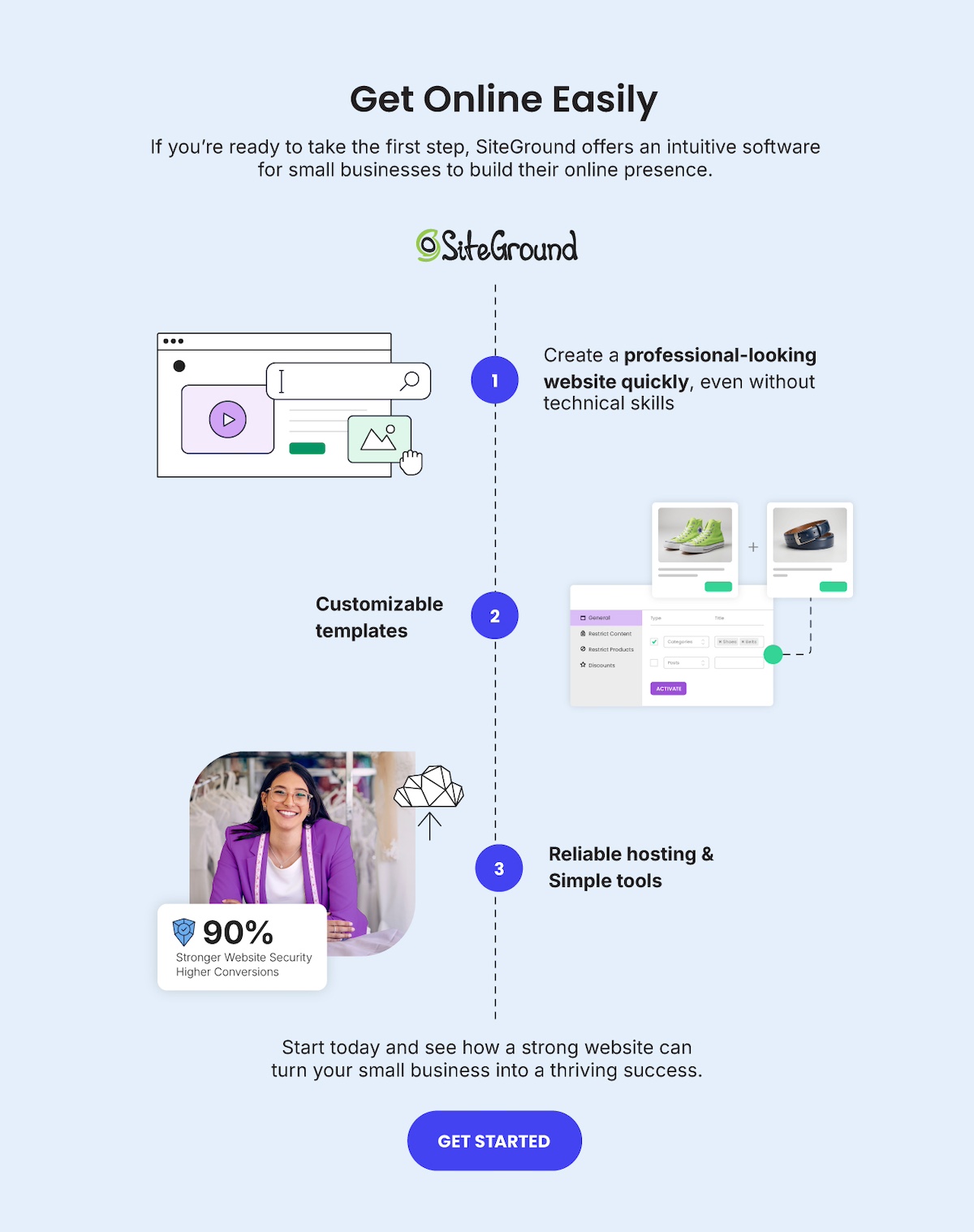
Get Online Easily

If you’re ready to take the first step, SiteGround offers an intuitive software for small businesses to build their online presence. With customizable templates, reliable hosting, and simple tools, you can create a professional-looking website quickly, even without technical skills.

Start today and see how a strong website can turn your small business into a thriving success.

GET STARTED →

2.  Make Landing Pages

Once you tackle a website, you’d be wise to consider implementing landing pages. What are those? Unlike general website pages, landing pages are designed with a single objective in mind. When it comes to small business marketing, you may want to leverage landing pages in a variety of ways, such as to: 

  • Capture leads by offering valuable resources (ebooks, discounts, etc.) in exchange for contact information.
  • Promote specific products or services, with a clear call to action for purchase.
  • Drive focused attention for special campaigns through dedicated landing pages.
  • Tailor landing pages for different customer segments to personalize the experience and increase conversions.
  • Use A/B testing to experiment with different copy, design, or offers to see what resonates best with your audience.

3. Optimize Your Local SEO Strategy

How often do you Google a local product or service, and quickly click on the location information of the first place that pops up? Most of us do it all the time. So when people search for a local business like yours online, you want to show up in these search results too—and focusing on small business SEO (search engine optimization) is what makes that possible.  

Here are a few ways you can improve your local SEO:

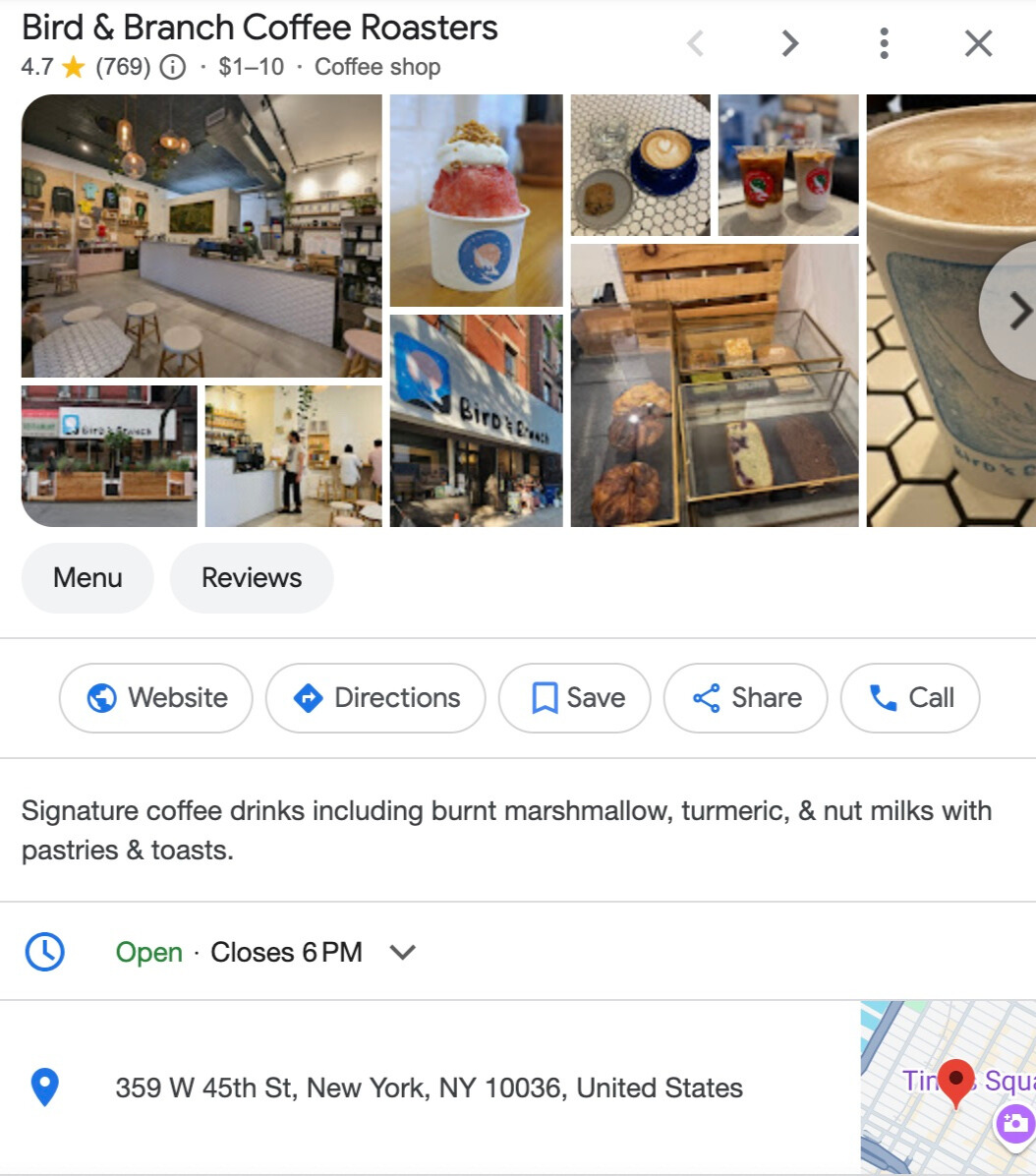
  1. Add Your Business to Google My Business (GMB)
    Complete your GMB profile with accurate details, post regular updates, and monitor insights to improve local SEO and customer engagement.
  2. Get Your Business on Google Maps
    Claim your GMB listing, optimize it with relevant information, and add photos to ensure visibility on Google Maps and attract potential customers.
  3. Enable Reviews from Clients
    Encourage customers to leave Google reviews, then be sure to respond to feedback, as well as highlight positive reviews.
Bird and Branch Coffee Google My Business Info

4. Produce Content

Websites, landing pages, local SEO—what do the last three points have in common? You’ve guessed it: content.

Content is the lifeblood of your online presence. It is the base for any of your marketing strategies, as it allows you to engage with your audience, showcase your expertise, build your brand, drive sales, and contribute to improved SEO. It’s one area where small businesses just can’t afford to fall behind. But where to start? 

  • Define Your Unique Value Proposition (UVP): Your UVP is the core of your brand’s identity, distinguishing you from competitors and clearly addressing customer needs. Use your UVP to guide your messaging as you produce every piece of content. 
  • Create a Blog: A blog is an affordable tool for building your brand, improving SEO, and driving sales. Focus on understanding your audience’s interests, producing consistent, high-quality content, and optimizing for search engines to increase visibility.
  • Take Advantage of Video and High-Quality Images: Video marketing allows you to engage your audience dynamically. Experiment with formats like tutorials, product demos, or behind-the-scenes content, and encourage interaction to foster community and increase brand loyalty. And keep in mind that digital marketing trends indicate that short-form content is the way to go, so aim to deliver your message quickly and effectively.
  • Use High-Quality Images: Professional, high-resolution images set the tone for your brand and communicate your offerings effectively. Invest in quality visuals, maintain a consistent style to reinforce your brand’s identity across platforms, and optimize for performance so that your site functions at its best (which you can easily do with a speed optimizer plugin).

The great news here about all manner of content—from creating a unique value proposition to video script writing, and coming up with blog post ideas—is that, with the help of AI, producing high-quality content is easier and more affordable than ever for small business marketing. In fact, with the right ChatGPT prompts, you can tackle many of the above items quickly and professionally. 

💡 PRO TIP: AI can help you with more than just content production—consider using AI tools for your business, as they can provide you with a competitive advantage.

5. Leverage Email Marketing

Speaking of all things content, email marketing is, hands down, one of the most effective ways for small businesses to nurture relationships and drive conversions. It’s a direct line to your audience’s inbox, is highly affordable, and, as a result, has a massive return on investment. By following a handful of simple email marketing tips, you can turn this form of marketing into one of your most prized strategies for your small business’s success. Here’s how to get started:

  1. Choose an Email Marketing Platform: Select a platform that is easy to use, offers customizable templates, automation features, and robust analytics. The right tool will streamline your email marketing efforts and help track success.
  2. Build a Your Email List: Grow your email list through social media, in-store interactions, and your website. Offer valuable incentives like discounts or exclusive content to attract engaged subscribers. And don’t forget to ensure compliance with regulations like GDPR or CAN-SPAM (for example, make it easy for your recipients to unsubscribe).
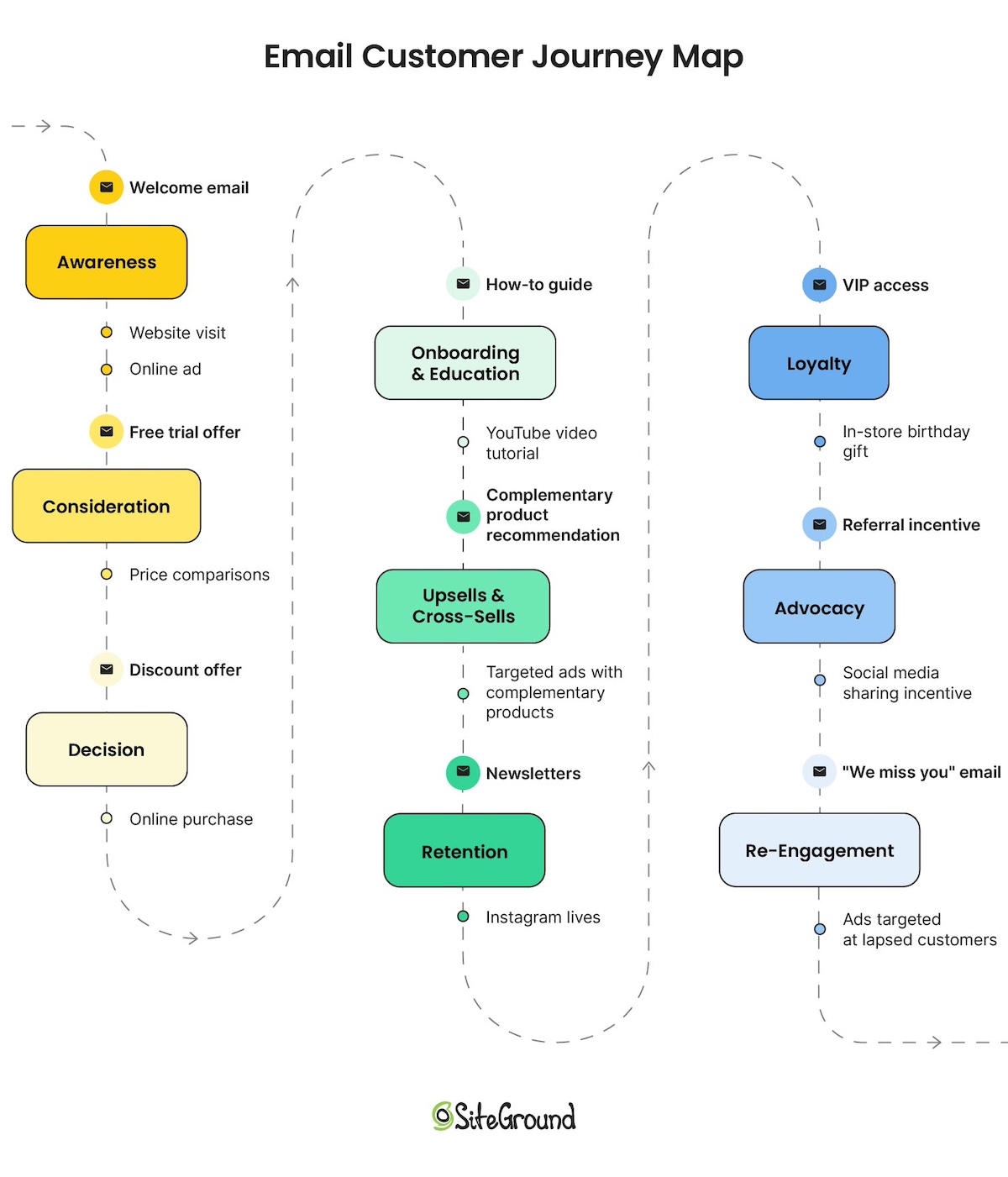
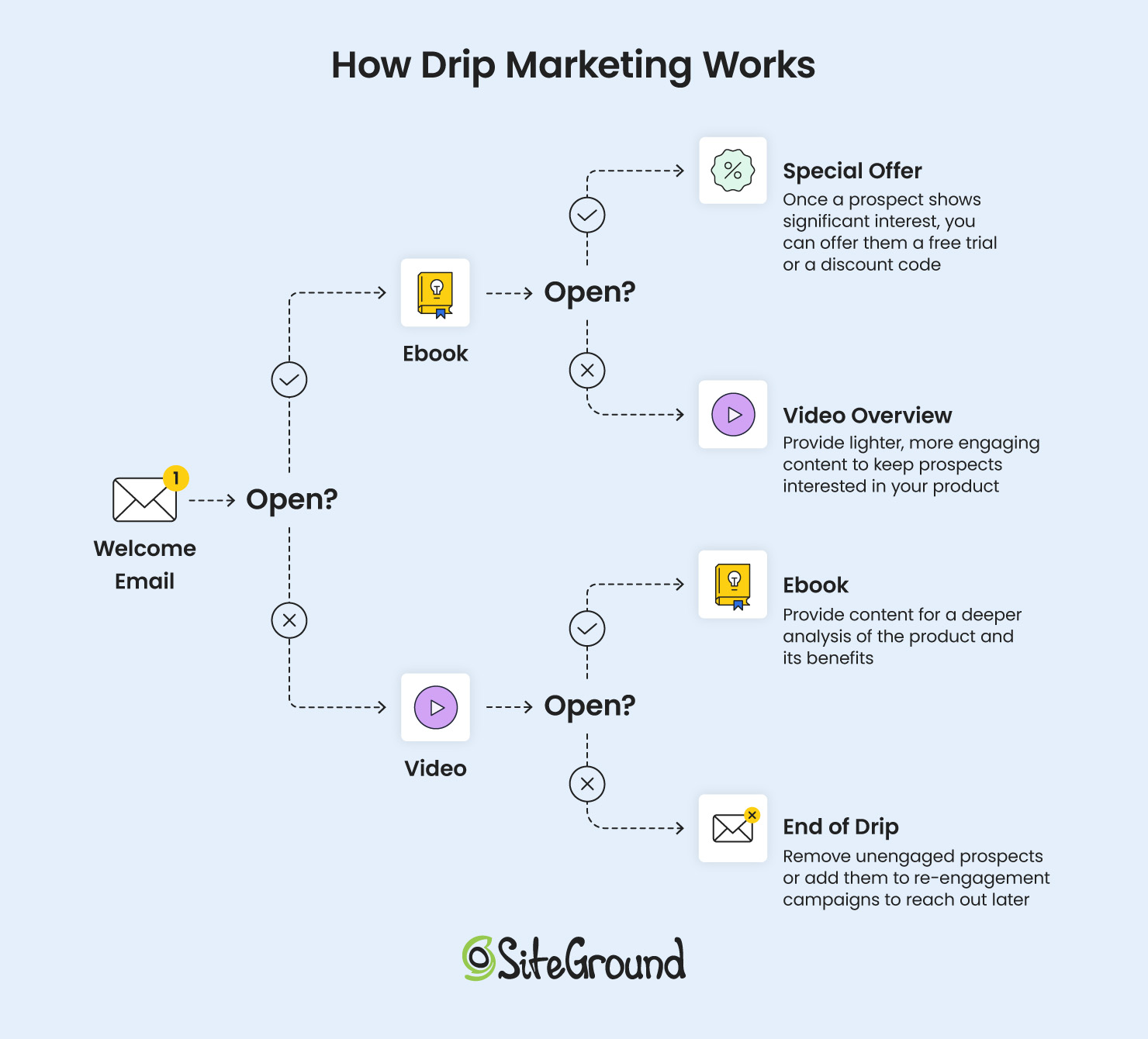
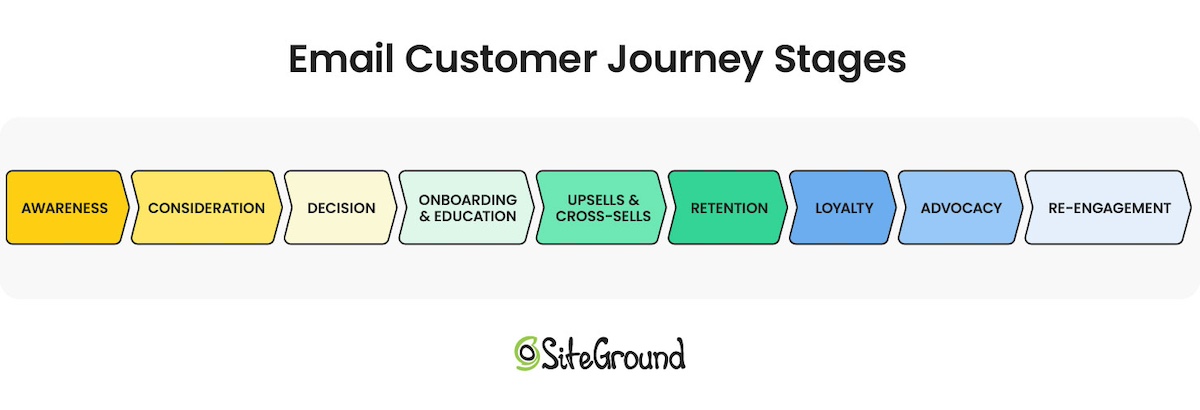
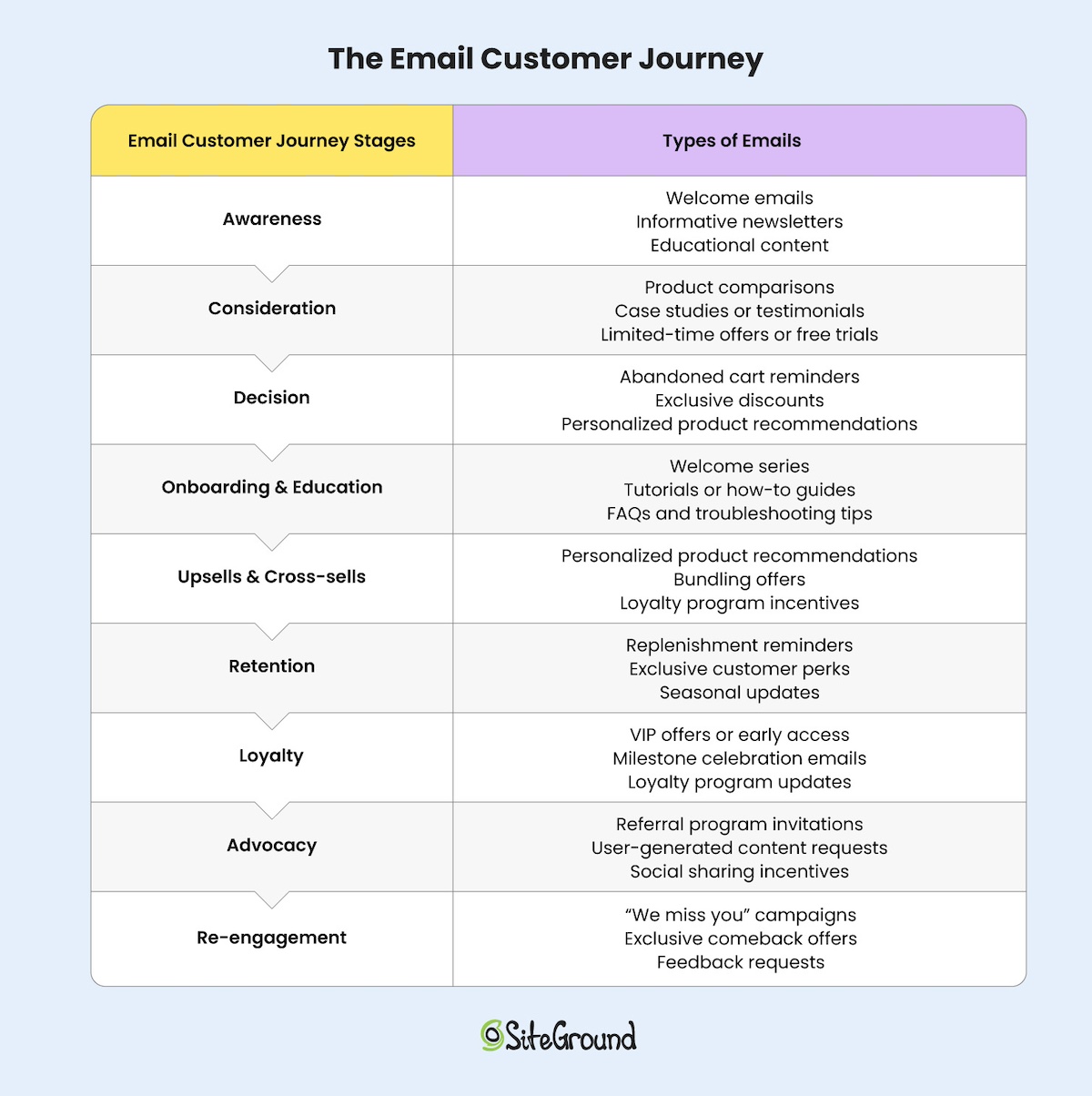
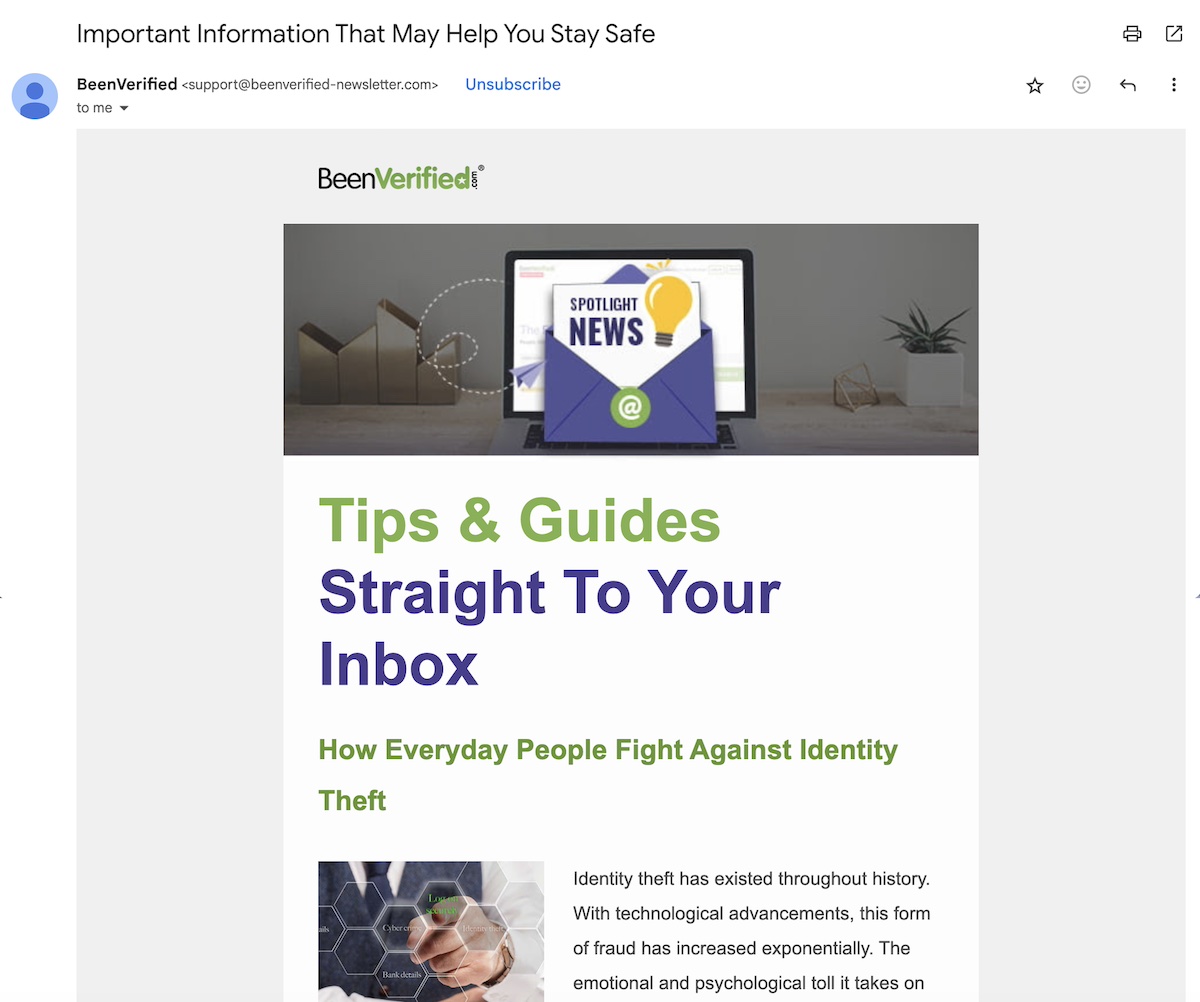
  3. Create Content that Delivers Value: Craft emails with valuable content, such as tips, special offers, or personalized recommendations. Also consider the overall email customer journey by using a mix of newsletters, product announcements, special offers, and event invitations. Each type of email serves a different purpose, from keeping customers informed to enticing them with promotions or updates. And don’t forget compelling email subject lines!
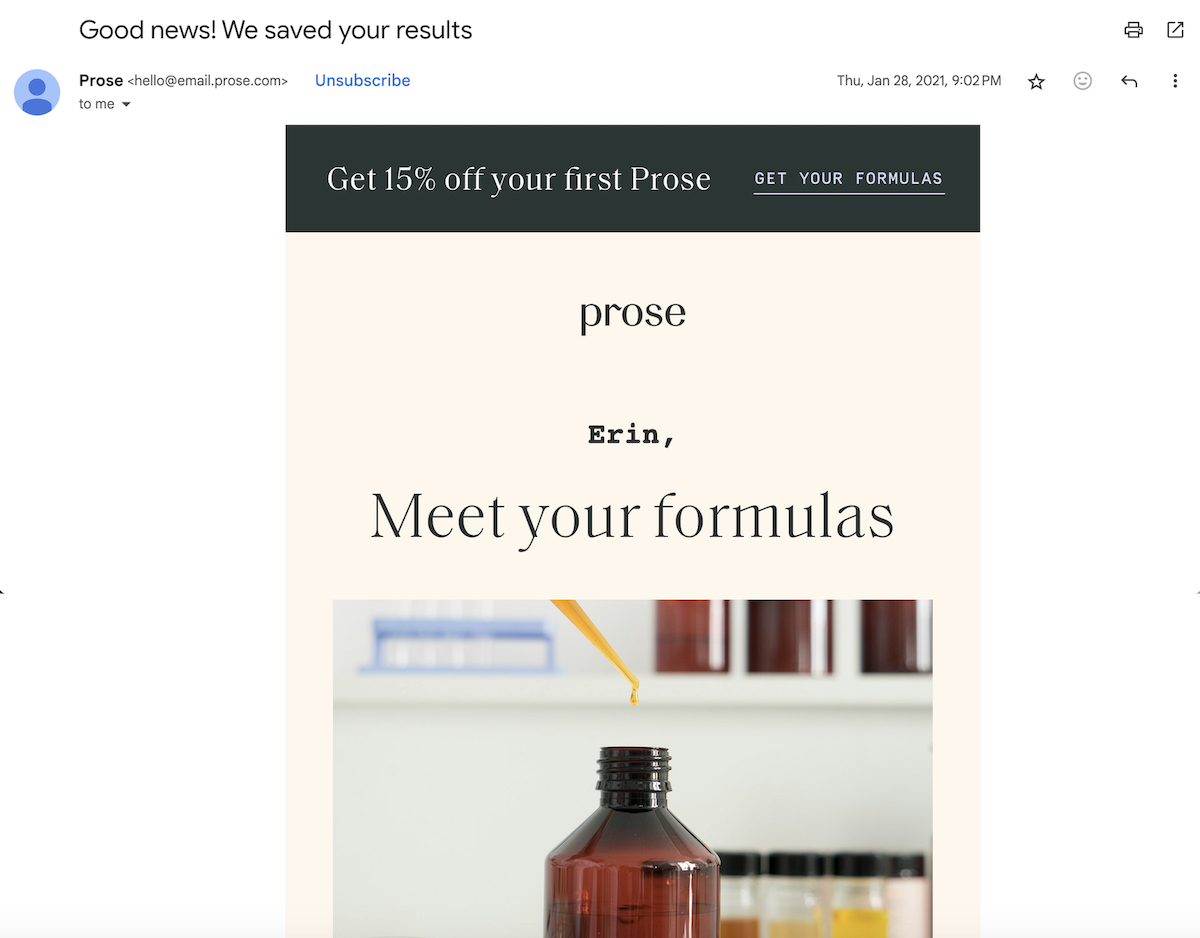
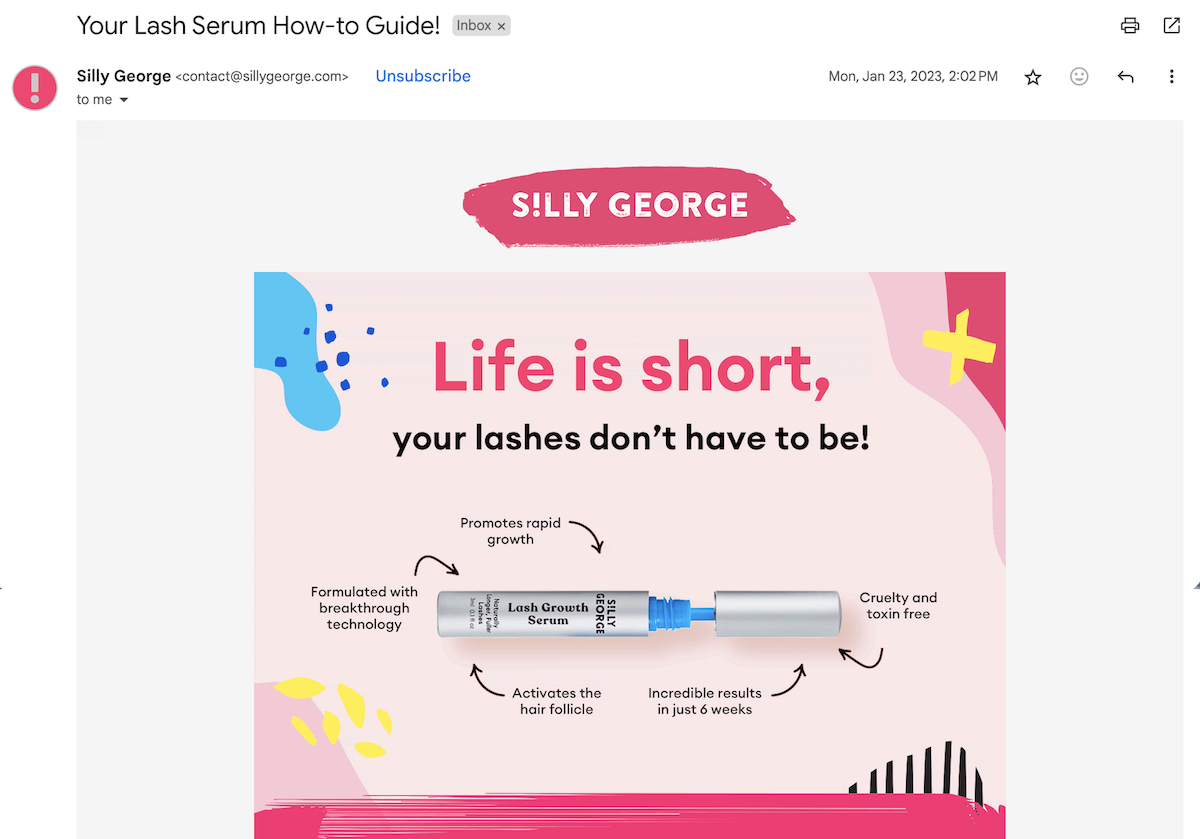
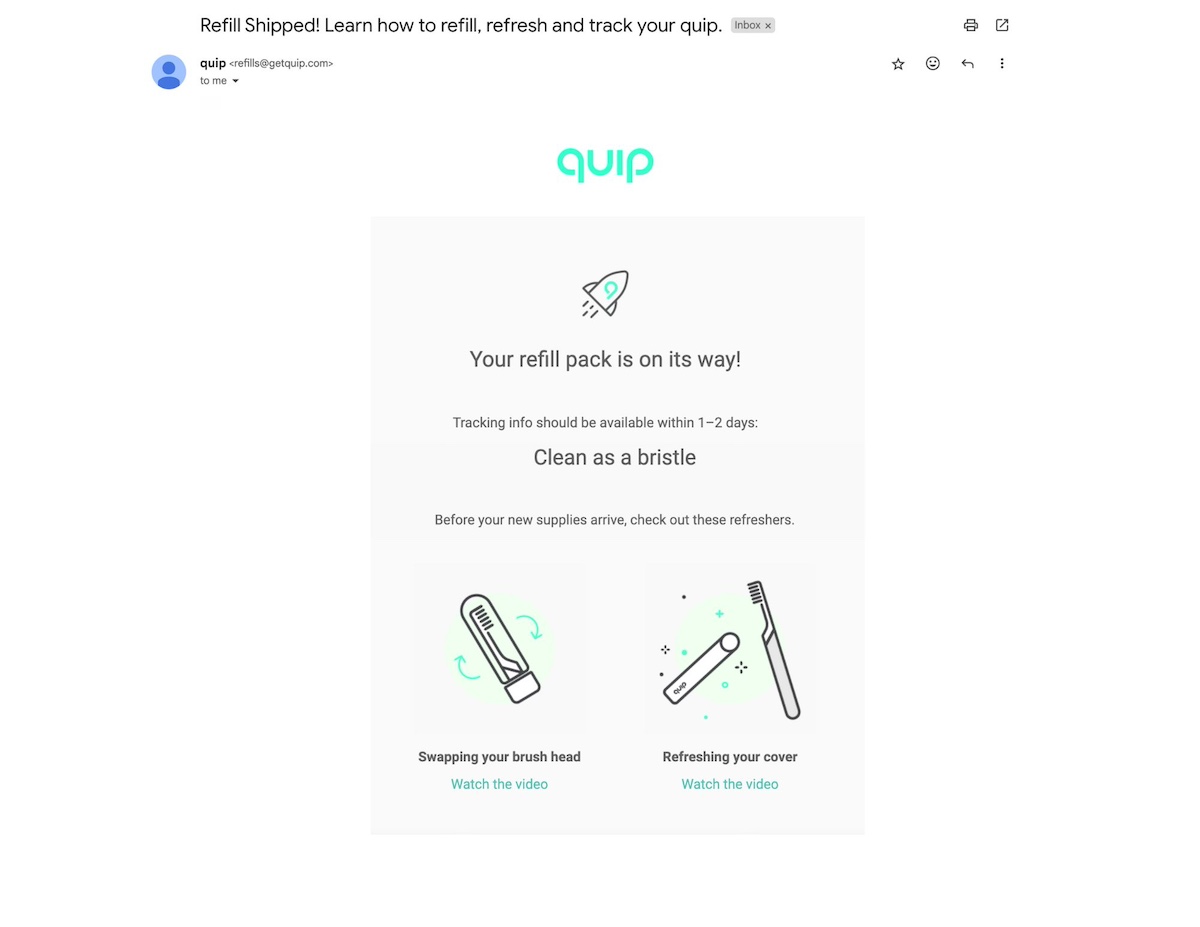
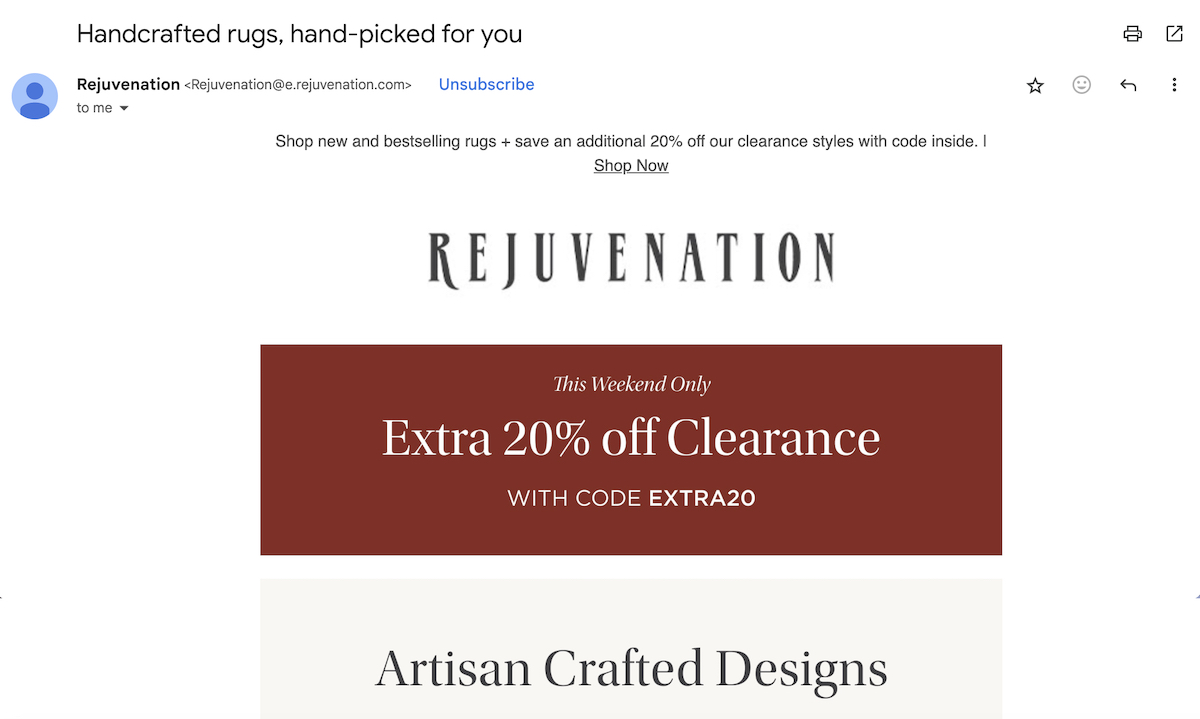
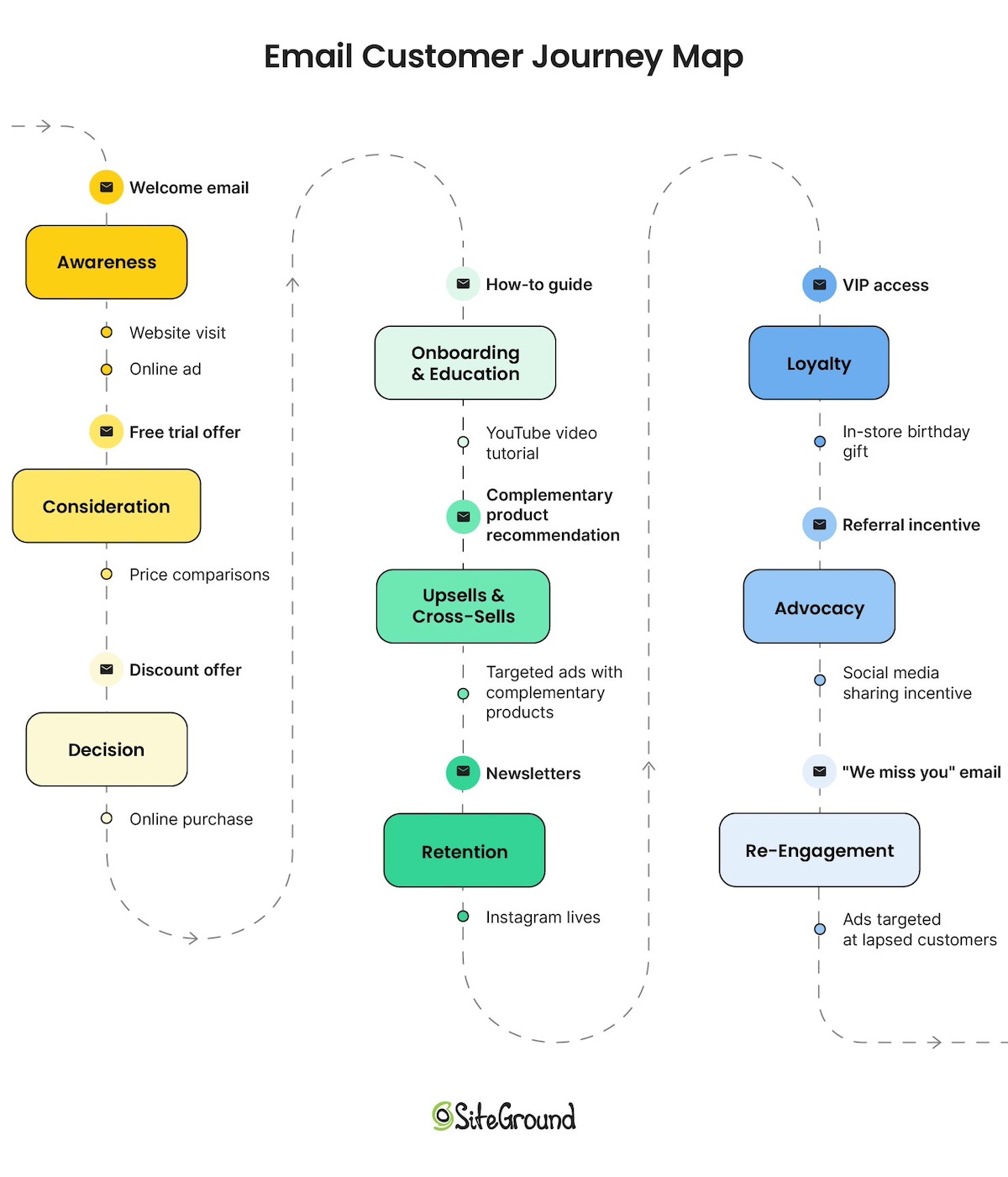
Content for the email customer journey map
  1. Personalize Your Messages: Segment your email list by factors like demographics or purchase history, and tailor content to specific groups. Personalization increases relevance and engagement, boosting your campaign’s effectiveness.
  2. Focus on Design: Use a clean, responsive email marketing design that looks great on both desktop and mobile. Enhance your emails with visuals like images, videos, or infographics to keep things engaging and easy to read.
  3. Test Your Send Times: Experiment with different send times and analyze past campaigns to identify when your audience is most likely to open and engage with your emails.
  4. Use Strategic CTAs: Each email should feature a clear call to action (CTA), guiding subscribers toward the desired action—whether it’s visiting your site, making a purchase, or signing up for an event.
  5. Monitor Performance: Track key email marketing metrics like open rates, click-through rates, and conversions to refine your strategy, optimize campaigns, and improve results over time.
Create successful email marketing campaigns

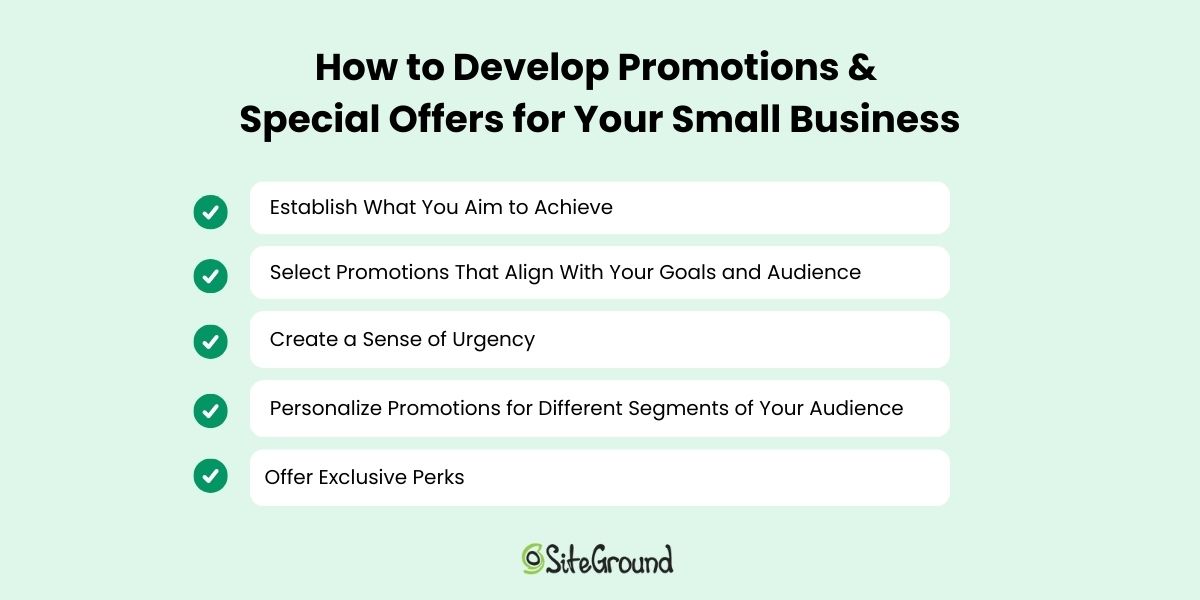
6. Develop Promotions and Special Offers

You’ve got a website and content, so now it’s time to get to the business of, well, driving business! One way to do that is, of course, by running promotions and special offers. So let’s examine how to go about narrowing your focus. 

How to Develop Promotions for your small business
  • Establish What You Aim to Achieve: Whether it’s clearing out old inventory, increasing brand awareness, or rewarding loyal customers, having clear objectives before launching a promotion will guide your strategy and help measure success.
  • Select Promotions That Align With Your Goals and Audience: Common options include discounts, buy-one-get-one-free (BOGO) offers, free shipping, limited-time sales, or bundled packages. Consider your audience’s preferences and purchasing behavior to determine the most effective approach.
  • Create a Sense of Urgency: Set a time limit on your promotions so that customers feel the urge to act quickly. Limited-time offers prompt customers to make a purchase decision sooner rather than later. Countdown timers on your website or in email campaigns can help you emphasize the deadline.
  • Personalize Promotions for Different Segments of Your Audience: Leverage your email marketing platform to easily and affordably customize offers based on past purchases, preferences, or geographic location, using customer data. These personalized promotions can increase engagement and conversion rates.
  • Offer Exclusive Perks: Promotional strategies for your small business wouldn’t be complete without offering exclusive perks to your loyal customers. Think: loyalty programs, member-only discounts, or early access to sales—all great ways to strengthen customer relationships and foster long-term business.

💡 PRO TIP: Leverage email marketing to strategically share promotions with your subscribers. It’s highly effective, and SiteGround’s Email Marketing makes it super easy to get started with a user-friendly builder, powerful features like automation and segmentation, and a built-in AI writer—and all at an accessible price.

Start promoting with email marketing now>>

7. Use Social Media

Many people turn to social media before they ever bother checking their email, so you would be remiss not to take advantage of this important marketing channel. Plus, as a small business, you can more easily and authentically connect with your audience—and it’s free to do!

As you dip your marketing toes into the world of social media, here are a few things to consider:

  • Choose the Right Platforms: Not all social media platforms are created equal, and each has its unique audience and strengths. Identify where your target audience spends their time and focus your efforts on those platforms. 
  • Develop a Content Strategy: Mix different types of content, such as images, videos, stories, and live streams, to keep your feed dynamic and engaging. Plan your content calendar in advance, incorporating a mix of promotional, educational, and entertaining posts.
  • Engage With Your Audience: Respond to comments, messages, and mentions promptly to show that you value input. At the same time, encourage interaction by asking questions, running polls, or hosting Q&A sessions
  • Stay Authentic: Be true to your brand—its voice and its values—in order to build trust and loyalty on social media. Share behind-the-scenes glimpses of your business, highlight your team, and communicate your mission in order to create a deeper connection with your audience.
  • Leverage User-Generated Content: User-generated content packs a big marketing punch: not only is it a free resource, but when users produce content, they are by default advocating for your brand. Encourage your customers to share their experiences with your products or services by providing them with a branded hashtag or by running contests. Share their content on your channels to showcase social proof and community involvement.
Example of user generated content

8. Place Paid Ads

If you’re looking to increase visibility, reach new audiences, or drive conversions (who isn’t?), then paid advertising might be the way to go. It’s an effective way to increase visibility, reach new audiences, and drive conversions, as it offers targeted exposure, measurable results, and complements organic marketing efforts.

With options like pay-per-click (PPC) and social media advertising, even a modest budget can yield impressive results by targeting the right audience with precision. To get started, keep the following in mind:

  • Define your objectives: Before launching a campaign, define your objectives—whether it’s driving website traffic, generating leads, or increasing brand awareness. 
  • Choose the right platform: Keep in mind that different online advertising platforms (think: Facebook, LinkedIn, Instagram, YouTube) offer unique advantages, so it’s important to choose the ones that align with your target audience and business objectives.
  • Start small: Determine how much you are willing to spend on your ad campaigns and allocate your budget accordingly. Consider starting with a smaller budget to test different ad types and targeting strategies.
  • Track your metrics: Regularly review the performance of your ad campaigns using analytics tools provided by the platforms. Track key metrics such as click-through rates (CTR), conversion rates, and cost-per-click (CPC). Then, use this data to identify what’s working and make necessary adjustments to content and budget to optimize your campaigns for better results.

9. Engage With Local Communities and Businesses

Connecting with your local community and neighboring businesses is a fantastic and affordable way to build relationships, as well as create brand awareness and sense of belonging in your area. By actively participating in local networks, you can create opportunities for collaboration, drive growth, and increase website traffic. With that in mind, here are a handful of ideas for embracing your local community:

  • Leverage Networking Opportunities: Connecting with other business owners and community members can open doors to collaborations and customer relationships. Attend local events like business meetups and trade shows, and join chambers of commerce or business associations to access valuable resources and networking events.
  • Harness the Power of Online Communities: Digital spaces are great for connecting with your local audience. Join and participate in social media groups, create local interest groups to establish your brand as a thought leader, and share insights in relevant forums in order to position your business as a reliable resource.
  • Strengthen Public Relations and Media Engagement: Local media can amplify your business’s reach and credibility. Build relationships with reporters and editors, submit press releases for newsworthy updates like product launches, and offer your expertise for stories related to your industry. This positions your business as a trusted local authority.

💡Pro tip: Apart from reaching out via official publication and media channels, follow your favorite journalists on Instagram and send them a direct message with your pitch.

At the end of the day, your local community is likely where you’ll find your biggest fans—people love supporting small and local businesses! Tapping into the above strategies can not only lead to an instant sales bump, but also meaningful collaborations with other regional brands, as well as a loyal customer following. 

10. Organize Webinars and Live Events

Webinars and live events are a phenomenal way to take advantage of face-to-face interaction (even if virtual) and the ability to showcase your expertise. These interactive platforms allow you to deliver valuable content, answer questions, and create a sense of community. Below are a few points to keep in mind as you plan your small business marketing event:

  • Plan and Promote Thoughtfully: Choose topics that resonate with your target audience, such as solving common pain points or addressing industry trends. Develop a detailed plan outlining the event format, agenda, and key takeaways. Promote the event through multiple channels using eye-catching visuals and compelling messaging to maximize interest and registrations.
  • Capture and Nurture Leads: Use registration forms, surveys, or downloadables during or before the event to generate leads, gathering important contact information, whether that’s just a name and email, or, if valuable, details such as the contact’s business needs, size, or otherwise. Use this information to create email marketing segments that can later be leveraged for personalized and targeted marketing. 
  • Engage After the Event: After the event, take advantage of the aforementioned segmentation to send targeted email campaigns. Also, consider sending a thank-you message, key takeaways, or additional resources. Use this opportunity to gather feedback and nurture leads by inviting participants to future events.

11. Build a Referral Program

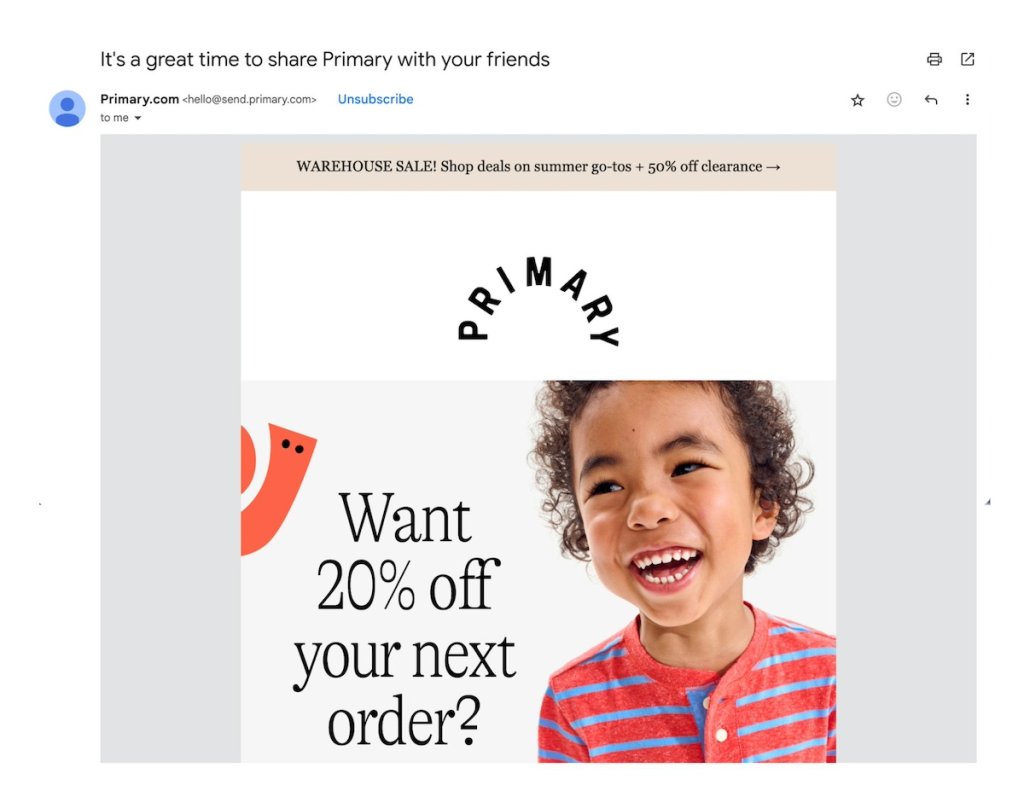
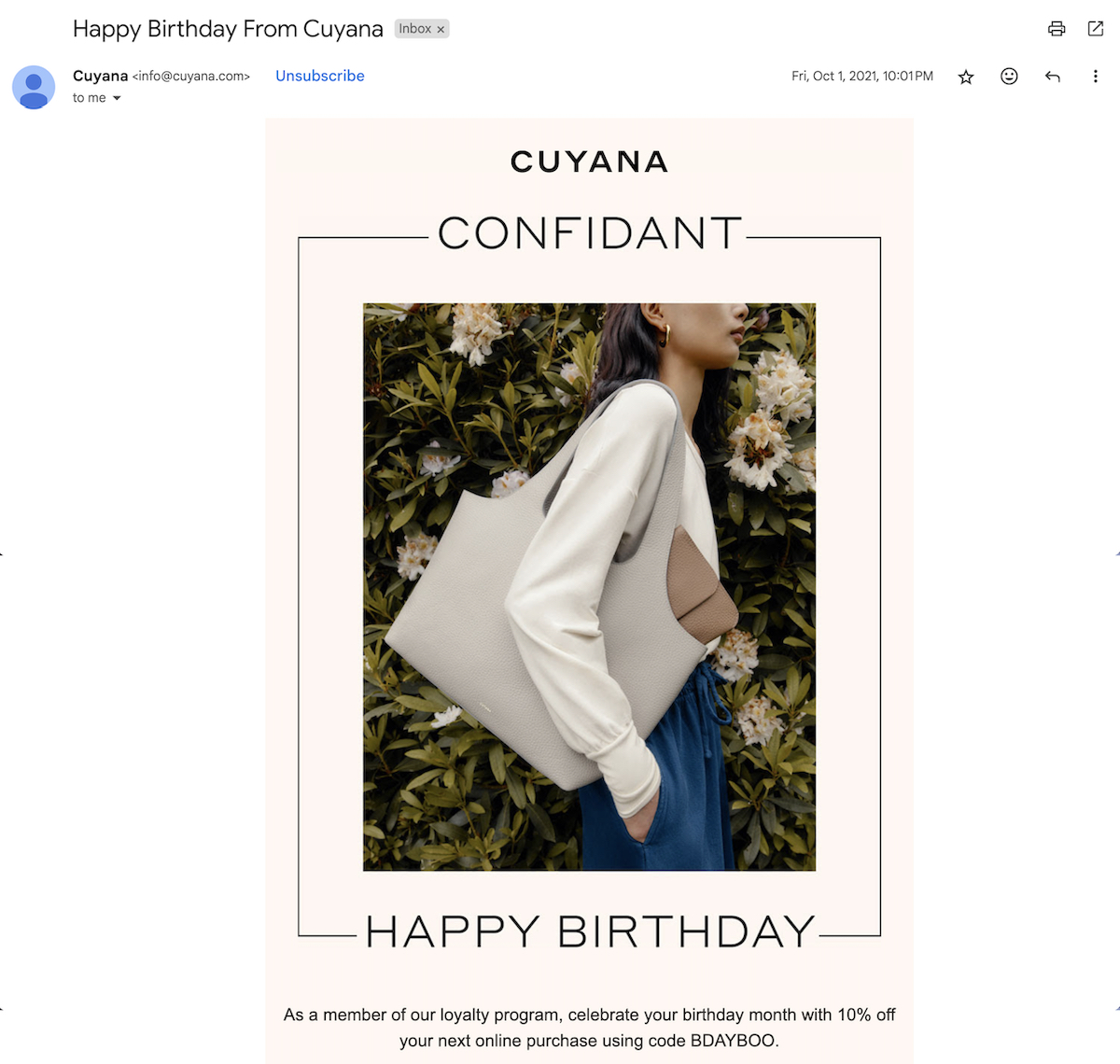
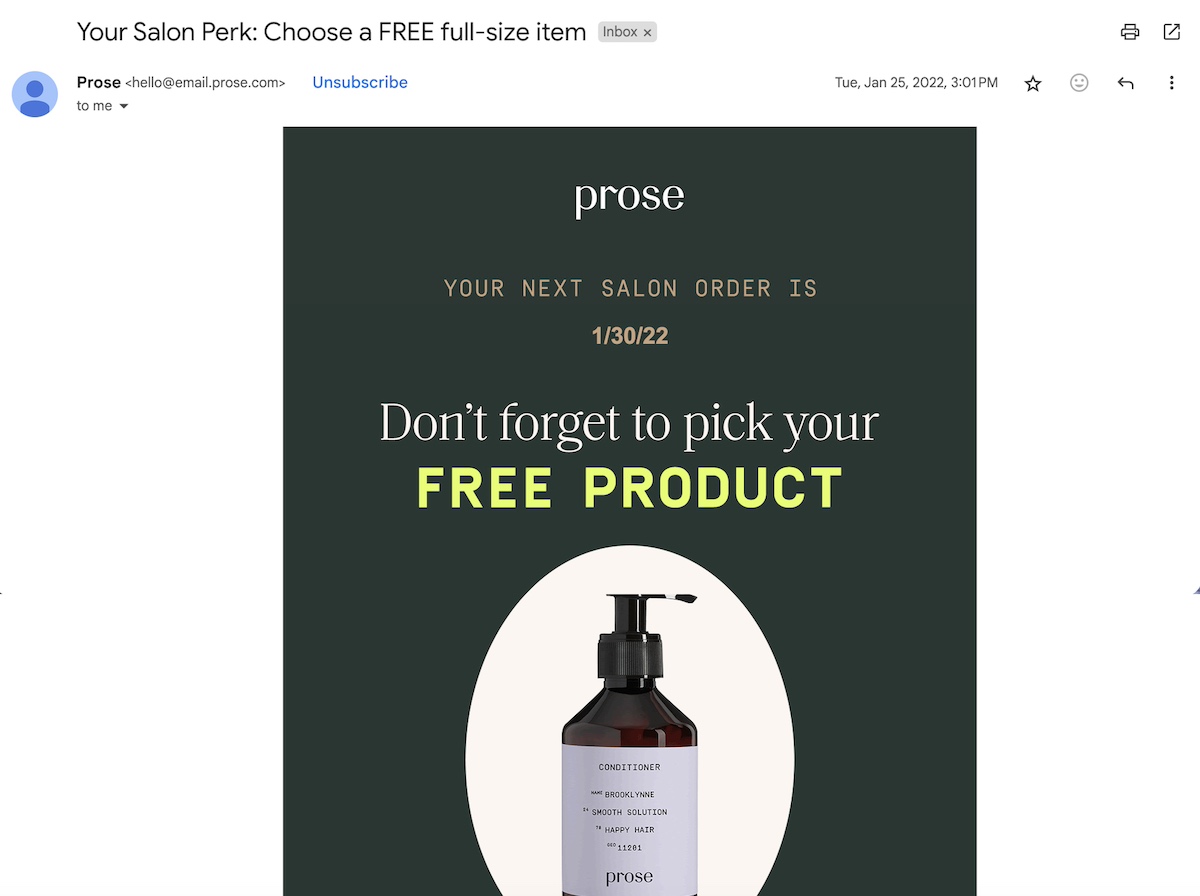
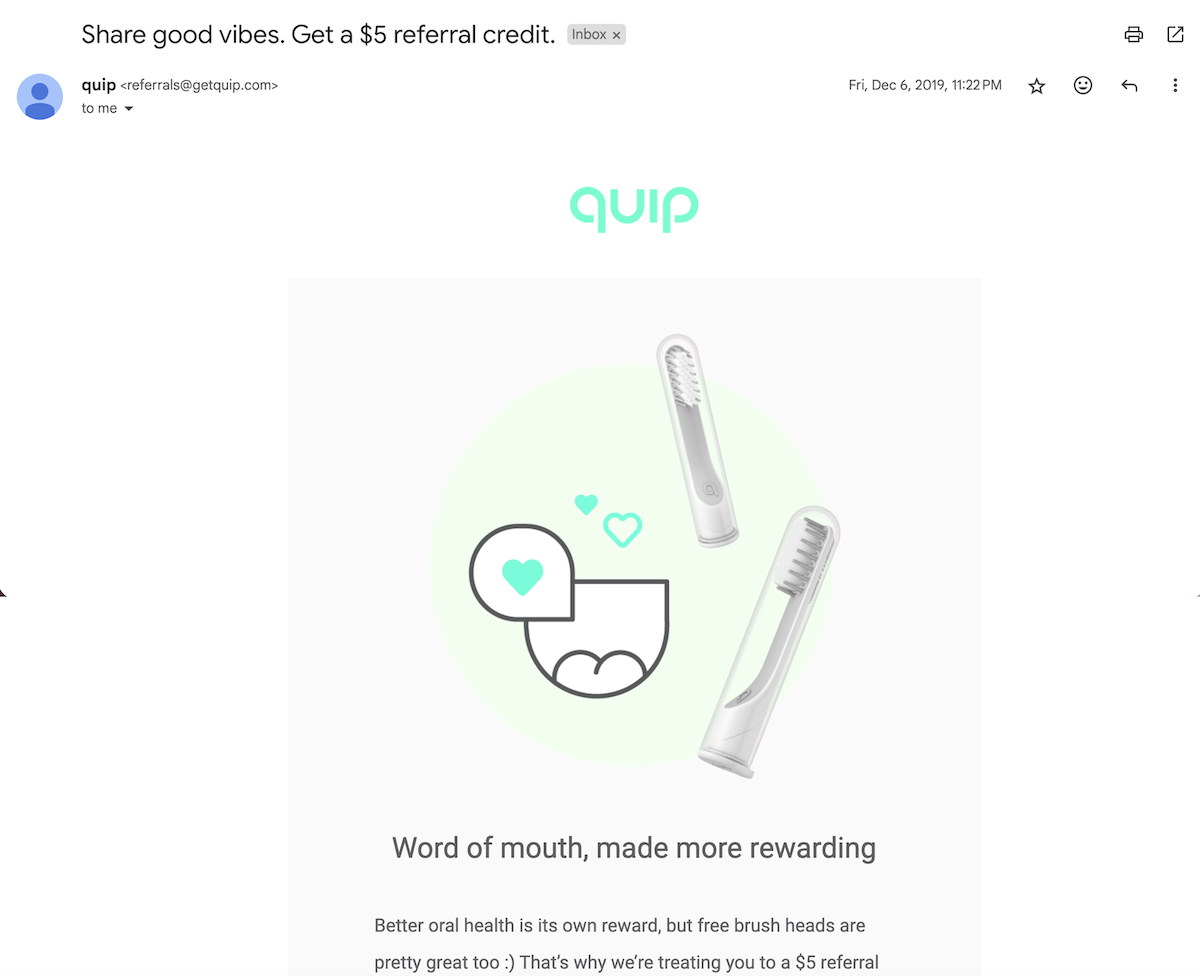
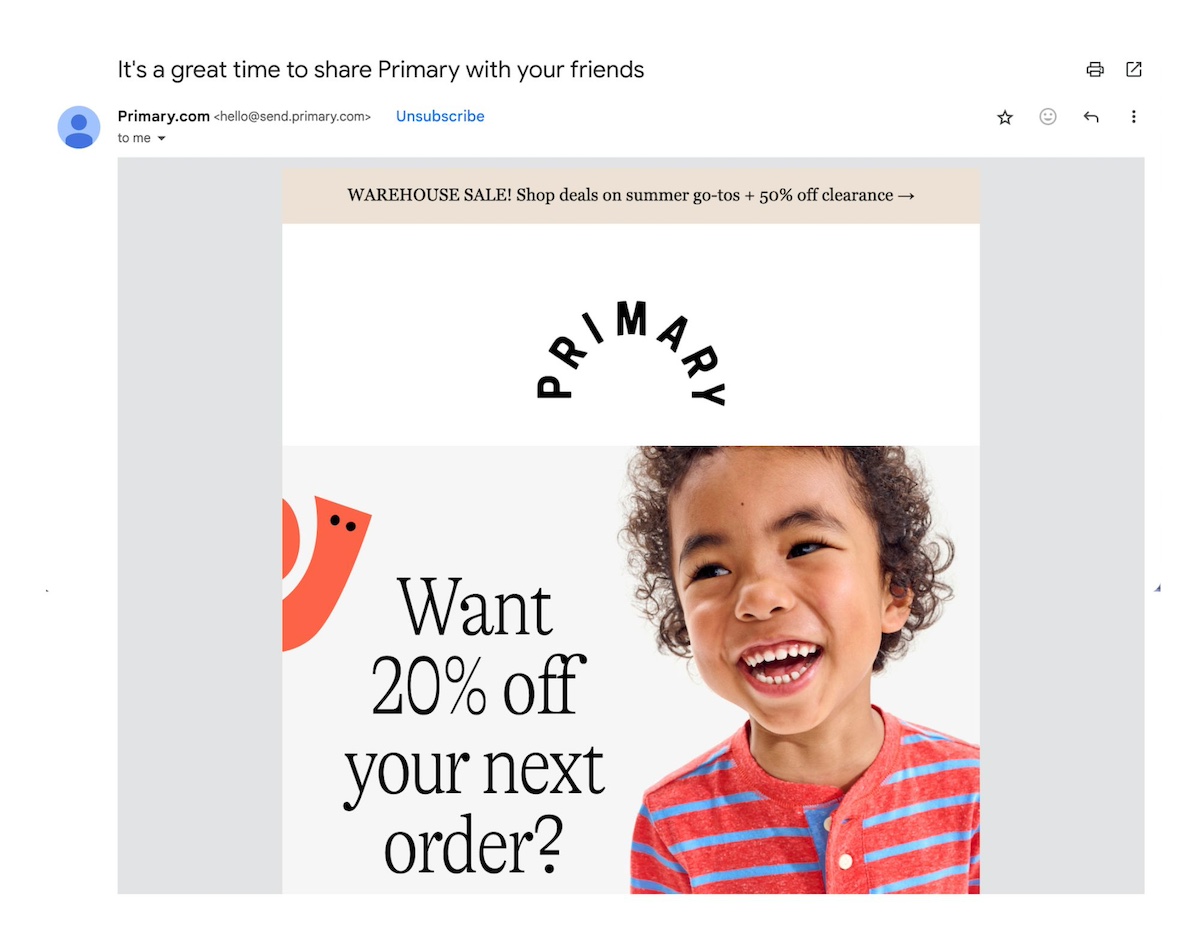
A referral program is an affordable and effective way to leverage word-of-mouth marketing by turning satisfied customers into enthusiastic brand advocates. It also makes up an important part of the customer journey, taking customers from retention, to loyalty and eventually advocacy. Here are some of the best tips for making your program a success: 

  • Offer Compelling Incentives: Motivate customers to participate by offering valuable rewards, such as discounts, gift cards, free products or services, or exclusive access to new offerings. Ensure the incentives are enticing enough to drive referrals while remaining sustainable for your business.
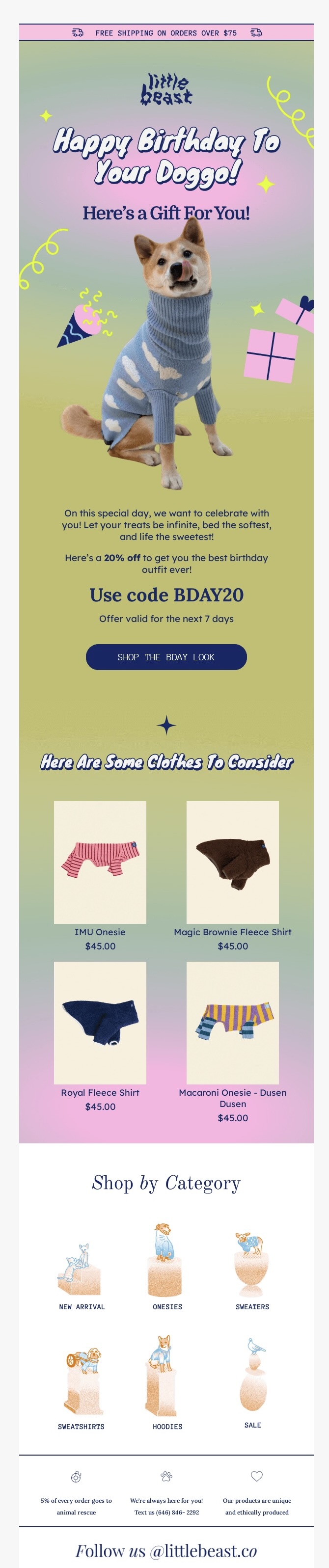
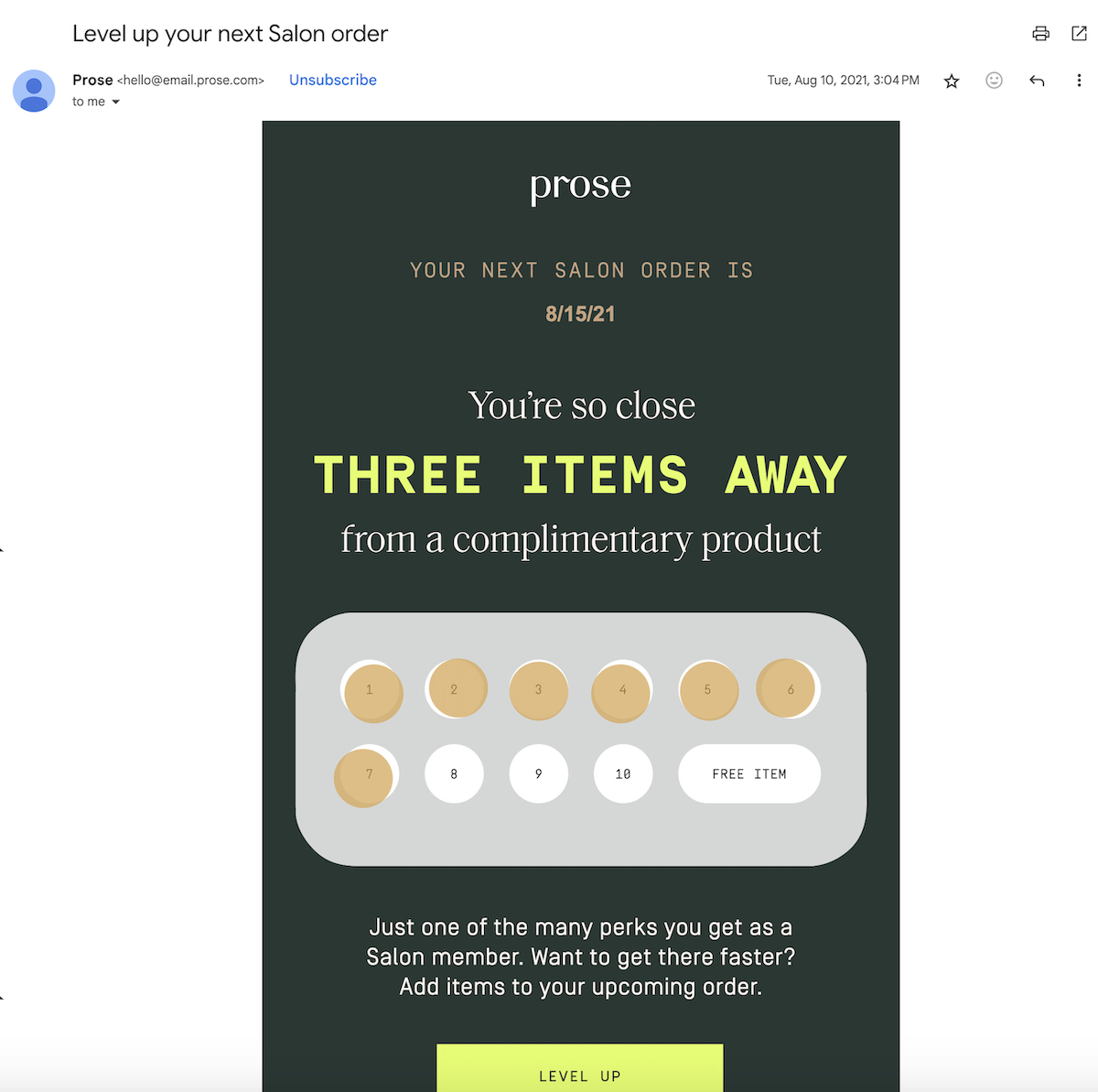
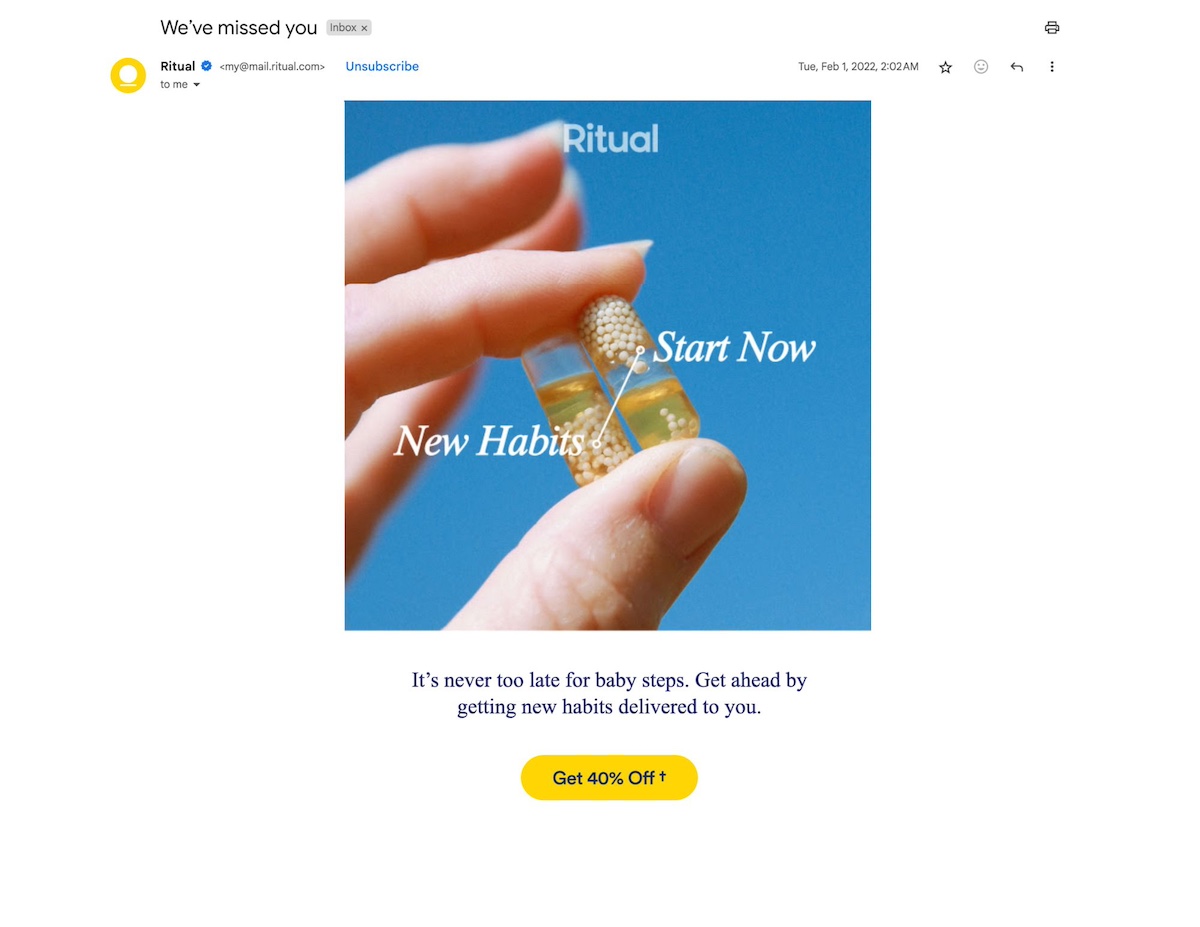
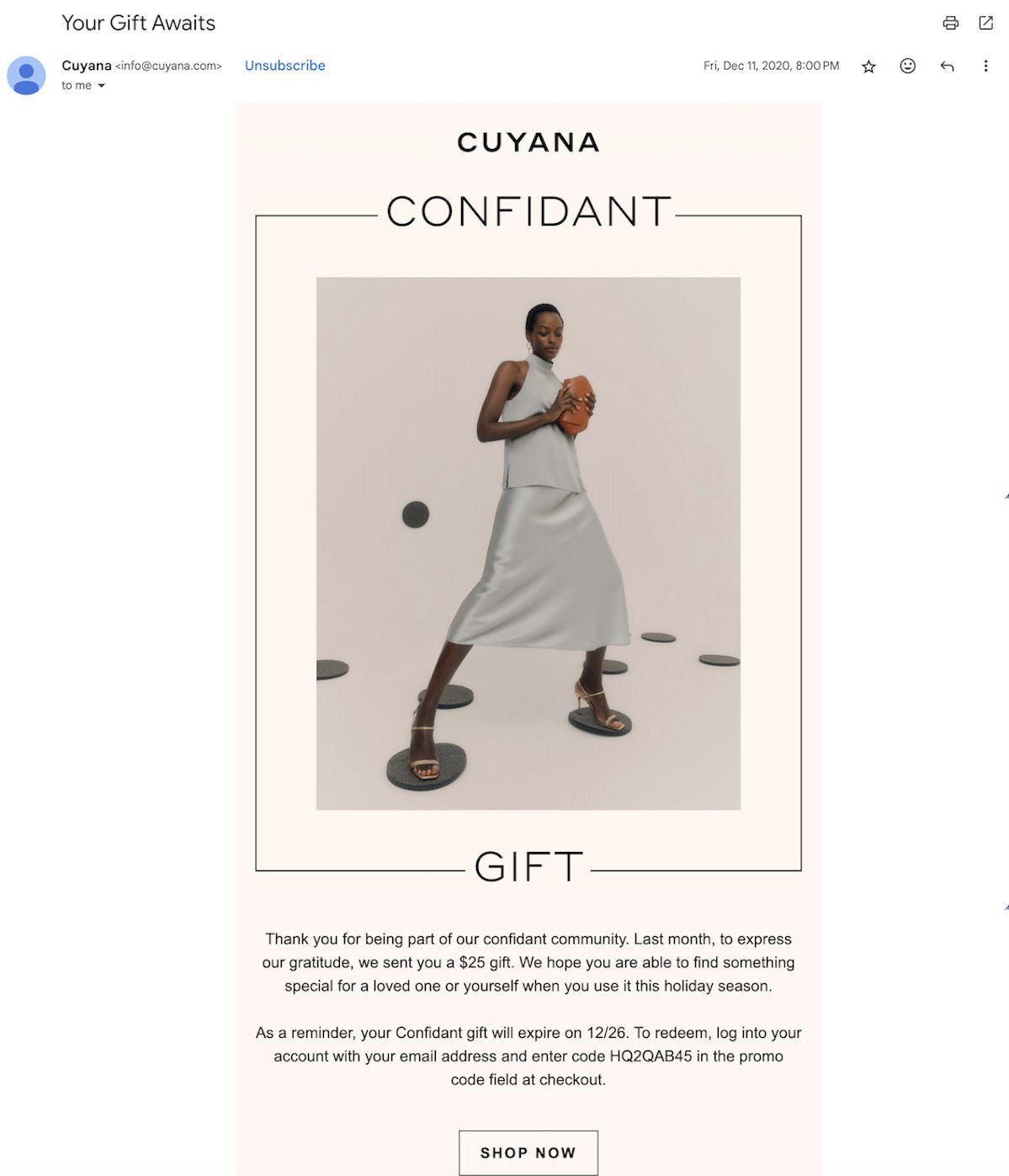
Email example with offer for customer sharing
  • Streamline the Referral Process: Make it easy for customers to refer others by providing clear instructions and tools like referral links or codes. A seamless and user-friendly process increases the likelihood of participation.
  • Promote and Track Your Program: Maximize engagement by promoting your referral program through email newsletters, social media, your website, and even in-store signage. You might even wish to use a referral program software to automate tracking, analyze performance, and personalize the experience for participants.
  • Show Appreciation: Recognize and thank customers who participate in your program by sending personalized email messages or featuring top referrers on your website or social media. Acknowledging their contributions strengthens relationships and encourages ongoing participation.
A list of effective ways to market your small business

Small Business Marketing at Your Fingertips

Successful small business marketing requires understanding your audience, setting clear objectives, and regularly reviewing and adjusting your strategy. Whether you’re hosting webinars, running promotions, or connecting with your local community, each step you take brings you closer to your business goals. The best part? The ideas and methods we explored above are both affordable and accessible, making it possible for small businesses to compete in ways not previously possible.

The starting point for all of this is building and maintaining a successful website—and it doesn’t have to be complicated or costly. If you’re feeling unsure about where to begin, SiteGround’s Website Builder makes it easy to get your online presence up and running quickly and efficiently. 

Get online easily with SiteGround Site Builder

AI and SEO: What’s Next for the Future of Search

The way we approach SEO is changing rapidly, thanks to the growing impact of AI. This shift is challenging many of the strategies we’ve relied on for years, forcing us to think differently about how we create and optimize content. It’s no longer just about ranking high—it’s about staying relevant and getting clicked. 

In this guide, I’ll walk you through how AI is reshaping SEO and share practical tips to help you adapt. Together, we’ll explore ways to align with these changes and ensure your content continues to stand out, connect with your audience, and meet the demands of tomorrow’s search engines.

[41]

AI Impact on SEO

Let’s begin by addressing the question on everyone’s mind: how will AI impact SEO?

AI is reshaping everything we thought we knew about SEO. 

From transforming content creation to changing the way we approach marketing, artificial intelligence is redefining the landscape of organic search and optimization. 

Let’s be honest. SEO was never easy. In the past, users would have a big amount of URLs to choose from, making it difficult for any website to stand out. 

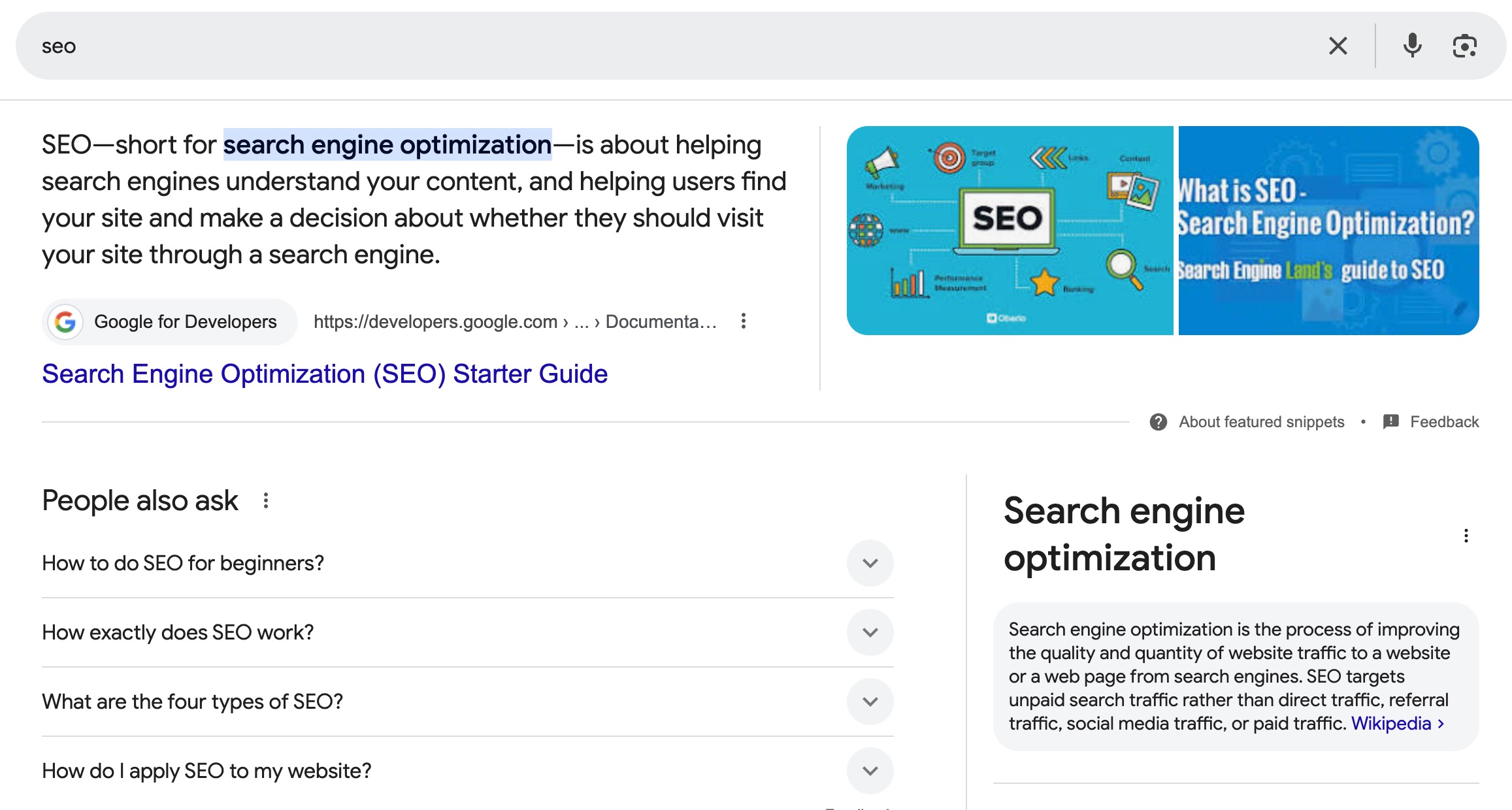
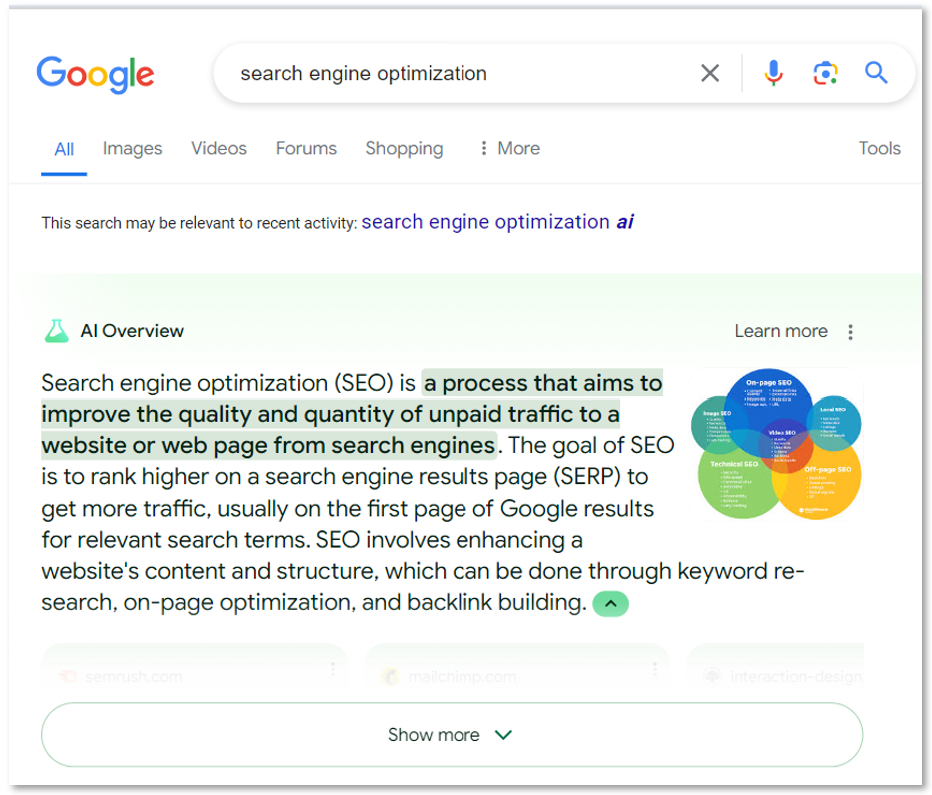
As if this wasn’t enough, SEO professionals had to start competing not just with other websites, but also with Google’s features like snippets, knowledge graphs, and image packs, which dominate more space on the search engine results page (SERP).

Google search results page displaying a featured image snippet and a paragraph snippet for an SEO search query.
Screenshot

But AI gave us hope—well, at least for a minute. It enabled brands to produce content at a faster pace with less resources and need for investment. 

So we are all somewhat guilty. Without realizing, we have been contributing to an oversaturation of results on the SERP. And Google is determined to fight back. 

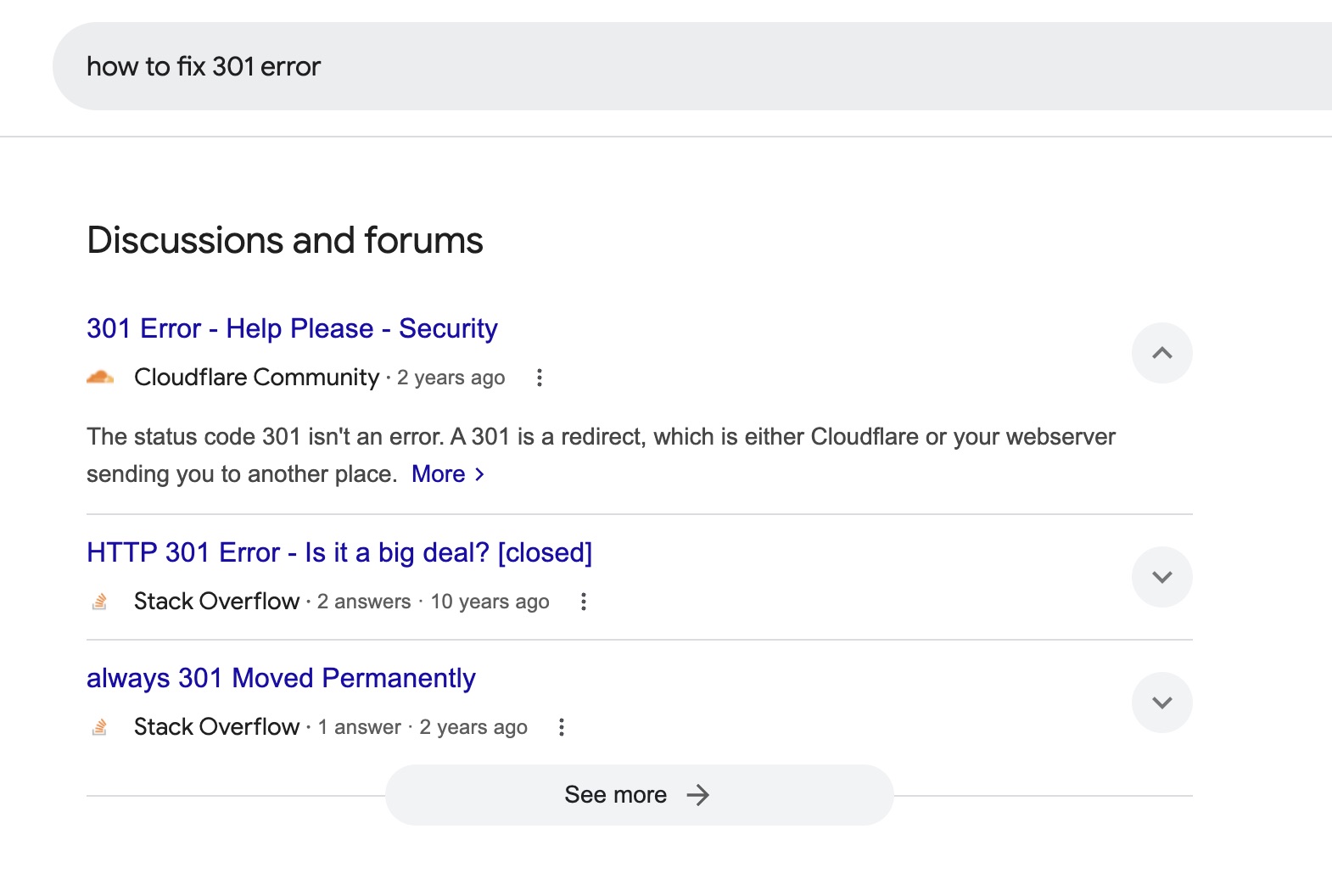
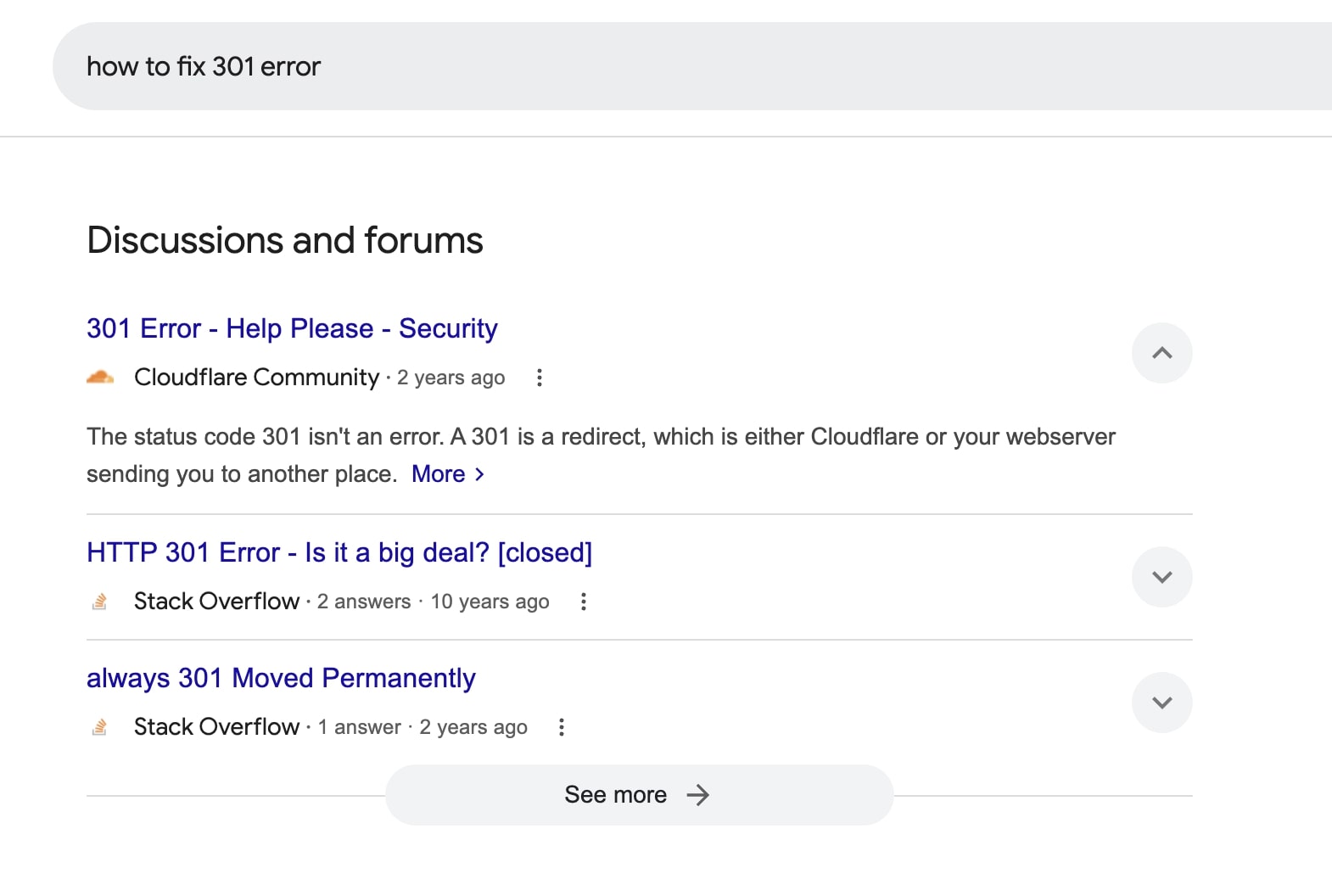
On one hand, latest SEO trends suggest that Google is increasingly prioritizing user-generated content, as users seek more authentic and genuine insights. Platforms like Reddit, Quora, and niche communities are now dominating the search results because they offer room for genuine discussions, trusted recommendations, and practical advice.

"How to fix 301 error" query results showing user-generated content from Reddit, Quora, and niche communities.

But also, Google is taking even more space on the SERP with the so called AI Overviews. And this shift isn’t random—it’s part of Google’s larger strategy to keep users engaged within its ecosystem. The longer users stay on Google, the more ad revenue it generates and the more opportunities it has to drive traffic to services like YouTube, Maps, and Shopping. 

So with these AI-powered overviews, Google powers instant, conversational answers, reducing the need for users to click away from the search page altogether. As a result, organic listings are being pushed further down the page, making it harder to capture attention and visibility unless we start to adjust our approach.

For marketers, it’s clear that sticking to traditional SEO strategies just isn’t enough anymore.

So what do we do now?

What’s Next for the Future of SEO: 5 Facts You Need to Know

First of all, no need to panic. 

After doing plenty of research, here’s a breakdown of what’s changing in the world of AI and SEO. 

In this section, I’ll walk you through everything we know about AI’s impact on SEO and what’s coming next: key developments, trends, and insights shaping the future of SEO. 

We’ll explore how these shifts are reshaping search engine strategies and what you need to know to stay ahead. Let’s get started! 

1. Expertise and Authority Will Be Valued for Users and Engines Alike

As a consequence of this content overload, search engines prioritize pages that reflect genuine credibility and firsthand knowledge. This shift emphasizes the need for content creators to highlight real-world experience through personal stories, case studies, and original insights that demonstrate subject-matter expertise.

As you can see, transparency is essential. The more you demonstrate that your content is created by true experts with verifiable credentials, the better your chances of earning Google’s trust—and climbing the rankings.

What’s more, Google’s algorithms are increasingly designed to reward brands that clearly display their creators’ expertise and achievements. So a key part of this strategy is crafting detailed author bios that showcase an author’s authority, background, and accomplishments. Not only does this build trust with your audience, but it also sends a signal to AI-driven optimization systems. 

2. No Fluff—Just Genuine Informative Content

It’s not just about who delivers the message—but also about the value of the message itself. As AI continues to shape the future of SEO, the demand for content that provides truly insightful answers is growing. 

Generative AI models, trained on massive datasets, are designed to prioritize high-quality, original content. This means your content needs to go beyond surface-level information and offer something unique. In-depth, well-researched pieces that bring fresh insights or a distinctive perspective are far more likely to catch the attention of AI engines.

Quality and originality are no longer optional—they’re critical. AI-powered systems favor content that genuinely serves users’ needs, making it essential to focus on delivering real value. 

3. SERP Becomes More Dynamic

Google is always refining its results to better align with search intent, and now these updates are happening even more often, especially in AI-generated overviews. This presents both a challenge and an opportunity: staying visible means consistently updating your content to keep it fresh and relevant. The upside? Doing so boosts your chances of being featured.

Frequent monitoring is just as important. Keep an eye on whether your content is holding its position in AI summaries and rankings. If you notice a drop in visibility due to newer or more relevant updates, take it as a sign to revisit and optimize your content.

4. Informative Queries Result in AI Overviews More Frequently 

AI-generated overviews are not triggered by every query, meaning not all keywords require AI SEO optimization.

For now, informative queries—those beginning with “what,” “how,” “when,” or “why”—are the sweet spot for AI Overviews. Generative engines excel at delivering concise, direct answers, making these types of questions a prime target when it comes to SEO for AI.

Long-tail keywords, conversational phrases, and natural language queries are also increasingly shaping AI responses, as users seek personalized, straightforward content. 

However, AI-generated results are less prominent for local searches, where map results dominate, or for transactional queries, which typically lead to Google Shopping listings.

If your project is losing traffic to AI overviews, start by identifying which keywords are generating these summaries and focus your optimization efforts there. 

5. GEO Is Here to Stay

Already ranking on the traditional SERP? That’s a solid foundation, but it doesn’t guarantee inclusion in AI-generated answers.

AI engines prioritize clarity, structure, and relevance, qualities that may differ from traditional SEO factors. To ensure visibility in generative responses, you’ll need to refine your content with these specific requirements in mind, even if you’re performing well in standard search results. 

Here’s where Generative Engine Optimization (GEO) comes in. 

Generative engine optimization focuses on crafting content that aligns with how AI engines evaluate, understand, and present information. 

These engines don’t just rank content—they synthesize it, creating concise answers that draw from multiple sources. They prioritize content that’s clear, well-structured, and directly relevant to user queries. 

That means you’ll need to go beyond traditional SEO tactics. As GEO reshapes the way content is discovered and consumed, adapting your strategy is no longer optional—it’s a must to maintain visibility and relevance in an AI-driven search ecosystem.

SEO and AI: How to Adapt

Alright. We’ve explored the facts and the shifts AI is bringing to SEO, but understanding the changes is only half the battle. The real challenge lies in adapting your strategy.

It’s time to move beyond theory and focus on actionable steps. Here’s how to align your SEO efforts with the demands of an AI.

1. Draft Your Content Plan Around Topic Clusters

To position your brand as a trusted authority in your niche, a well-structured content plan is essential. Instead of treating keywords and topics as standalone elements, focus on creating interconnected topic clusters. This approach allows for comprehensive coverage of your niche while signaling to Google that your site offers in-depth, credible insights.

Start by mapping out your content based on your niche’s main themes, branching into subtopics, keywords, and common queries from every angle. Each piece of content should connect seamlessly to others, creating a web of information that demonstrates expertise.

When drafting your plan, organize your content according to the customer journey. From top-of-funnel awareness to bottom-of-funnel decision-making, ensure your pieces address the needs of users at every stage. 

Covering all possible queries related to your niche allows for your content to become the go-to resource, increasing both user trust and AI recognition.

Don’t forget to highlight your expertise by incorporating case studies, expert quotes, and unique perspectives that add depth and value. Remember, it’s not just about quantity but quality. 

2. Determine Keywords for SEO vs. GEO

Now that your content funnel is mapped out, it’s time to categorize your keywords. Not all keywords require the same optimization strategy—some will align better with traditional SEO, while others are prime candidates for AI SEO or GEO.

The key is to align each piece of content with the user intent behind the keyword. Informational queries should be optimized for AI by focusing on clarity, structure, and actionable insights that AI can synthesize. Transactional or navigational keywords, on the other hand, should probably follow SEO traditional best practices, as we want these results to be placed on the regular SERP. 

3. Choose an Easy-to-Scan Structure: It’s the Key to AI and SEO Optimization

If you want your content to stand out in AI-generated responses, creating a user-friendly structure is non-negotiable. AI prioritizes content that’s not only keyword rich but also incredibly easy to scan and process. Here’s how to make your content AI-ready:

  1. Prioritize Intent
    Start by aligning your content with user intent, ensuring each section answers specific queries clearly and concisely. But don’t stop there—how you present the information matters just as much.
  2. Optimize for Readability
    Use headings, subheadings, bullet points, and short paragraphs to make your content digestible. Think of your structure as a roadmap that guides both users and AI through the key points effortlessly.
  3. Add Structured Data
    Incorporate Schema markup to define your page elements—such as product details, reviews, FAQs, or articles. Structured data acts like a blueprint for search engines, helping them categorize and feature your content more effectively in AI overviews.
  4. Improve Website Performance
    A fast-loading site isn’t just good for user experience; it’s essential for AI prioritization. Compress images, streamline your code, and ensure your website is responsive across devices. Slow-loading pages risk being bypassed entirely.

 4. Make Your Content Relevant: 

Relevance is the new cornerstone of AI-driven SEO. Unlike traditional SEO strategies that favored lengthy, all-encompassing articles, AI engines prioritize content that is concise, targeted, and directly aligned with specific user queries.

So instead of trying to address every possible angle in one article, create multiple pieces of focused content that answer particular questions or solve specific problems. This approach not only increases your chances of being featured in AI-generated overviews but also better serves users searching for direct answers.

5. Always Keep Your Content Fresh and Up to Date

Staying relevant also means keeping your content fresh and up-to-date. AI prioritizes content that reflects the latest information, trends, and insights. 

As we said, AI overviews update in real-time, often favoring newer, more valuable content. If your articles are outdated, they risk being overshadowed by fresher content from competitors. 

That’s why you should review your content periodically: Refresh outdated statistics, replace old examples with newer ones, and expand sections with new developments in your industry.

Especially if you notice a decline in traffic or rankings, revisit that piece and optimize it!

SEO in the Future: What Can We Expect?

The evolution of SEO caused by AI is undeniable. 

In the future, we can expect SEO to become increasingly dynamic, demanding a balance between technical precision and authentic, user-focused storytelling. Expertise, relevance, and adaptability will be the pillars of success. 

Businesses that embrace these principles—while staying agile in response to AI innovations—will not only survive but thrive in the ever-changing world of search.

SEO’s future isn’t about gaming the system; it’s about building trust, meeting user needs, and crafting content that stands out for both humans and AI. The question isn’t just how to rank but how to remain relevant. 

The opportunities are vast, and the potential is limitless for those ready to adapt.

2026 Digital Marketing Trends: What Marketers Need to Know

Digital_marketing_trends

This article was originally published in January 2025, and then updated in January 2026.

Somewhere between “let’s boost this post” and “wait, does Gen Z even use Google?” digital marketing became unrecognizable. Your customers are discovering products in 15-second videos and researching purchases through actual conversations instead of clicking through ten blue links.

So what does marketing actually look like in 2026? Well, it’s changing by the day, but what’s important to know is that you don’t need to chase every shiny new platform. That’s why we’re focusing on the six foundational shifts that are redefining how people discover, evaluate, and buy. Here’s what’s actually changing and what you need to do about it.

Key takeaways:

  • AI now controls visibility. GEO determines whether your content appears in AI-generated answers, summaries, and recommendations.
  • Shopping is AI-driven. AI assistants influence how products are discovered, compared, and purchased.
  • Search is no longer linear. People search through conversations, videos, and social platforms rather than just keywords.
  • Short-form video fuels discovery. Fast, engaging video is now a primary way users explore products.
  • AI powers real conversations. AI-led communication enables personalized, scalable interactions across channels.
  • Paid media favors creativity. AI handles optimization, but strong creative drives performance.

As we transition into 2026, the following trends are underway and only accelerating. So the marketers who get on board and start adapting now will be better positioned to stay ahead.

1. Generative Engine Optimization & AI Visibility

Before diving into our list of digital marketing trends, let’s unpack a trend that underpins almost everything else: AI, and specifically generative engine optimization (GEO). 

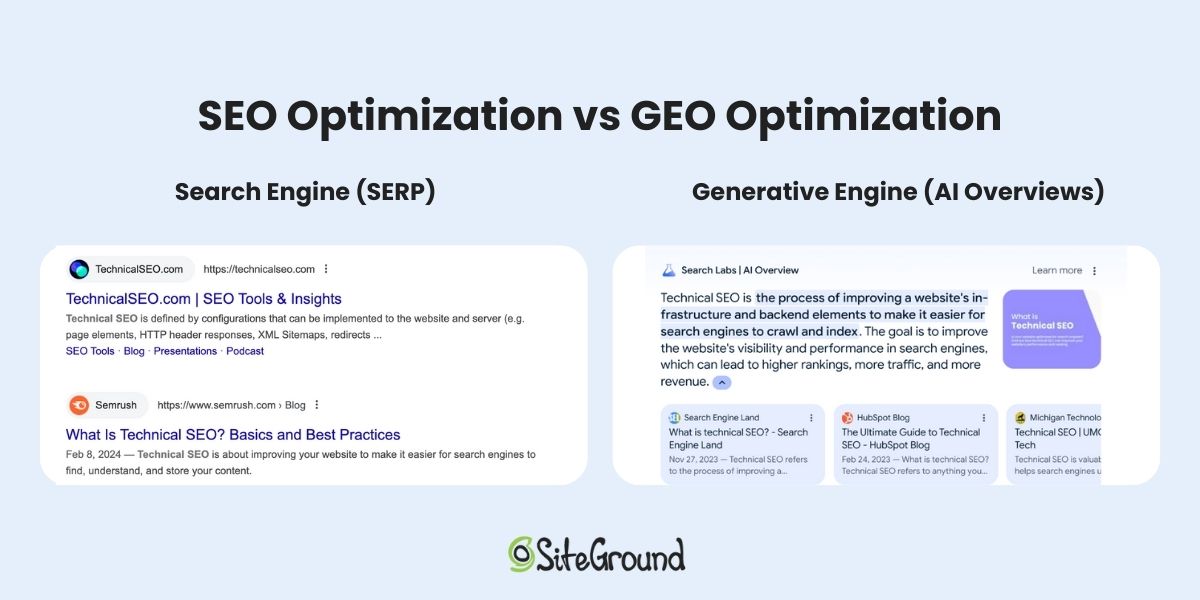
GEO is the process of optimizing content so it can be accurately interpreted, prioritized, and surfaced by AI-driven search engines. Unlike traditional SEO, which focuses on ranking on search results pages, GEO is about getting your brand and message to appear in AI-generated summaries, answers, and recommendations across multiple AI platforms.

search-engine-vs-generative-engine-optimization

This much-desired visibility is a whole new frontier that we’re only just starting to really understand. But what we do know now is that your success (or lack thereof) depends on how well AI can understand your content, evaluate its trustworthiness, and determine whether it answers customer questions. 

What’s changed:

  • AI increasingly delivers direct answers and summaries, oftentimes without users visiting the original website page.
  • Traditional SEO signals (think keywords and backlinks) remain relevant, but now don’t cut it on their own.
  • AI relies on structured data, schema markup, and content clarity to evaluate context, authority, and relevance. 
  • Content visibility now hinges on authority and alignment with user intent, not just ranking position.

What marketers need to optimize for:

  • Structured, machine-readable content (schema, metadata, FAQs) that AI can accurately interpret. Basically, make your content organized so that AI can understand it.
  • People-first, authoritative content that genuinely answers questions and demonstrates expertise. That means expert points of view, original content, and authenticity. 
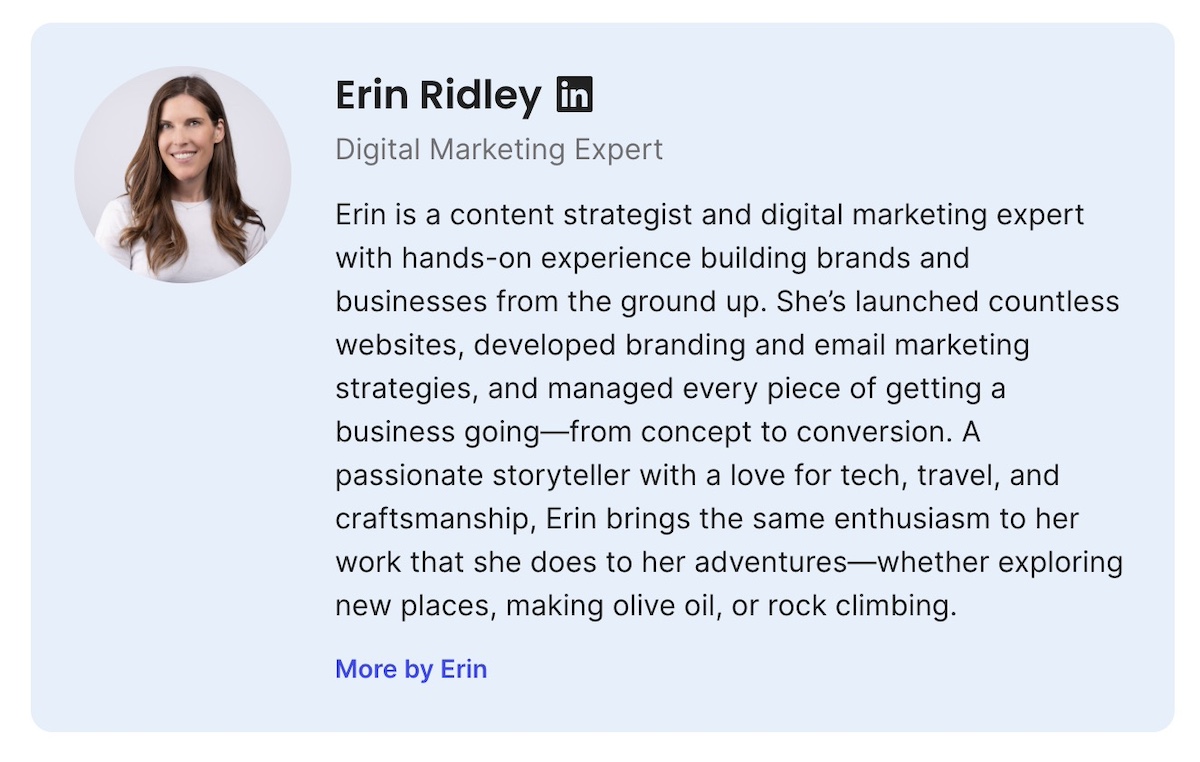
  • Signals of credibility and trust like author bios (as seen below), citations, reviews, and social proof that AI can evaluate (and which also contribute to said authority).
Example of an author bio acting as a signal of credibility for AI
  • Content optimized so AI systems can accurately extract facts, context, and intent for downstream use.
  • Clear internal linking and website structure so AI understands relationships between topics (like your products, services, and so on).
  • Continuous monitoring and iteration using AI tools to assess which content is being surfaced and how it’s performing. While this kind of monitoring is evolving day by day, it’s important to stay on top of it.
  • Don’t focus on keywords alone and start addressing your users’ questions and search intent through content (such as blog articles) and dedicated pages.

The takeaway:

In 2026, digital visibility depends as much on how AI understands and interprets your content as on traditional ranking (and increasingly more so!). The brands that lean into this trend are likely to reap the greatest rewards.


Building a GEO-Ready Website
Getting this right starts with your site’s foundation. You need clean code, proper schema markup, and a structure that makes sense to both humans and AI.

SiteGround’s Website Builder makes building your site simple and fast, with clean code and easy tools for adding meta titles and descriptions. The website creation is handled so that you can focus your energy on optimizing content for AI.

Get started now>>

2. AI-Powered Shopping & Agentic Commerce

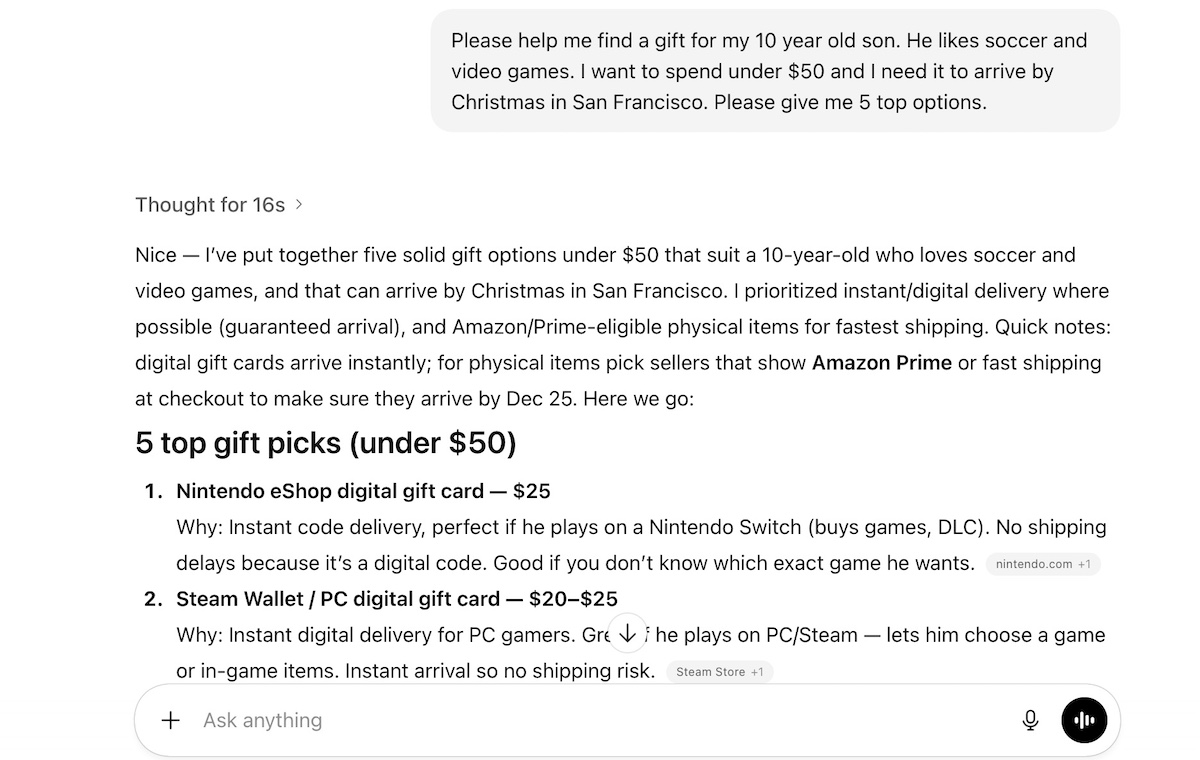
With GEO as the foundation for AI to understand and surface content, the next trend relates to how AI shapes the shopping experience itself. What matters here is not only what we discussed above, but also high-quality product information. This matters because it helps your offerings get accurately evaluated and recommended by AI-powered shopping assistants. 

Example of AI powered shopping via ChatGPT

What’s especially noteworthy about this shift is that it’s given rise to the trend of agentic commerce, where AI not only guides discovery but can actively influence or even complete purchases on behalf of consumers. 

This isn’t theoretical. In early 2025, OpenAI announced new shopping research capabilities in ChatGPT, signaling a move toward AI systems that actively help users research, compare, and evaluate products inside the interface itself.

What’s changed:

  • Shopping is now guided and mediated by AI, rather than purely manual browsing via search engines.
  • Discovery, comparison, and decision-making increasingly happen inside AI-powered interfaces, rather than on traditional ecommerce pages.
  • AI can evaluate multiple contextual signals (such as price, product attributes, delivery options, and other preferences) to recommend the “best fit” without users manually comparing every option.

What marketers need to optimize for:

  • Visibility within AI-driven shopping flows depends on having accurate, well-structured product data and clear differentiation (building on the previously discussed GEO principles).
  • Trust signals, such as reviews, ratings, and social proof, that AI can reliably review and surface.
  • Product clarity and content completeness so AI can interpret features, benefits, and use cases accurately.
  • Seamless website navigation and discovery, making it easy for AI to interpret your content and also guide users through exploration and selection.

The takeaway:

This trend means success depends on how easily AI can understand and surface your product. When product content is GEO-optimized, it doesn’t just increase visibility, it improves the quality of AI recommendations, directly supporting higher conversions.

Watch this space: it’s changing fast.

3. Search Becomes Conversational, Visual & Exploratory

Once AI can reliably interpret and surface content (we’re looking at you, GEO), the way people actually discover and research products is evolving rapidly. Search is no longer a linear process of typing keywords and clicking results. Now it’s a fluid, exploratory experience. 

Users now ask follow-up questions, refine intent mid-search, and move between text, video, and social platforms to make decisions. Meanwhile, platforms like TikTok, Instagram, and YouTube have become core discovery engines, especially for product research, local recommendations, and “how-to” content.

Example of TikTok as an information discovery engine

What’s changed:

  • Search is increasingly conversational; users ask full questions instead of short keywords.
  • Discovery is non-linear; queries now span multiple formats and platforms.
  • Social platforms function as search engines, especially for younger, discovery-first audiences.
  • Visual and video results are becoming influential, not just text-based content.

What marketers need to optimize for:

  • Content that answers questions the way people actually ask them, not just keyword-stuffed pages.
  • Specific, detailed search phrases instead of only chasing the obvious high-traffic terms.
  • Social media marketing across platforms, including TikTok, Instagram, YouTube, and other discovery channels.
  • Search-friendly video and visual content optimized for both traditional search and in-platform discovery.
  • Consistent visibility across platforms by matching content to real user intent.

The takeaway:

Success in 2026 depends less on ranking for a single keyword and more on consistently showing up across the entire customer journey of discovery. So that’s really wherever and however users explore before making purchase decisions. If we can start to really understand these evolving search behaviors, then we can better guide customers toward conversions.

4. Short-Form, Fast-Turnaround Video More Powerful than Ever

Building on this shift toward conversational, exploratory search, short-form videos have, as a result, become a super important channel for discovery and engagement. TikTok, Instagram Reels, YouTube Shorts: they all involve allowing users to quickly explore, compare, and evaluate products. And often before they even reach your website.

AI takes this even further by helping brands create, edit, and repurpose videos at scale, all while keeping messaging and branding consistent. With accurate metadata and transcripts backing your videos, AI can understand your content and deliver it to the right people at exactly the right time.

What’s changed:

  • Short-form video is now a primary discovery channel, and more than just entertainment.
  • AI enables rapid production, editing, and repurposing of video assets.
  • Video content is increasingly integrated into search, social, and commerce, influencing both awareness and conversions.
  • Attention spans are shorter, so content must communicate value immediately.

What marketers need to optimize for:

  • Producing videos quickly to stay relevant and post consistently.
  • Reusing content across different platforms to get more value from each video.
  • Creating stories that grab attention in the first few seconds.
  • Making videos easy to find through AI recommendations and discovery features.
  • Adding clear descriptions and tags so AI can understand and show your content to the right people.

The takeaway:

Short-form video has become a primary channel for how people discover products. AI tools let you produce and optimize videos at the speed and scale needed to stay visible where your customers are actively searching and scrolling. When your content shows up at the right moment across search, social, and ads, you’re there during those critical seconds when people are exploring options and deciding what to buy.

5. AI-Led Communication: Conversational Everything

AI isn’t just answering questions anymore. It’s running the whole conversation. Whether someone lands on your website, slides into your DMs, or asks a question in search, AI is there having real-time chats that actually feel human. (A little scary, a little impressive.) It’s not just spitting out canned responses. It understands your brand, reads the room, and responds like it actually gets what people need. Welcome to the era where your customers might not even realize they’re talking to a bot.

Example of an AI assistant via SiteGround chat in order to address customer queries

What’s changed:

  • AI chatbots and conversational interfaces now handle multi-turn, complex interactions, not just FAQs.
  • Messaging is personalized in real time, drawing on behavior, preferences, and context.
  • Conversational interfaces are integrated across channels, from web and apps to search and social platforms.

What marketers need to optimize for:

  • Defined conversational goals: Be clear about what each AI interaction should help users do, whether that’s exploring, deciding, resolving, or converting.
  • A consistent conversational voice: Document tone, language style, and boundaries so AI responses sound recognizably “you,” everywhere.
  • Context-aware responses: Ensure AI can reference relevant pages, products, policies, and past interactions instead of giving generic answers.
  • Clear escalation paths: Decide when AI should continue the conversation and when it should hand off to a human.
  • Ongoing review and refinement: Regularly audit real conversations to catch inaccuracies, gaps, or off-brand responses and adjust accordingly.

The takeaway:

AI-led communication isn’t about replacing human interaction; it’s about scaling it smartly. Brands that actually design their conversational experiences (instead of just automating for the sake of it) create smoother journeys from discovery to purchase. Skip this step and you risk sounding robotic, off-brand, or just plain unhelpful as you scale your business.

6. AI-Driven Paid Media & Creative-Led Performance

Once you’ve nailed discovery and engagement, paid media takes things to the next level. AI has transformed this space, too. By 2026, real-time ad optimization runs almost entirely on autopilot. AI handles the bidding, figures out who to target, and places your creative where it’ll perform best. Nearly half of advertisers have already anticipated letting AI handle bidding and optimization, according to Emarketer. This approach frees you up to focus on making ads people actually want to see.

With AI handling technical optimization (like Meta targeting peak-converting audiences or Google Performance Max shifting budgets to top-performing creative), your real opportunity to stand out is in your messaging, hooks, and emotional resonance. AI can optimize all day long, but it’s your creative that gives it something worth optimizing. The better your ads connect with people, the better signals AI has to work with.

What’s changed:

  • AI now handles bidding, targeting, and where your ads show up, so you spend less time in the weeds.
  • Real-time adjustments keep your campaigns performing without blowing your budget.
  • Your creative quality matters more than your technical setup.
  • The stories you tell shape the signals AI uses to optimize.

What marketers need to optimize for:

  • Creative that actually stops the scroll and makes people care.
  • Clear, punchy messaging that gets to the point fast.
  • Authentic storytelling that feels human, not corporate.
  • Testing new creatives constantly while AI handles the optimization grunt work.
  • Keeping your paid and organic content aligned so AI can accurately read what’s working.

The takeaway:

Paid media in 2026 is less about babysitting campaigns and more about creating ads worth amplifying. Let AI handle the technical heavy lifting while you focus on content that connects. Good creative plus smart automation equals better results. Simple as that.

Looking Ahead: Where Digital Marketing Trends Are Taking Us

These six trends share one thing: AI is reshaping how people discover, evaluate, and buy. The brands winning in 2026 use AI to scale what works while focusing their energy on creativity, authenticity, and storytelling.

You don’t need a huge team or budget to keep up. You need a solid foundation: a fast, flexible website built to work with AI. That means clean code, structured data, mobile optimization, and the ability to move quickly.

The SiteGround Website Builder is built for exactly this. It helps you create sites optimized for speed, SEO, and the structured content AI systems need. Whether you’re starting fresh or improving what you have, the right infrastructure makes everything else work better.

The future of marketing isn’t chasing every new platform. It’s showing up consistently and intelligently wherever your customers are looking. Nail that, and you’re set.

Ad to build your site in minutes with the SiteGround Website builder

This article was originally published in January 2025, and then updated in January 2026.

Drip Marketing: What Is It and How It Works

A laptop displaying an email that marks the beginning of a drip sequence.

Turning curious browsers into loyal customers can feel like a Herculean task. Leads often play hard to get, and even when they’re ready to take action, holding their attention is no small feat. 

But what if you could captivate them with well-timed messages that gently nudge them toward conversion? 

Fortunately, this isn’t just wishful thinking—it’s a practical strategy you can easily implement. Follow along to learn about drip marketing and how to leverage its power to deliver the right message at the right time.

What Is Drip Marketing?

Drip marketing is a strategy that involves automatically sending out personalized messages based on a schedule or segments, or that is triggered by specific user actions. These messages can be delivered through email, SMS, or push notifications, with email being the most commonly used channel. 

💡An email drip campaign may also be referred to “an automated email campaign,” “lifecycle emails,” or “autoresponders.”

Oftentimes, a drip marketing campaign is used to influence its target market over time by delivering a series of messages that follow a predetermined course. One common example is the welcome email sequence, used to greet newcomers. 


For instance, a welcome email can be sent automatically when someone registers on your website. Depending on whether the first email was opened, you can follow up with a different message tailored to guide them further down their email customer journey. If they don’t engage, you can remove them from this specific campaign. However, if they do engage, you can encourage further interaction by subtly prompting them to make a purchase.

Illustration of how a welcome drip campaign works

Although transactional emails can be sent individually, they can also play an effective role in drip marketing. These types of emails include account alerts, such as password resets or subscription renewals, as well as commercial transactions like order confirmations and shipping notifications.

Why Run a Drip Marketing Campaign?

Email automation isn’t just about logistics, though: it can help grow your business. Indeed, here are several reasons why you should consider implementing it in your email marketing strategy:

Time-Saving and Scalable

Drip marketing allows your business to communicate in real-time and in ways that manual outreach simply can’t replicate. That is, as a small business owner focused on growth, manually greeting every new subscriber or tracking each website visitor’s actions in order to send individual emails would be overwhelming, if not impossible. 

With drip marketing, you set up your automation workflows once, and they run automatically in the background, working their magic. This way, you not only save time to focus on other important tasks, but you can also handle a larger number of subscribers without extra effort. As a result, you spend less time on tedious activities while achieving greater results.

Increased ROI 

Speaking of greater results, did you know that three out of four marketers who implement marketing automation achieve a positive return on investment (ROI) within a year, and almost half see a positive return within just six months? 

This success is largely due to drip campaigns’ ability to effectively highlight calls to action at the most opportune moments. For example, if someone is exploring your premium plans, they receive a message showcasing the benefits of upgrading. After making a purchase, they receive an upsell or cross-sell message to encourage further interest. In each scenario, they receive tailored messages during critical-decision moments, which increase the likelihood of success and therefore your ROI. 

Gradual Relationship Building

Retaining existing customers is both easier and more cost-effective than constantly pursuing new ones. Automated flows can help you achieve this efficiently.

For instance, you can have one drip campaign for when someone signs up to download a resource, showing interest in your content. An automated sequence can follow up with related articles, helpful tips, or exclusive offers, gradually nurturing their interest and naturally guiding them from lead to customer. Once they make a purchase, transition them to a loyalty series. This might start with a thank-you email, followed by usage tips for their new product and exclusive discounts on future orders.

This approach ensures that customers receive messages relevant to their current situation, keeping them engaged with your brand and increasing the chances of repeat purchases and loyalty.

Personalization Made Easy

When subscribers receive emails that feel personal, they are more likely to engage—whether by opening, clicking, or even making a purchase. Drip campaigns simplify personalization by allowing you to set up the flow once and customize it for each recipient’s unique attributes, such as user data, behavior, and preferences.

Nordstrom, for instance, customized their promotional emails to reflect each visitor’s local weather conditions, providing content that was directly relevant to their environment. This level of personalization makes the communication feel more relevant and engaging, increasing the likelihood of interaction and conversion.

How to Set Up an Email Drip Campaign?

Now that you’re versed on what drip marketing is and its many perks, let’s pull back the curtain and explore the behind-the-scenes processes. From choosing your email triggers to crafting a compelling message, let’s examine all you need to know in order to create seamless customer experiences.

1. Choose an Automation Software

First and foremost, you can’t set up a drip campaign without automation software.  That’s because manually managing dynamic content and conditional statements would likely be mind-bogglingly time-consuming and error-prone. Fortunately, most email marketing or CRM platforms include automation features that simplify the process.
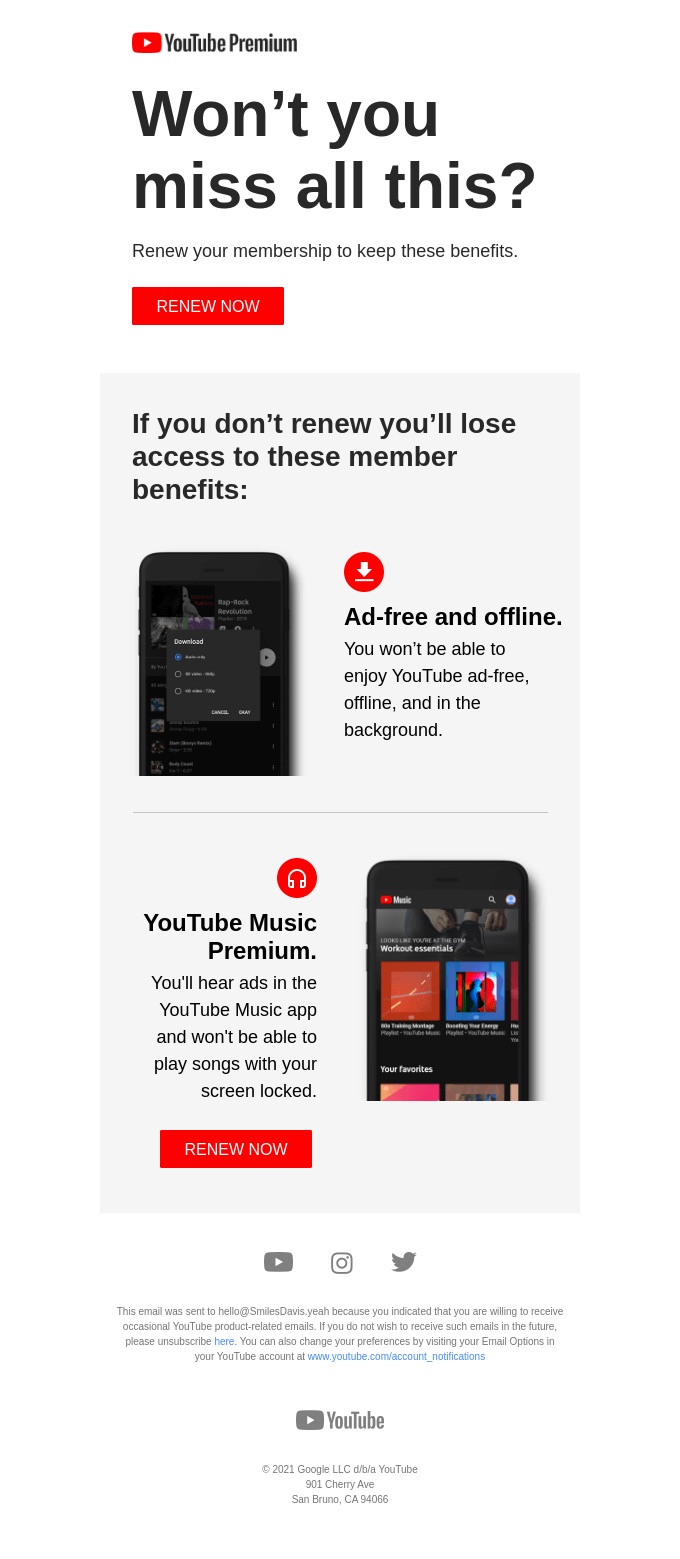
Here’s a quick list of key features to look out for when selecting an email automation tool: 

  • Ease of Use: Look for intuitive navigation and a no-code builder so you can manage workflows without needing lengthy tutorials. 
  • Deliverability: Ensure your platform allows you to authenticate your sending domain via DNS records (DKIM, DMARC, SPF) to prevent emails from landing in spam folders or getting blacklisted.
  • Recipient Segmentation: Look for a platform that allows for straightforward recipient segmentation into cohorts that align with your marketing efforts.
  • Analytics and Reporting: To identify the most effective email elements and increase conversions, your platform should provide access to key email marketing metrics like open rates, click rates, bounce rates, and interactions.

SiteGround Email Marketing happens to have them all! With its intuitive interface, AI writing assistant, and pre-built templates, you can effortlessly schedule welcome sequences, deliver freebies, and keep your audience engaged with simple, targeted email flows. Discover how easy it is to nurture, engage, and grow your audience.
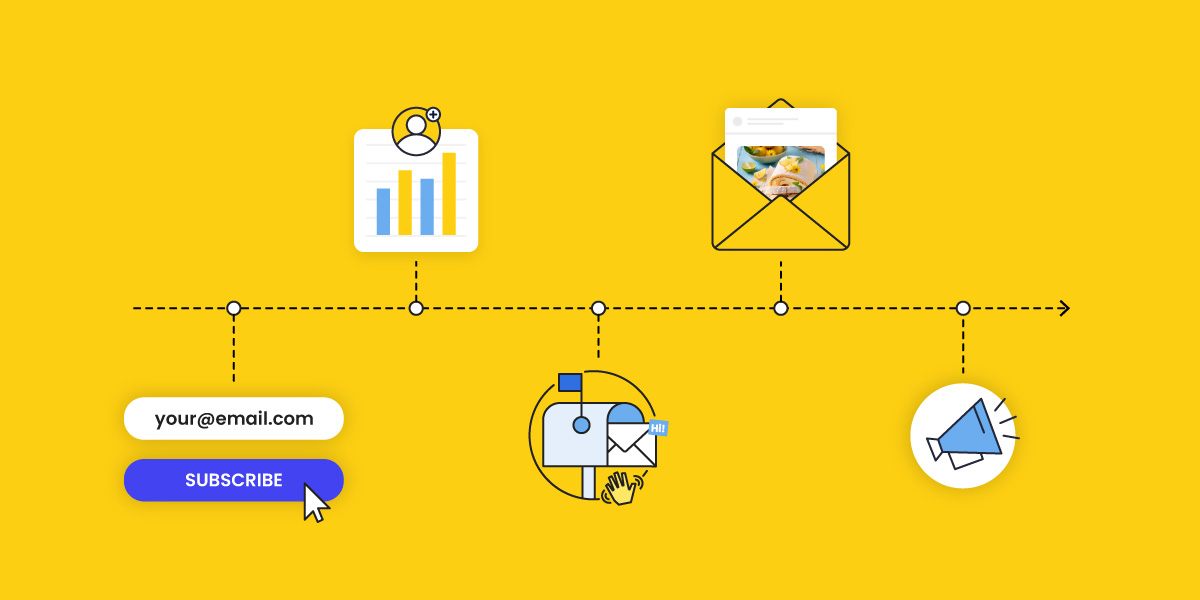
2. Determine Your Email Triggers
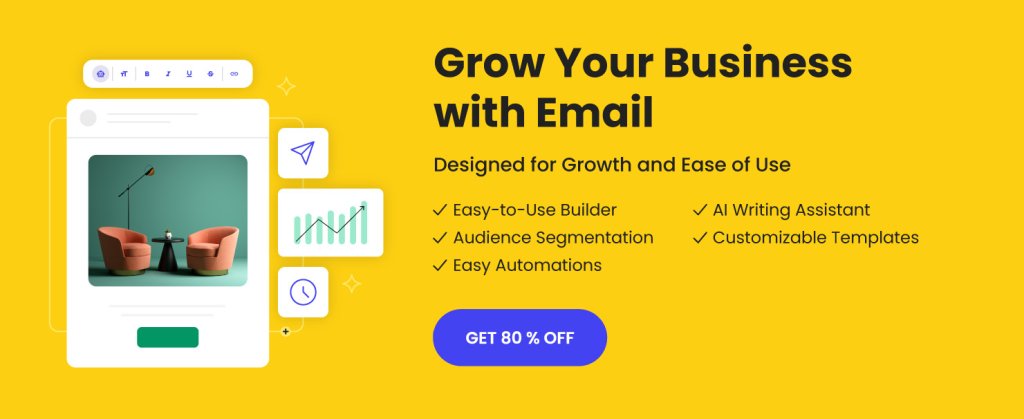
In the world of drip campaigns, triggers, also known as rules, act as the signals that determine when and why a user receives a particular email. It’s important to choose triggers that resonate with your audience to avoid overwhelming them with irrelevant information. Here are the four main types of email triggers you might consider:

Action-Based Triggers

As you can guess, action-based triggers are initiated by a specific action a user takes, either on your website or within your app, like:

  • Sign-Up Confirmation
  • Product Purchase
  • Webinar Registration
  • Abandoned Cart

Date-Based Triggers

Engage with your audience on the days that are important to them—or to you. These automations can be utilized for a range of occasions, including:

  • Subscription Renewal Reminder
  • Milestone Achievement
  • Brand Anniversary
  • Birthdays

Demographic-Based Triggers

Demographics provide valuable insights into your users, allowing for more personalized interactions. Consider factors such as:

  • Gender
  • Age
  • Location

However, it’s crucial to use this information responsibly and respect your audience’s privacy consent.


User Characteristic-Based Triggers

You might also try targeting audience segments based on user characteristics such as:

  • Visit Frequency: How often do they visit your site, or how long do they linger on your premium services page?
  • Account Inactivity: How long ago did they sign up, or make their last purchase?
  • Content Preferences: Which types of content do they engage with most?

💡 TIP: We suggest starting with these automation sequences that every business should implement:
– welcome sequence
– lead magnet delivery sequence
– nurture sequence
– client loyalty sequence
Once you’ve mastered these, you can try setting up drip campaigns based on more advanced triggers.

3. Determine Your Calls to Action

The primary goal of a drip campaign is to guide your prospects through the customer journey by encouraging them to take specific actions. 

To achieve this, each email in your series should include a call to action (CTA) that prompts subscribers to engage in activities that advance them further down your sales funnel, such as:

  • “Download Guide” 
  • “Redeem Your Discount”
  • “Watch Video”
  • “Purchase Now”

To motivate subscribers, it’s important to associate a clear benefit with the action you want them to take. Additionally, the actions subscribers take—or choose not to take—serve as triggers for the subsequent email in the campaign.

4. Plan Out Your Drip Campaign

How many emails should your drip campaign include? How should you space them out? These are crucial questions, and the answers depend on several factors:

  • The type of drip campaign 
  • The complexity of the information you need to convey
  • The length of your customer journey

Research indicates that increasing the number of emails in an autoresponder sequence can lead to reduced engagement. Surprised? After all, nobody enjoys being blasted with emails. 

However, there are a few guidelines to help you hit the sweet spot regarding the number of emails in your sequence and the intervals. Here are a few to consider:

  • Identify the amount and type of content needed to effectively guide a subscriber through your sales funnel.
  • Break your content into small, easy-to-digest chunks
  • Assign the content to each stage of your customer journey
  • Experiment with different drip sequences

5. Don’t Forget to Set Exit Conditions

We’ve talked about setting email triggers; now let’s focus on how your audience exits these triggers—that is, how they finish the email drip campaign. To stop subscribers from receiving your sequence after they’ve already taken the desired action, it’s important to establish exit conditions. These conditions define the specific actions or criteria that, when met, automatically remove subscribers from the campaign, ensuring they only receive relevant content.

Consider a situation where a prospect is enrolled in a drip campaign aimed at gathering feedback. They receive an email requesting feedback about their experience with your brand’s support team. After submitting the form, they expect a thank you email but receive another feedback request instead, leading to confusion. This is not the reaction you want from your prospects, right?

To ensure a smooth process, remember to set exit conditions for your email triggers, which will automatically disenroll a prospect once they complete the desired action.

6. Craft Action-Inspiring Content

Now that you know who you’re targeting, you need to generate a message that’s helpful and grabs their attention. What do you want the customer to do or learn? Based on your answer, write copy that’s clear, actionable, and on brand. 

🔥 Learn how to write marketing emails that people actually read. 

In an email drip marketing campaign, each message should be able to stand alone, even though it’s part of a series. For instance, if a prospect skips the first two emails but engages with the third, they should still be able to follow along and understand the call to action.

Don’t assume subscribers read every email, just as you likely don’t either. Instead, ensure each message provides context and relevance.


[ai_prompts_download]

7. A/B Test Your Drip Campaign

Once you’ve crafted your emails, you might think it’s time to send them out. But wait! To make the most out of your email drips and to continuously improve, it’s important to conduct A/B testing. For an email drip campaign, this means sending slightly different versions of an email to various groups of subscribers to determine which performs best.

You can test each component of your emails to find the optimal combination that drives results. However, remember to change only one element at a time. For instance, try different subject lines or images while keeping everything else constant. This approach will help you identify the specific change that made the campaign more successful, allowing you to fine-tune your drip campaigns.

Examples of Email Drips

Now that you have the know-how to start your drip campaign, here are some real-life examples to ignite your creativity.

1. Welcome Email 

Imagine how bewildered a newcomer might feel during their first encounter with your business. That’s why a welcome email series is an essential first step in engaging a new or potential customer.

This type of drip marketing triggers immediate next steps based on actions users take on your website or app, such as subscribing to your newsletter or creating an account in your application.

Welcome drips allow you to share everything a newcomer needs to know about your business—from your brand’s values and story to your product selection or even a quick guide on how your platform works. This email from Pinterest is a good example.

2. Cart Abandonment

Abandoning a fully loaded shopping cart is unfortunately quite common, but a well-crafted abandoned cart email can encourage customers to reconsider their purchase. Be cautious not to come across as overly intrusive or “big brother”-like. Instead, find a subtle way to say, “We understand, life happens,” without any judgment or pressure.

For example, Meow Meow Tweet sends a light-hearted reminder to customers that something is waiting for them, gently encouraging them to return and complete their purchase.

3. Post-Purchase 

When someone makes their first purchase from you, it’s a great opportunity to thank them, showcase the product’s features, provide tips on getting the most out of it, and reassure them that they made a smart decision.

Expressing gratitude at this early stage of your business relationship can make customers feel like they’re part of a special community, much like this email from Ilia.

4. Order Confirmation

When a customer completes a purchase, an order confirmation email is the initial communication they anticipate from any brand or business. It reassures them that their transaction was successful and provides important details such as shipping information and an order summary.

However, these emails can be more than just a receipt, and Ipsy is a perfect example of that. They even provide a how-to guide in order to educate the customer on how to get the most out of the product.

5. Birthday Celebration 

Sending an email on a customer’s birthday, the anniversary of their first purchase, or another significant event can be an excellent way to reinforce your brand’s value—and might even prompt a purchase.

Take a cue from Little Beast, which remembers to delight its customers, even if those customers aren’t exactly human.

6. Unsubscribe 

While unsubscribing emails might not be the most exciting aspect of a marketing plan, they are essential, particularly when building a high-quality email list.

These emails can be used to try to win back customers by understanding their reasons for unsubscribing, and thus offer valuable insights to enhance your marketing strategy. Alternatively, you can suggest they customize their preferences to receive more relevant information, if this was the problem.

7. Subscription Renew

If your subscriptions don’t auto-renew, design a compelling drip campaign with a clear call to action, urging users to renew their service. Use this opportunity to showcase the advantages of maintaining their subscription, such as access to exclusive content and exciting new features introduced since their last renewal.

For instance, YouTube Premium successfully encourages users to keep enjoying the enhanced experience of their premium service by highlighting what they would miss out on if they don’t renew.

Final Words on Drip Marketing

Drip marketing is like having a friendly digital concierge for your audience, ready to deliver just the right message at just the right time. 

With drip marketing, you can send personalized, timely messages, effortlessly guide prospects through their customer journey, enhance their experience, and build lasting relationships. Whether you’re rolling out the welcome mat for new subscribers, giving a gentle nudge to those who left items in their cart, or assisting someone who has forgotten their password, drip campaigns offer a strategic and efficient way to communicate that saves time and drives results.

The Email Customer Journey – 5 Simple Steps + Examples

The-Email-Customer-Journey

Email marketing can be a scattershot endeavor if you don’t have a strategy. What kinds of emails should you send? And when? The reality is that you need to have a plan – and understanding the email customer journey is absolutely essential to making sure your email marketing efforts are a success. 

So let’s tease out the email customer journey, including each of its stages, as well as email marketing campaign examples to suit every step of the way. 

What Is an Email Customer Journey?

The email customer journey refers to the experience a customer has with a brand through email communication, from their first interaction to becoming a loyal advocate and returning for more. It encompasses every touchpoint where email plays a role in guiding, informing, and engaging customers throughout their lifecycle.Email journeys aren’t just about delivering promotions or newsletters; they are strategic tools designed to nurture relationships, build trust, and drive action at various stages of the customer experience. When done well, email marketing can be a powerful channel for creating meaningful, personalized connections that resonate with customers at the right moment.

What Is a Customer Journey vs. An Email Customer Journey?

A customer journey represents the complete path a customer takes when interacting with a brand, spanning all channels and touchpoints, from initial awareness to long-term loyalty. It includes everything from discovering the brand on social media to making a purchase in-store or online and receiving post-purchase support.

An email customer journey, on the other hand, is a subset of the overall customer journey. It specifically focuses on how email communications guide and support customers through different stages of their interaction with the brand. So while the customer journey encompasses a wide range of channels, the email marketing customer journey – with the help of email automation, which we’ll discuss below – zeroes in on the role of email as a strategic tool for nurturing relationships and driving conversions.

Understanding how the email customer journey fits within the overall customer journey helps brands create cohesive, omnichannel strategies that enable consistency and improve the customer experience across every touchpoint.

What Are the Stages of the Email Customer Journey?

Email-Customer-Journey-Stages

It might seem like the customer process is rather simple – a customer needs something, learns about your brand, likes what they see, buys it, and then end of story, right? But a customer journey is so much more nuanced than this, and understanding its stages can reveal heaps of new marketing opportunities, especially when it comes to email. 

Just like the overall customer journey, email journeys can be broken down into the same key stages, each addressing specific customer needs and behaviors. 

Also, it’s important to note that customer journeys – and email journeys – aren’t necessarily linear. A customer might jump back and forth between these stages, or pass through multiple stages at once. So it’s important to keep this in mind as we dive deeper.

Without further ado, here’s a closer look at these stages and how email plays a critical role in each.

email-customer-journey-types-of-emails

1. Awareness

The awareness stage is where potential customers first learn about your brand, products, or services. Maybe they see a friend using your product, or perhaps they come across your brand at the store. They don’t know much – in fact, they may not even know that they need or want a product like yours. So it’s at this stage that you’ll want to paint the picture for them – one that identifies their pain point, and that positions your business as a possible solution.

In this stage emails can be used to capture attention, generate curiosity, and provide value – and all without being overly promotional. That’s one of the great benefits of email marketing. It’s about helping these potential customers understand that they have a pain point, and – wink, wink – you’ve got a possible solution.

Emails at this stage might include:

During this stage, a brand might send an email with a free guide titled, “10 Tips for Better Time Management,” targeting individuals struggling with productivity. The focus is on providing value and showcasing expertise rather than making an immediate sale.

As you can see in the email journey example below, BeenVerified creates awareness around a specific issue – in this case, identity theft – without specifically promoting the brand itself. This email could have been preceded by a welcome email triggered by someone signing up for the email list. Then this email could be followed by a newsletter that shares industry updates and top tips. The goal is to help the email recipient understand that there’s a problem that needs to be solved – and begin to position BeenVerified as the solution, which will be tackled during the next stage.

email-journey-example-awareness-stage
SiteGround-Email-Marketing-Welcome-Emails

2. Consideration

So you’ve created a bit of awareness. Customers know that a problem exists, and that you might have some solutions. This is the consideration stage – when those potential customers begin evaluating their options and comparing solutions. With that in mind, emails at this stage should provide compelling reasons to choose your brand while more concretely addressing pain points and answering questions as they relate to your own offering.

Emails at this stage might include: 

  • Product comparisons
  • Case studies or testimonials
  • Limited-time offers or free trials

An email at the consideration stage might showcase customer testimonials with a subject line like, “Why Professionals Choose Our Productivity App,” which can help sway hesitant leads by offering social proof and highlighting unique benefits. 

See how at this stage the message has become more promotional? It’s not simply about speaking to the customer’s problem, but how and why you as a business can solve it.

In the example below, the simple text email from Canva taps into the consideration stage by offering up helpful, but not promotional information when it comes to creating ads. Canva could then follow this email with an offer for a free trial of their premium service, encouraging further consideration by the customer.

email-journey-example-consideration-stage

Then, let’s say the customer participates in a free trial. In the below customer journey email example, Canva builds on the free trial by offering testimonials from their community, helping an uncertain customer inch closer to a decision.

email-customer-journey-example-consideration-stage

3. Decision

In the decision stage, customers are ready to make a purchase but might need that final little nudge. Emails here should aim to reduce friction, instill confidence, and encourage immediate action. It’s a step past the “consideration” stage, where you go beyond comparisons, but add that extra touch to make your offer stand out as the best. 

Emails during the decision stage might include: 

  • Abandoned cart reminders
  • Exclusive discounts
  • Personalized product recommendations

So it’s at this point that a retailer might send an abandoned cart email saying, “Your cart is waiting! Complete your purchase today and get 10% off.” This combines urgency and value to drive conversions – and, importantly, it helps that indecisive customer finally tip the decision scale toward a purchase.

In the case of the below email journey example, Pottery Barn reminds this customer of products they’d been eyeing. The goal? To make the decision hard to pass on by offering extra rewards. 

This email could be followed by other decision stage emails, such as one emphasizing that rewards are about to expire. Or perhaps even another email increasing the reward amount.

email-journey-example-decision-stage

In the below email journey example, the haircare brand Prose aims to turn already-captured customer information (customized shampoo formulas) as a selling point to urge purchase. Then if the customer doesn’t bite, they might then send another decision-stage email with an exclusive discount offer.

email customer journey example decision stage

4. Onboarding & Education

A customer has made a purchase – that’s great! But the journey doesn’t even come close to ending here. Keeping this customer happy and coming back for more is one of the most important parts of the customer journey. 

Indeed, once a customer has made a purchase or signed up for a service, the onboarding and education stage ensures they know how to get the most out of their investment. These emails help set the stage for a positive experience and reduce churn.

Onboarding and education emails could include: 

  • Welcome series
  • Tutorials or how-to guides
  • FAQs and troubleshooting tips

So, let’s say you work for a SaaS company. You might send a series of onboarding emails showing users how to navigate the platform, starting with “Getting Started: Your First Steps to Success.” This makes their experience with your service more successful and rewarding, ensuring that they get the most of your product and, you guessed it: it keeps them coming back to you as a customer.

In the below email marketing campaign example, Silly George sent out a post-purchase how-to guide in order to educate the customer on how to get the most out of the product. They could follow this with an FAQ email, and then another email that features different video tutorials. This helps make the customer experience more seamless and enjoyable.

email customer journey example education stage

In the below example, quip sends a post-purchase email that includes tutorials on how to refill, refresh, and track the product, making sure that the customer purchase flows from start to finish. They might send other emails during this stage with video tutorials on how best to brush.

email-journey-example-education-stage

5. Upsells & Cross-Sells

With trust established, the upsell and cross-sell stage focuses on encouraging customers to explore additional products or services. This is ever so important, as existing customers can be one of your greatest sources of business, and they ensure ongoing success. 

Since you’ve already convinced these customers to buy a specific product, now’s the time to leverage your emails to highlight complementary items or premium options that not only might address other customer pain points, but that can even enhance the initial purchase.

This also means that this is when you’re really going to want to get especially strategic about email marketing personalization and segmentation so that you can make targeted recommendations. 

With that in mind, these kinds of emails might cover:

  • Personalized product recommendations
  • Bundling offers 
  • Loyalty program incentives

For example, after a customer buys running shoes, an email offering “Top-rated Running Gear to Complete Your Kit” can introduce related products like socks or water bottles. They’re already using one of your products, and have been educated on how to get the most out of it, so now’s the time to capitalize on the relationship you’ve established to get them coming back for other products. 

The below email journey example leverages a personalized recommendation in order to cross-sell the customer on a related product. Perhaps the customer previously bought a sofa, so now a “hand-picked” rug seems like a logical complement. During this stage, Rejuvenation might send a “buy one, get one” offer, or perhaps a different product recommendation in order to get the customer to buy more.  

email-customer-journey-upsell-stage

In the below example, Prose reaches out to existing customers, encouraging them to buy more so that they can get a free item. This classic upsell and cross-sell is incentivized by the temptation of a free product down the line. During this stage, they could also promote a hair mask that goes with the shampoo the customer already bought, or send an email offering a limited-time shampoo and conditioner bundle.

email-customer-journey-example-cross-sell-stage

6. Retention

Retention emails aim to keep existing customers engaged and prevent churn. By staying top-of-mind and adding continuous value, brands can encourage repeat purchases and maintain strong relationships. 

Indeed, like any relationship in life, you want to make sure your customers know that you’re around, interested in them, and available to address their needs. 

Retention campaigns benefit from visually appealing email marketing design that highlights customer perks, such as exclusive discounts or personalized recommendations, in a way that’s easy to digest.

Here are few email types you might consider sending:

  • Replenishment reminders
  • Exclusive customer perks
  • Seasonal updates

So let’s say you run a skincare brand. You might send a reminder email like, “Time to restock your favorite moisturizer” to encourage repeat orders and maintain engagement. The customer who’s running out of moisturizer could have waited until the last minute and bought the product from another brand that was readily available, but because you checked in, reminded them of their need and just how great your product is, they buy from you instead. You retained that customer!

In the below email, Prose continues to move their subscriber along – this time to the retention stage. They remind the customer that they may need more product, and also that they can modify their shipping frequency. As part of retention, Prose might also send newsletters with tips and tricks, and perhaps emails with hair tutorials – all aiming to enrich the experience and maintain the relationship between company and customer.

email customer journey example rentention reminder

Below, Rejuvenation stays top of mind by sending out regular informational emails that might be of interest to their subscriber base. By adding constant value, they nurture their relationship with customers, and thus remind them to come back for more. As part of this stage, they might also send a “holiday favorites” guide, as well as special offers.

email-customer-journey-example-retention-stage

In the below retention email, Silly George reminds the customer that they’re probably due for a “top up.” This inspires the recipient to take action and make a purchase – and therefore remain a customer. During this stage Prose might also send emails with tips on lash care, as well as how-tos with other beauty advice.

email journey example retention stage reminder

7. Loyalty

Loyalty is a stage that often gets overlooked because it can feel a bit abstract. But it’s in this stage that you create repeat customers.

In the loyalty stage, emails focus on rewarding long-time customers and reinforcing their positive experiences with your brand. This is the phase where you can deepen connections and encourage advocacy.

Key loyalty email types include:

  • VIP offers or early access
  • Milestone celebration emails
  • Loyalty program updates

Once again, think of this as a proper life relationship, where you want to show gratitude so that each person (that is, each customer) knows that they are appreciated, and therefore they will hopefully appreciate you in return (buy continuing to do business with you!). So if you own, let’s say, a coffee subscription service, you could send an email thanking a customer for their one-year anniversary with an email subject line saying “Here’s a special gift for being with us: $10 off your next order.”

Not only have we tackled the loyalty stage here, but also retention. Check and check!

The below email journey example goes the milestone route, making the customer feel extra special. The company does so by wishing the customer happy birthday and offering them a special discount. As part of the loyalty stage, Cuyana could also send an in-store event invite or a special product perk for long-time clients.

email-journey-example-loyalty-stage

Prose moves on to the loyalty stage in this customer journey email example, which offers an extra gift as part of the loyalty program. These kinds of rewards build an ongoing relationship with the customer – one in which the customer feels appreciated and returns as a buyer again and again. To generate loyalty, Prose might also send emails with special loyalty program discounts, as well as early-access emails for new products.  

email-customer-journey-loyalty-stage

In the below example, quip feeds customer loyalty by offering app users various rewards. Not only does it generate dedication from the customer, but motivates them to download and use the app (and therefore add yet another valuable touchpoint with the brand). They could also send an email offering loyal customers a free dental floss, or an email with exclusive access to a new limited-quantity toothbrush. The goal: make these loyal customers feel valued.

email customer journey example loyalty stage

8. Advocacy

Advocacy emails empower satisfied customers to share their positive experiences with others. Because repeat customers are important, but customers who bring in more repeat customers are even better – the benefits are exponential! This stage helps turn loyal customers into brand ambassadors who actively promote your products or services. 

How can you tap into this magic? Consider implementing the following types of emails: 

  • Referral program invitations
  • User-generated content requests
  • Social sharing incentives

To do this, you might send an email with the subject line, “Love our products? Share the joy and earn rewards!” offering a discount for every friend referred. Or, you could offer a discount if customers post on social media and tag you. 

In the below customer journey email example from quip, the company uses a fun play on words to offer a reward to happy customers that spread the word. They could also send an email with an Instagram hashtag contest, or a special discount for providing a product review. 

email-journey-example-advocacy-stage

Who doesn’t want 20% off their next order? During the advocacy stage, Primary uses a compelling discount to get its subscribers to reach more potential customers. Advocacy unlocked – it’s as simple as that.

email-customer-journey-example-advocacy-stage

9. Re-Engagement

It’s probably clear by now the importance of returning customers – so, not surprisingly, if the customers aren’t returning, it’s time to re-engage. As such, re-engagement emails are a type of email designed to win back customers who have become inactive or disengaged. These emails should grab attention and offer hard-to-pass-up reasons to return.

Re-engage with customers with emails such as:

  • “We miss you” campaigns
  • Exclusive comeback offers
  • Feedback requests

In this re-engagement stage, an ecommerce store might send an email with the subject line, “We miss you! Here’s 20% off to welcome you back,” enticing lapsed customers to come back and see what the store has to offer.

The below email journey example from Ritual lets the customer know they’ve been missed, and tempts them to return with a 40% off discount. To further reignite engagement, Ritual could send an email asking for feedback (maybe the customer’s disappointed in the product or service), or an even steeper discount. 

email-journey-example-re-engagement-stage

Below, Cuyana reconnects with the customer to remind them to take advantage of an already-sent discount, hopefully bringing them back for another purchase. If the customer doesn’t make a purchase, Cuyana might send a bigger discount, or perhaps pique the recipient’s interest with an intriguing new product, plus an extra-special offer. Anything reasonable to get the customer back in the loop.

email-customer-journey-example-re-engagement-stage

The truth is you could have a whole email journey about awareness or have a journey that covers multiple stages, such as awareness, consideration, etc. 

So whether you move the lead through the stages with one or multiple journeys will depend on the complexity of your product, business, etc. 

With that in mind, let’s see how to create an email customer journey.

How to Create an Email Customer Journey

Alright, you’re now convinced that you should start paying attention to these email customer journey stages, but how and where to get started? Let’s break it down, step by step.

Customer-Journey-Emails-and-Touchpoints

1. Complete Your Email Journey Mapping

The first step in creating an effective email marketing customer journey is to do customer journey mapping. To do this, you’ll want to identify all the existing touchpoints where a customer interacts with your brand. This includes not only email but also website visits, social media engagement, and in-store experiences. Understanding the full customer experience helps pinpoint opportunities to integrate email effectively into your email customer journey map.

Email-Customer-Journey-Map

2. Identify Gaps in the Customer Journey

Once you’ve done your customer journey mapping, identify gaps in both their overall experience with your brand, and when it comes to your email marketing. Ideally, your email marketing will not only support and enhance the stages of the overall customer journey, but your emails will hit each of the stages as well – making for a complete email customer journey map.

To make this happen, assess where people may drop off or encounter challenges in their email customer journey. Maybe you realize that all of your emails go straight into full-on “consideration” mode – that you’re selling and promoting your product hard from the start, with no real education around the pain point.

Or maybe you make the sale, and then just push your customers out of the metaphorical nest. Off they go with your product, never to hear from you again. You’ve left the entire second half of the customer journey untouched, and lost many customers and potential customers in the process. 

So in going through the process of email journey mapping, take note of those gaps where you either haven’t addressed a stage, or haven’t done so in a thoughtful and thorough manner.

3. Address Customer Journey Gaps

With a clear understanding of your touchpoints and gaps, it’s time to start creating emails and email journeys that cater to different stages we’ve discussed. 

There are two ways to go about this. Either slot in an email to accommodate an unaddressed stage (like, say, an abandoned cart email to get people to make a decision), or create an automated email journey that more thoroughly walks subscribers through a specific stage or even multiple stages.

Review your map and determine where and with what types of messages you can support and nurture each customer through their email marketing journey.

4. Create Automated Email Journeys

As we’ve just discussed, a part of effectively moving your customers through their journey is by implementing automated email journeys. For this, you’ll want to really lean on email automation tools in order to schedule your emails, segment your audience, and deliver personalized content that aligns with their needs. 

This is an integral part of how to do email marketing, as it allows you to guide your audience through the customer journey with minimal effort. It also permits timely delivery, as well as personalized messages triggered by customer actions (and in many cases, these actions represent stages!), such as signing up, making a purchase, or abandoning a cart. 

So, in a basic automated customer journey, you might create a welcome series, where a person signs up for your emails, receives a welcome email (awareness), which is followed by an email with testimonials (consideration), and then an email with a limited-time discount and additional selling points (decision). 

Another journey might be triggered by a customer purchase, which is followed by a how-to guide (education), then by complementary product recommendations (cross-selling), then an email newsletter with brand and product updates (retention), after which you send a “we appreciate you” email with a discount (loyalty), and finalize with a “share with your friends and get a discount” email (advocacy). 

You could bounce back and forth between these stages, reinforcing steps like education, upsells, loyalty, and advocacy. The main goal is to make sure you’re not neglecting any of these stages, and therefore keep your customers moving through them (even indefinitely!).

Effortlessly create automated email journeys with the easy-to-use SiteGround Email Marketing platform. You get everything you need to run successful email campaigns, and at an unbeatable value. It includes features that make it easy to grow your audience, design attractive emails, and run targeted campaigns – and all without advanced skills, thanks to a no-code email builder, AI email writer, free customizable email templates, automated email sequences, high email deliverability, and more. 


Get started now with SiteGround Email Marketing>>

5. Measure & Optimize Email Customer Journey Success

To make sure your email marketing customer journey is effective, you’ll want to track key email marketing metrics. These include open rates, click-through rates, unsubscribe rates, and conversion rates. 

Not only is it important to evaluate each email send, but if you notice that subscribers are falling off at a certain stage – that is, perhaps a certain email is getting fewer clicks than others in your workflow – then you’ll know that this is a possible roadblock in your email customer journey and, therefore, an opportunity for improvement. 

Not sure which changes to make or what will work? Consider A/B testing to experiment with subject lines, content, and design. Continuously analyze performance data to refine and optimize your campaigns, and to make sure that your emails and workflows are moving customers through their journey successfully. 

Final Thoughts on Building an Effective Email Customer Journey

No matter your business, your sales and success depend on a customer journey – and a strategic email customer journey is a critical part of this process. By applying these aforementioned strategies as well as practical email marketing tips, you can build an email customer journey that builds engagement, loyalty, and results. With thoughtful email journey mapping, and ongoing optimization, your email campaigns can form a foundational part of your business’s success.

Start building your email customer journey today with SiteGround Email Marketing. Beautifully designed templates, a built-in AI writer, robust segmentation and automation tools, and easy-to-understand analytics, all will enable you to create a successful email customer journey in no time.

The 2026 SEO Trends That Will Truly Define the Landscape

seo trends

SEO is always evolving, and what worked yesterday might not work today.

With constant updates and new trends emerging, it can feel like a never-ending game of catch-up. But today, we’re cutting through the noise. 

No more talking about mobile optimizations or video trends that everyone keeps repeating. We’re diving into the real changes—six major SEO trends that are reshaping the game in 2025 and beyond.

If you’re not paying attention to these, you’re already behind. Let’s jump in!

[41]

What’s new in SEO? Latest 2025 SEO predictions

AI is the game-changer of SEO in 2025. AI isn’t just influencing SEO; it’s accelerating its evolution. Every trend and development we’re about to cover ties back to this shift, as AI reshapes how Google organizes and delivers search results. But don’t worry—change doesn’t have to be a bad thing. 

We will be sharing strategies to help you fight back and adapt to modern SEO, ensuring you stay relevant and competitive. 

1. AI Overviews and Zero-Click Searches 

Have you noticed organic click-through rates (CTR) dropping? Well, that’s the general current trend and it’s expected to keep decreasing in the future. Google is now answering user queries directly on the search results page with AI Overviews. As a result, organic listings are pushed farther down the page, which means less visibility for your content.

This is part of Google’s bigger strategy to keep users on its platform longer. That’s not new. More time on Google means more ad revenue and more opportunities to engage users with services like Maps, YouTube, and Shopping. What’s changing now is how Google is achieving this.

If you want to understand how SEO will develop in the future, understand Google’s ultimate goal.

This is your best bet to predict future SEO trends. 

What’s interesting is that Google’s Search Generative Experience (SGE) creates these detailed answers by pulling info from various online sources. It even links to those sources, which can actually drive free traffic to your site, despite the drop in overall clicks.

seo trends 2025 ai overview

So, how do you fight back?

  1. Focus on content that’s clear, concise, and easy to scan—so that AI can take the right info from it. AI is designed to extract relevant information quickly, so if your content is too long, too wordy, or not focused, it might not get picked up. Keep your sentences short and to the point —directly answer the question/query— and break up text into smaller chunks—headings, bullet points, and paragraphs help make your content scannable. This way, AI can easily pull out the most important details from your pages.
  2. Optimize your website performance: Slow sites frustrate users and search engines alike. Compress images, clean up code, and make sure your website loads quickly on all devices. 
  3. Add structured data: This is like a map for search engines. Use structured data (like Schema markup) to clearly define elements on your pages—like product details, reviews, or articles. This helps Google better understand and categorize your content, making it easier to get featured in those AI overviews.

Pro Tip: Simplify your images. While Google is improving at interpreting visuals—even without alt text—it still struggles with overly complex or cluttered images, like those generated by AI with intricate elements. Use clear, straightforward visuals and always include descriptive alt text for better SEO and accessibility.

When all of this is in place, Google is more likely to trust your site, pick your content for AI-generated answers, and rank you higher—because your content is both user-friendly and machine-readable. 

So that’s how you can adapt to these SEO trends today.

2. UGC (User-Generated Content) and Forums

On the other hand, as AI-generated content becomes more prevalent in search results, people are craving real, authentic insights from actual users. 

That’s why by 2025, SEO experts predict search engines will prioritize platforms like Reddit, Quora, and niche communities. Why? Because these sites offer genuine discussions, honest recommendations, and practical advice that users trust more than AI content.

seo trends 2025 user generated content forums and discussions

To stay ahead of the curve, you need to:

  1. Encourage user-generated reviews and comments. Whether it’s on your website, product pages, or social media, make it easy for users to share their thoughts. Respond to reviews, ask for feedback, invest in off-page SEO, and create spaces where your audience can engage with your brand. The more real, authentic conversations you can spark, the better for modern SEO.
  2. Focus on long-tail keywords and user questions—these will be the key to attracting organic traffic. Instead of just targeting broad keywords, think about the specific questions your audience is asking. Long-tail keywords—phrases that are more detailed and less competitive—are perfect for capturing users in the research phase. For example, instead of just “best running shoes,” try something like “best running shoes for flat feet.” These are the kinds of searches that people make when they’re looking for real, practical answers.
  3. Leverage video content: And here’s something else to keep in mind: video content, especially on platforms like YouTube, is expected to grow. Videos feel more personal, and users trust them more. So, if you’re not already incorporating video into your strategy, now’s the time to start as it is one of the current SEO trends more valued by end users.

3. NEEAT

If you are up to date on the latest SEO developments, you’ve most likely heard of EAT or even EEAT. Now, in 2025 you will be hearing a new term: “N-E-E-A-T”, which stands for Notability, Experience, Expertise, Authoritativeness, and Trustworthiness 

With the rise of AI-generated content, Google has upped its game with NEEAT. They now want to see that the people creating content are true experts with real, recognizable credentials. So that’s where that new N comes into place.

So, what does that mean for you? SEO predictions claim that Google is rewarding brands that clearly highlight their authors’ expertise and achievements. It’s not just about having good content—it’s about showing you’ve got the right people behind it. To succeed, make sure to:

  1. Feature detailed author bios, credentials, and any relevant achievements.
  2. Use author schema markups to help Google recognize who’s behind your content.
  3. Be transparent about who’s creating the content—trust is key.

The more you can prove your authors’ authority and expertise, the better your chances of earning Google’s trust and ranking higher.

Pro Tip: Expertise will become essential throughout 2025, but impactful content will still be a must. Rather than replicating competitor designs and rephrasing their text, develop original, value-driven content that demonstrates a deep understanding of your audience’s needs and challenges.

4. Topic clusters

Thanks to AI, creating content has become so effortless that many websites are churning out countless new pages in the hopes of gaining a few extra clicks. 

However, Google rewards websites that stick to a unified, brand-focused message. That’s because it helps Google understand your authority in a specific area. If your content is all over the place, it becomes harder for search engines to know what you really specialize in.

If you want to succeed at modern SEO, a great way to organize your content is by using content clusters or keyword universes. This doesn’t simply mean internal linking but crafting content that is contextually connected and expands on specific aspects of a broader topic. 

Group related content together around key topics. But be sure to focus on content around topics that align with your brand’s core expertise. For example, if you’re an expert in email marketing, create clusters around subject lines, email design, email campaigns, etc. This signals to Google that you’re an authority in that niche –while maintaining relevance to the overarching topic.

5. Crawling and Indexing Frequency

As mentioned earlier, AI generates vast amounts of content, and to curb its misuse, Google has recently started reducing the frequency with which it crawls and indexes websites.

This means Google is now crawling sites less frequently, which can impact how quickly your content gets updated in search results. Why are they doing that? They’re optimizing their algorithms to save resources. 

Unlike Bing and Yandex, which use systems like IndexNow to detect and add new content quickly, Google hasn’t adopted anything like that yet, but it could be something we will see in the near future. We’ll have to stay tuned for these kinds of SEO developments, which are likely to happen sooner or later. 

For now, how do you fight back?

  1. Update your content regularly. Fresh SEO-optimized content signals to Google that your site is active and up-to-date. It’s a great way to keep your pages relevant.
  2. Invest in technical SEO to make sure your site is easy for Google to crawl efficiently. As we’ve said before: ensure your pages load quickly, use structured data to clearly define content, and make sure your site is mobile-friendly. 
  3. Leverage internal links: Internal links are the links that connect one page on your website to another. When you link relevant pages together, it helps Google navigate your site more easily. Google can discover new pages faster and understand how your content is connected as well as its hierarchy. 

Internal links also help pass on “link juice”—the value passed through links—across your website. This boosts the authority of your most important pages and helps them rank better. To make this work, focus on linking your key pages together naturally and logically, making sure your most important pages are just a few clicks away from the homepage.

6. First-Party Data & Privacy

SEO is no longer just about driving traffic—it’s about driving conversions. 

With the phase-out of third-party cookies and growing concerns over data privacy, leveraging first-party data is becoming essential as part of your SEO strategy. 

First-party data is the information you collect directly from your own users—things like email sign-ups, surveys, and customer feedback. As opposed to third party data, where the data comes from a domain different from yours. Third-party cookies are most frequently used for online advertising. 

But what does it have to do with SEO trends? Well, Google is favoring privacy-friendly approaches, so keeping your site compliant with privacy laws like GDPR, CCPA, and others is critical. Not only does it protect your users’ data, but it also helps avoid potential penalties and builds trust with your audience.

As we’ve seen, SEO in 2025 is all about adapting to a landscape that’s increasingly influenced by AI. 

The good news? These SEO trends are also opportunities. By staying proactive—creating scannable, AI-friendly content, building trust with N-E-E-A-T standards, and prioritizing user-generated engagement—you can not only keep up but thrive in this new environment.

The key takeaway? Stay flexible, focus on quality, and never stop learning. SEO is a constantly evolving field, and those who adapt will stay ahead of the curve.

All You Need to Know to Increase Traffic to Your Website

how to increase traffic to your website

Having a website is essential to any business, but driving traffic to it is what truly fuels success. Without website traffic, even the most stunning website can remain unnoticed. Whether you’re a business owner, blogger, or entrepreneur, increasing traffic strengthens your online visibility.

In this blog post, we’ll explore how to increase organic traffic to your website, equipping you with the most important tactics and insights needed to grow your online presence.

How to Increase Your Website Traffic for Free

There are numerous ways to increase website traffic for free, allowing you to attract more visitors and expand your reach without costly investments.

However, you wouldn’t want just any free traffic, but qualified traffic. While general traffic brings a wide audience to your website – which usually results in lower engagement rates and less conversions – quality traffic drives visitors who are genuinely interested in your brand. They are easier to engage and eventually convert into customers.

In this article, we’ll focus only on those strategies that have proven helpful in driving qualified traffic and growing audiences organically.

Let’s explore how to attract the right kind of visitors to your website––without spending a penny!

1. Optimize Your Website for SEO

One of the most effective ways to increase organic traffic to your website is to optimize it for search engines. Search engine optimization (SEO) involves several strategies and techniques that make your site more appealing to search engines like Google; thus, improving your rankings and visibility.

Here’s what to focus on first when optimizing your website for SEO:

  1. Incorporate keywords

Conduct thorough keyword research to identify the terms and phrases your target audience is searching for by using tools like Ahrefs. Incorporate these keywords naturally into your website’s content, including titles, headings, and meta descriptions. That said, avoid keyword stuffing, as this can harm your rankings. If done right, every page on your site should have a main keyword assigned to it.

  1. Submit a sitemap for search engines

A sitemap is a file that provides information about the pages, videos, and other files on your site, and the relationships between them. Once you’ve worked on your pages and have them well organized, create and submit your sitemap to search engines like Google. This will help them crawl your site more effectively, and make sure that your most important pages are indexed.

  1. Use internal linking

Internal links are another way to show which pages on your site are related. By connecting different pages within your website, you help users navigate your site more easily, and distribute page authority throughout your site. Meanwhile, don’t forget to use descriptive anchor text to improve user experience and SEO.

To stay ahead in the world of SEO, check out our video: SEO in 2025: 6 Trends Truly Changing The Landscape.

2. Create New Content and Repurpose Old Content

You’ve got your pages, and you have your keywords. But how do you attract users to your site? With content. 

Creating fresh content and repurposing existing material are powerful ways to increase website traffic and attract a quality audience. 

Here’s how you can improve website content through these two strategies:

  1. Creating new content

To keep your audience captivated and attract new visitors, you need to consistently produce new content. Focus on creating high-quality, relevant, and valuable content that addresses your audience’s needs and interests. Use a variety of formats, such as blog posts, videos, infographics, and podcasts, to cater to different preferences. Concentrate on trending topics as well as evergreen themes to secure a steady stream of quality website traffic. Additionally, incorporate keywords to stay relevant and elevate your SEO efforts.

  1. Repurposing old content

Don’t let valuable content gather dust—repurpose it to reach new audiences and extend its lifespan. Identify high-performing or evergreen content and transform it into different formats. 

For example, turn a detailed blog post into a video tutorial, an infographic, or a podcast episode. This not only diversifies your content offerings but also reinforces your message across multiple platforms. Repurposing content can breathe new life into your website and attract new visitors who may have missed the original material.

These practices will enable you to continually improve website content, while it remains fresh and appealing. These approaches will not only maintain your current audience, but also draw in new visitors, contributing to sustained growth in website traffic.

3. Leverage Guest Blogging and PR

Guest blogging and public relations (PR) are potent strategies to generate website traffic and enhance your online visibility. Share your expertise on reputable platforms and interact with media, so you can reach new audiences and establish authority in your field.

Here are the steps to follow in order to master guest blogging and PR:

  1. Identify relevant platforms

To maximize the impact of guest blogging, target websites and blogs that align with your industry and audience. Look for platforms with a strong readership and high domain authority to ensure your content reaches a broad audience. This will help you improve your credibility and serve as a direct method for increasing traffic to your website.

  1. Create valuable content

When guest blogging, go for delivering insightful, high-quality content that provides value to the host site’s audience. Tailor your content to address their interests and needs while subtly integrating your expertise. In this way, readers will be incentivized to visit your website for more information.

  1. Engage in PR

Public relations efforts can amplify your reach and visibility. Build relationships with journalists, bloggers, and influencers in your industry to gain media coverage and mentions. Craft compelling press releases and pitches that highlight your unique offerings, achievements, or insights, making it easier for media outlets to feature your brand.

  1. Build social proof

Share your guest posts and media mentions on your own social media channels and website. Diversify the platforms where you share, such as LinkedIn, Facebook, or X. they will help you get better exposure and build social proof by demonstrating your authority and credibility to your audience.

4. Post on Social Media Platforms

Social media platforms are indispensable tools for driving traffic to your website. Post strategically on popular platforms like Facebook, LinkedIn, Instagram, X (formerly Twitter), TikTok, and Pinterest. This will help you reach a vast audience and direct visitors to your site.

Here’s how to increase traffic to your website through social media:

  • Understand your audience

Each social media platform attracts different demographics and user behaviors. Tailor your content to fit the preferences of your audience on each platform. For instance, LinkedIn is ideal for B2B content and professional insights, while Instagram and TikTok are more suited for visually appealing and entertaining content.

  • Create compelling content

Develop content that resonates with your audience and encourages interaction. Use a mix of formats, such as images, videos, stories, and polls, to capture attention. Interactive content is more likely to be shared, expanding your reach and driving more visitors to your website.

As a matter of fact, producing video content has recently emerged as a powerful tool in the realm of website traffic generation strategies. Videos are highly likeable and can convey complex information quickly. Produce high-quality videos that align with your brand’s message and audience interests, delivering value, whether through tutorials, product demonstrations, or storytelling.

  • Optimize posting schedules

Timing is crucial when it comes to social media. Research the best times to post on each platform to maximize visibility and engagement. Additionally, consistent posting helps maintain your presence and keeps your audience engaged.

  • Utilize platform-specific features

Leverage unique features of each platform to upgrade your content. Use Facebook and Instagram Stories, LinkedIn articles, X threads, TikTok challenges, and Pinterest pins to diversify your content and capture attention. These features can help you stand out and attract more visitors to your site.

  • Include clear calls to action

Always include a call to action (CTA) in your posts, directing users to visit your website for more information, to read a full article, or to explore your products and services. Directing users with a clear next step can significantly boost website traffic.

  • Interact with your audience

Social media is a two-way street. Respond to comments, participate in conversations, and build relationships with your followers. Active communication fosters community and motivates users to explore your website further.

5. Participate in Online Forums and Groups

As a next step, participate in online forums and groups in order to increase your website’s visibility and drive targeted traffic. Platforms like Reddit and Quora offer unique opportunities to interact with niche communities and establish your expertise. 

Here’s how to get website exposure through these channels:

  1. Identify communities

Start by finding forums and groups that align with your industry or niche. On Reddit, look for subreddits where your target audience is active. On Quora, follow topics related to your expertise. Get involved in these spaces in order to connect with users who are already interested in your field.

  1. Provide value

The key to successful participation is offering genuine value. Answer questions, share insights, and contribute to discussions with well-informed responses. Avoid blatant self-promotion; instead, build trust and credibility. When users perceive you as a knowledgeable resource, they are more likely to seek out your website for further information.

  1. Include thoughtful links

When appropriate, include links to your website in your responses. These links should be relevant and add value to the discussion. For example, link to a blog post that provides a deeper dive into the topic at hand. Be careful, though, as including too many links could be considered a spammy strategy.

If you’re looking to build high-quality backlinks while maintaining credibility, consider collaborating with a link building agency that can help you secure placements on reputable sites in your niche.

  1. Take part consistently

Regular participation is crucial for building a presence in online forums and groups. Set aside time to get in touch with these communities consistently. This ongoing interaction helps solidify your reputation and keeps your website top of mind for community members.

  1. Monitor and adapt

Pay attention to the feedback and engagement your contributions receive. Use this information to refine your approach and better serve the needs of the community. Be responsive and adaptable to get even more website exposure and establish your authority.

6. Organize Webinars and Live Events

Webinars and live events are interactive formats that allow you to showcase your expertise, connect with your audience in real-time, and inspire participants to explore your website further. 

Here’s how to increase traffic to your website through webinars and live events:

  1. Begin by selecting topics that resonate with your audience and address their needs or pain points. Choose subjects that are directly relevant to your niche. You will attract participants who are genuinely interested in what you offer, thereby driving targeted website traffic.
  2. Second, use multiple channels to promote your webinars and live events, such as social media, email newsletters, and your website. Create visually appealing promotional materials that highlight the value and benefits of attending your event.
  3. Next, deliver high-quality content that offers actionable insights and solutions. Make sure your presentation is informative and well-structured, leaving participants with a positive impression and a desire to learn more from your website. During the event, actively communicate with participants through Q&A sessions, polls, and interactive discussions.
  4. At the end of your webinar or live event, guide participants to your website in order to get traffic to your site. Whether it’s downloading a resource, signing up for a newsletter, or exploring related content, provide a direct pathway for attendees to continue engaging with your brand online.
  5. After the event, send follow-up emails to thank participants and provide additional resources or links to your website in order to keep your brand top of mind.

7. Utilize Email Marketing

Email marketing is perhaps the best way to drive traffic to your website. By crafting targeted and valuable email campaigns, you can nurture relationships, keep your audience informed, and prompt them to visit your site. 

Here’s how to do email marketing effectively:

  1. First and foremost, you need to build a quality email list. Grow a list of subscribers who are genuinely interested in your content or offerings. Implement sign-up forms on your website, offer lead magnets like eBooks or how-to guides, and comply with privacy regulations to build a relevant list.
  1. As a next step, send regular email campaigns. These are a great way to keep your audience updated on the latest news, blog posts, or products and services. Deliver content that is valuable and relevant to your subscribers. Include snippets that entice readers to click through to your website for the full story or additional resources.
  1. Design visually appealing emails. Highlight special offers, events, new products or services launches. Make sure that these emails clearly communicate the benefits of taking action. Include strong CTAs that direct readers to specific landing pages on your website.
  1. Personalization can also significantly increase engagement rates. Use your subscribers’ names and tailor content based on their preferences or past interactions with your brand. Personalized emails make recipients feel valued and more likely to click through to your website.
  1. Additionally, segment your email list based on demographics, behavior, or interests to send more targeted and relevant content. Address the specific needs of each segment, so that you can increase the likelihood of driving traffic to your website.
  1. Last but not least, regularly review your email campaign performance using metrics like open rates, click-through rates, and conversions. These insights will help you refine your strategies, experiment with different content types, and improve your overall approach to email marketing.

It’s That Easy to Drive Traffic to Your Website

Having mastered the best practices, it’s never been easier to increase website traffic! 

Go ahead and implement these strategies in your marketing efforts and see the results for yourself.

We’d love to hear from you––let us know in the comments below which tactic worked best for expanding your online presence.

How to Do Email Marketing: An Easy Guide for Beginners

how to do email marketing

Email marketing is undoubtedly one of the most powerful tools that you can use to drive sales to your business and build stronger relationships with customers. Whether you’re a business owner or a freelancer, learning how to do email marketing can help you grow your brand. 

If you’re new to it, however, the whole process can seem overwhelming – from building an email list, setting up campaigns, creating email content to measuring results with analytics. 

But don’t worry! In this email marketing guide, we’ll cover the essentials and walk you through everything you need to know to get started and do email marketing easily.  

What Is Email Marketing

Email marketing is a direct and highly effective way to communicate with your prospects and clients. It involves sending targeted email campaigns to a specific group of people (leads or customers) to promote a new product, share a special offer, or simply stay in touch.

Unlike other forms of digital marketing, email marketing doesn’t require a huge budget or technical expertise, making it accessible to just about anyone.

Why Is Email Marketing Important for Your Business

Email marketing brings various benefits to all types of businesses, but here are some of the key ones. 

First and foremost, it offers one of the highest returns on investment (ROI). The average ROI generated is $36 for every $1 spent on email marketing. This makes it one of the most cost-effective ways to reach your audience and grow your business compared to other marketing methods and channels.

But it’s not just about the money. Email marketing also plays a vital role in nurturing relationships with your customers or leads. By sending personalized, relevant, and useful content, you can stay top-of-mind with your audience, build trust, and keep them engaged. This ongoing communication helps move leads through the sales funnel, ultimately converting them into customers.

Another major benefit is that email marketing provides measurable results. You can track open rates, click-through rates, conversions, and other metrics that tell you exactly how well your campaigns are performing. This data allows you to continuously optimize your email campaigns and strategy, and make informed decisions.

How to Do Email Marketing Step-by-Step

Now that we’ve discussed why email marketing is so critical for your business, let’s break down the process of how to do email marketing yourself into easy-to-follow steps.

1. Identify Your Audience

When getting started with email marketing, the first step is identifying your audience. Understanding who you’re sending emails to is key because it allows you to speak directly to their specific needs. When you know your audience well, you can craft content that resonates with them, making your campaigns way more useful and interesting. 

Consider key demographic factors like age, location, gender, occupation, and interests. For example, if you’re selling high-end skincare products, your target audience might include women aged 25-45 who are interested in health and beauty. 

Narrowing your focus helps ensure that you’re not wasting time and effort on people who aren’t interested in your product or service. Overall, defining your audience clearly will help you send more relevant, engaging content and increase the chances of converting prospects into clients.

Here’s a nice example of a company identifying the needs and use cases of their customers and using the information to tailor their messaging.

In email marketing, you can use a similar approach – understanding the unique needs of your audience will help you adapt your content more effectively. Further segmenting your audience based on even more precise criteria can be especially beneficial, but we will go into this in more detail below.

2. Set Clear Email Marketing Goals

Another thing that will help you have effective content and campaigns is setting specific, clear goals for your email marketing efforts. Without clear objectives, your campaigns can quickly become unfocused or even feel spammy. So, take a moment to think about what you want to achieve. 

Are you looking to drive sales, boost brand awareness, generate more leads, keep customers engaged, or build stronger loyalty with your existing clients? Your goals will guide everything from what types of emails to send to how and when you send them. 

For instance, if your goal is to generate leads, you might send educational content with a clear call to action that encourages subscribers to sign up for a webinar. Or, if you’re aiming to increase recurring customers, your emails might feature special offers or limited-edition items. 

The easiest way to define your goals is by thinking about your business needs, and what it is that you want to accomplish in the short and long term.

3. Choose an Email Marketing Platform

Your email marketing platform is the backbone of your entire email strategy. It’s the tool that enables you to craft, send, and track your campaigns with ease, streamlining tasks that would otherwise take hours.

The right platform can help you design eye-catching emails, grow and manage your subscriber list, create templates, run test campaigns, automate messages, and track important metrics like open rates and clicks. When choosing your platform, think carefully about which features matter most for your business. 

Define your priorities, then look for a platform that matches both your needs and budget.

💌 At SiteGround, we’re happy to have created one of the easiest-to-use, yet powerful email marketing platform. With the SiteGround Email Marketing Platform, you get everything you need to run successful email campaigns at an unbeatable value. It includes features that make it easy to grow your audience, design beautiful emails, and run targeted campaigns – and all without advanced tech skills, thanks to a no-code email builder, AI email writer, free customizable email templates, automated email sequences, high email deliverability, and more.

siteground email marketing platform

4. Start Building and Growing Your Email List

Once you’ve defined your audience, set your goals, and chosen an email marketing platform, it’s time to start building your email list. If you already have a website, the easiest way to start collecting subscribers is through sign-up forms. You can create them yourself, use an external tool, or leverage your email marketing platform in case it offers that functionality.

At SiteGround, we’ve taken the hassle out of this process by offering a lead generation plugin for WordPress, built to integrate seamlessly with our email marketing tool. In just minutes, you can create a sign-up form and add it to your site without coding.

You can also grow your list by offering a lead magnet, such as a freebie or discount, in exchange for emails. For example, you may create a sign-up form that promises a 10% discount on the first purchase, or a free ebook that gives useful tips to your audience or solves a common problem they might have. You can promote your lead magnet on various pages of your website, and share it on your social media channels to increase visits and sign-ups.

Offline events and opportunities could also help you grow your list. If you attend industry conferences and meetups, for instance, you could collect emails by setting up a sign-up station or using QR codes that link to your form. Collaborating with influencers or affiliates is another way to get new subscribers.

Don’t forget to offer them unique incentives (discounts or referral bonuses) to promote your product and subscriber list, and consider running limited-time promotions they can share with their followers. For more detailed tips and tricks, check out our guides on how to build an email list and proven email lead generation tactics.

5. Segment Your Email List for Maximum Impact

Another email marketing tip is dividing your subscriber list into smaller, more specific groups. Segmentation could be based on different criteria like demographics, purchase history, behavior, or where they are in the customer journey. 

This approach helps you connect more meaningfully with subscribers, as each segment will receive content that’s directly applicable and useful to them. For example, let’s say you run an online clothing store. You might create segments for recent customers who purchased a specific type of clothing, loyal customers who buy regularly, and new subscribers who haven’t yet made a purchase. Based on your segments, you could send tailored content like a promotion to recent buyers, a sneak peek of upcoming new products for loyal frequent shoppers, and a welcome discount for new subscribers.

6. Create the Perfect Marketing Email

Creating the perfect marketing email requires great design and content, and it starts with understanding the type of email you’re sending. Some of the most effective email types include welcome emails, promotional emails, newsletters, lead nurturing emails, transactional emails, and re-engagement emails. Each of these has a unique purpose, so it’s important to adapt your content to match the goal of each email type.

Design also plays a huge role in creating the perfect marketing email. A modern, visually appealing layout can make all the difference in keeping your readers interested. Be sure to use a responsive layout so your emails look great on any device, whether it’s a desktop, tablet, or mobile screen. Maintaining consistency with your brand colors and fonts across all emails will also reinforce your brand identity. 

In terms of content, one of the most crucial elements is the subject line. This is the first thing your subscribers see, so your subject line must be short, relevant, compelling, and ideally personalized. It should grab attention and highlight the value your email provides. When it comes to the body of the email, keep it concise and aligned with your audience’s needs and your marketing goals. People’s time is precious, so make sure your message delivers value quickly and clearly.

And, of course, every email needs a clear call to action (CTA). You must tell your subscribers exactly what you want them to do. Whether it’s clicking a button, visiting an article, or making a purchase, the CTA should be visible and compelling. 
Experiment with different types of CTAs – buttons, links with anchor text, or images to see what works best with your audience.

🔥With the SiteGround Email Marketing Platform, creating beautiful, effective emails is easy. You can design your own email layouts to structure your content or use customizable, ready-made templates to get a professional look with minimal effort. We’ve also removed the hassle of writing your email copy thanks to the help of our AI assistant, which can craft the email text for you. Here is a cheat sheet with email prompts you can use for this purpose.

7. Test and Send Your Email

Once you’ve crafted your email, the next step is testing it. Don’t overlook this step! Test your email to ensure everything looks great, and don’t forget to check it on mobile devices too, as most people read emails on their phones these days.

To take your optimization even further, try A/B testing. This means sending different versions of your email to small groups of recipients to see which one performs better. Experiment with different subject lines, email body content, CTAs, images, and even the timing of when you send your emails. With testing, you can gather insights into what your audience responds to best, and refine your approach.

8. Track and Improve Your Email Marketing Campaigns

Tracking the email metrics of each email campaign is necessary so that you can measure the effectiveness of your campaigns and continuously improve them. These metrics give you insight into what’s working and what you can optimize. Here are the top email marketing metrics to pay attention to:

  • Open Rate: It shows how many people opened your email. Reveals whether your subject line is attention-grabbing and if your emails are reaching people at the right time.
  • Delivery Rate: This reflects how many emails were successfully delivered to subscribers. A low rate could signal issues with your email infrastructure or reputation.
  • Click to Open Rate (CTR): This tells you how many recipients clicked on links in your email. It’s a good indicator of whether your content is engaging and valuable.
  • Bounce Rate: This measures the percentage of emails that failed to deliver. High bounce rates could indicate problems with your email list or the quality of your content.
  • Spam Complaint Rate: This shows how often your emails are marked as spam. A high rate could suggest that your content isn’t resonating with your audience or that you’re sending too many emails.
  • Unsubscribed: This tells you how many people unsubscribed from your list. If the rate is high, it might mean your content isn’t hitting the mark or that you’re emailing too frequently.

Start Your Email Marketing Journey Today 

We hope this email marketing guide has given you the know-how to dive into email marketing confidently. You can also check our email marketing course and build your way to advanced techniques. Remember to focus on delivering value, keeping an eye on your results, and improving with each campaign. When you’re ready, kick off your first campaign smoothly and stress-free with the SiteGround Email Platform.

How to Do Email Marketing FAQs

Can I Do Email Marketing Myself?

Most definitely! By using the right email marketing platform, you can do email marketing yourself without needing advanced tech skills. This will streamline many time-consuming tasks, like managing subscribers, designing emails, testing and sending campaigns, creating automated email journeys, and even writing the content.

How to Do Email Marketing for Free?

It’s possible to start email marketing for free, as some email tools offer free plans with basic features. But keep in mind that free plans often come with limitations. Most free tools provide only the most basic features, which you can quickly outgrow and find insufficient as your business expands. 

You might find yourself restricted by the number of emails you can send, the quality of design options, and access to important analytics.

For more professional results, it’s advisable to invest in a robust email marketing tool, like SiteGround’s Email Marketing Platform, which can equip you with all essential features from the start.

When It Comes to Email Marketing, What Do We Mean by the Term A/B Testing?

A/B testing is when you send two different versions of an email campaign to small segments of your audience to see which one performs better. For example, you might test two subject lines, different CTAs, or images to find out what grabs attention or drives more clicks. This testing helps you better understand what resonates with your subscribers.