If you want to grow your small business, digital marketing is the modern way to reach results that bring your business success. This is especially true with the consistent growth of technologies, online communication, and social media platforms.
Digital marketing for a small business isn’t limited to paid ads and posting on social media. For an all-around effective strategy, it’s crucial to include SEO, content marketing, and email marketing, as well.
Whether you run a full-on e-commerce business or a brick-and-mortar store, these digital marketing tips will help you get more online engagement with your audience and conversions.
Forms of Content Marketing
As a marketer, you’ve likely come across the saying “content is king.”
Content brings many benefits like building trust with your audience, generating leads, and establishing your business as an authority in your niche.
In fact, according to Demand Metric, content generates three times as many leads as outbound marketing, drives six times higher conversion rates, and potentially has a 7.8-fold boost in web traffic.
Content marketing is too valuable for brands and customers to ever go away. That’s why scaling your content marketing is a winning digital marketing strategy for your business.
So, what’s included in content marketing?
Blog Content Marketing
Blogs are a powerful type of inbound marketing and allow for flexibility in terms of topics and purposes. You can use them to promote internal and external content and blog articles via links, add social share buttons, and incorporate product information.
Take OptinMonster, for example. It’s now a huge company under AwesomeMotive’s wing, but it wasn’t always like that. They got there by consistently creating high-quality content and sticking to a publishing schedule.
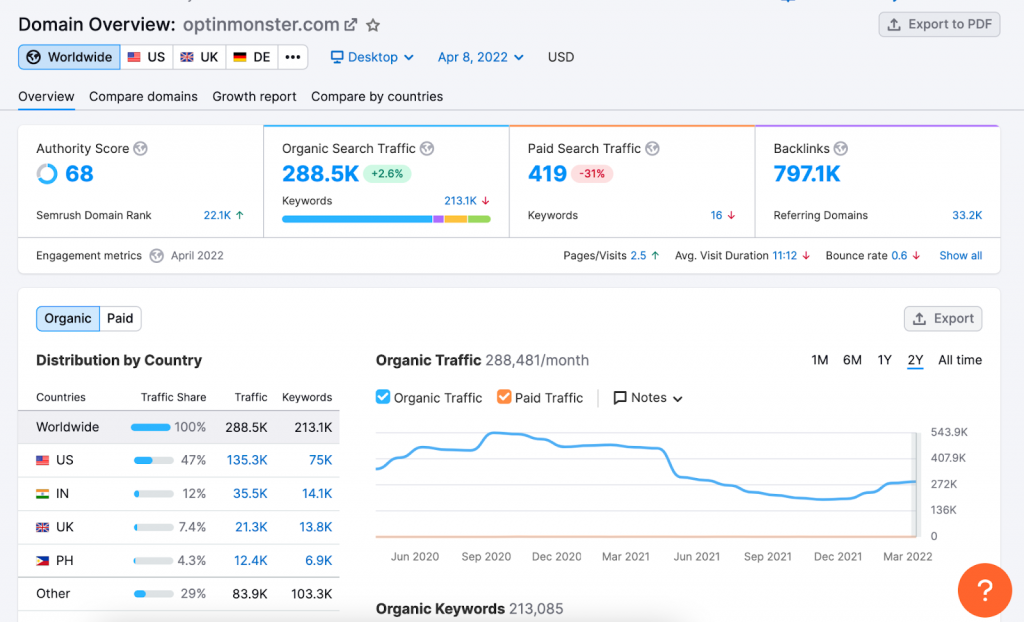
More specifically, OptinMonster excels at pillar posts. Pillar posts are long-form content to inform the reader deeply on a topic. They usually steer away from salesy language and are extremely actionable. Another word is 10x content.
Creating longer and more informative articles like OptinMonster rather than shorter, lower-quality ones will help your business long-term since it builds trust with readers and they generally prefer this kind of content.
And you can achieve a consistent blog posting schedule with a content calendar and keyword mapping. It will help you visualize your projects and stay on track with publishing.
Social Media Content Marketing
Social media has become so widely used across the globe, amounting to an entire 4.65 billion users, according to Kepios. With that said, smart marketers know not to skip social media in their small business digital marketing strategies.
You can use many platforms like Facebook, Instagram, Pinterest, Twitter, LinkedIn, and even Snapchat. You can share current discounts, product releases, and show off your brand culture through posts and stories. Plus, social media is an excellent outlet to grow brand awareness and engage your audience.
According to a HubSpot case study, a small business generated $1.2 million in revenue from its social media marketing strategy. $1.2 million results are an excellent incentive to start a social media marketing strategy. The biggest hurdle is time as a social media strategy doesn’t get created and executed overnight. It takes time to see results.
Video Content Marketing
Video content marketing is a fairly new strategy that encapsulates the principle of producing and sharing relevant video content to your target audience to create interest and attract leads.
Video content has become increasingly popular over the last few years. For example, a study by BusinessofApps shows that YouTube now has 2.3 billion monthly users. And, an entire 69% of consumers say that they prefer to learn about a brand’s product or services through video content rather than any other form (as per Wyzowl’s statistics).
To create videos for your marketing campaigns, remember that video marketing is to educate your audience. Educate them on how your product works, the benefits, where it can be used, case studies, and success stories on how clients have used it in the past, etc.
Here are some more tips on creating successful video marketing campaigns:
- Center your videos around the story, not the sale
- Hook the viewers in the first ten seconds with a captivating intro
- Use humor, animations, and effects
- Upload your videos on your own domain before uploading on sharing sites to drive maximum SEO value
- Use video to educate and prove yourself
You can upload your videos on social media platforms like Facebook, YouTube, Instagram, or landing pages. All you need is a good camera (iPhone works excellent) and editing software like iMovie or Adobe Premiere Pro.
Podcast Content Marketing
Podcasting can add a new dimension to your brand and content marketing strategy. There are many ways you can approach podcasting, utilizing different mediums, channels, and distribution methods.
Some of the top benefits of podcasting for your brand include:
- The current popularity of podcasting
- Ease of entry with inexpensive equipment and free uploading
- You can turn any content like videos and blogs into a podcast
- There’s a lot of potential for collaboration
- Break into new audience segments
With those benefits in mind, the best way to think about podcasting in content marketing is to think of it as a new marketing channel. Content marketing always has the same goal: to reach people and generate new leads. This could mean providing answers to questions (essential for SEO) or entertainment in podcasting.
Grow Your Email List
The email list is the heart of your business, and without it, that heart would fail to beat. And essentially, email marketing remains one of the most effective digital marketing for small business strategies today.
Unfortunately, there are so many elements that can cause your email list to shrink, such as:
- The subscriber has changed companies and now has a new email.
- The subscriber gave you their spam email, which they rarely check.
- The subscriber has unfortunately decided that your content isn’t for them anymore and has unsubscribed.
Did you know that an average email list decays approximately 22.5% every year, according to Marketing Sherpas? So that’s basically a quarter of what you have!
As sad as all of that sounds, it’s part of your content life cycle, frankly inevitable.
Wherever you are right now with your list in terms of numbers, let’s talk about some ways to grow and maintain your email list.
Insert Subscribe and Social Share Buttons on Your Pages
Don’t feel restricted to only adding subscribe and social share buttons on your homepage. You can put it on all of your content pages. Besides, once people get further into your blog’s pages, they’re unlikely to return to the homepage.
You can include them in different places like the sidebar, header, and footer. You can add a subscribe bar in the footer of each page of your website or blog. Or include social share buttons in its header, giving it more visibility.
You can even include your social share buttons on multiple spots on the same page. The point is to make it visible to your audience and include several platform options. It may turn out that your audience prefers using different platforms.
Offer Something In Return “What’s in it For Me?”
Just asking people for their emails may not always get you the desired conversions. If you’re looking for better and faster results, try offering your audience a lead magnet.
It doesn’t have to cost you much time or money to make, but make sure it’s something of value to your subscribers.
Here are some more examples of opt-in incentives you can offer:
- Downloadable articles
- Access to a private Facebook group
- Templates
- Stock Photos
- Live call with you
- Demo coaching session
- Free newsletter
- White papers
Those are just a few ideas, but the possibilities are endless.
If you have a cooking blog, for example, you can offer a free cookbook in exchange for emails. A great lead magnet solves a customer’s problem, promises a quick win, is specific, quick to digest, of high value, instantly accessible, and demonstrates your expertise.
Use CTAs on Blog Posts (Call To Action)
Most signups come from an effective CTA. Even better, clickable CTA buttons have proven many times over to increase conversions. So much so that a study by Protocol 80 found that adding a CTA button to their article templates increased conversions by 83% and boosted e-Commerce conversions by 22%.
Clickable CTA buttons help users navigate through your site and take specific actions. It’s equally crucial for your home page and high-converting landing pages.
Some criteria for a good CTA include contrasting colors, a clickable button, text that adds context around the button, and it’s put in a place that catches the eye.
Remember to always test your CTAs on different devices for bugs and improvements. You can use your email marketing ideas to convert your audience into customers now that you know how to grow and maintain your email list.
Optimize Your SEO strategy
To help you rank your small business on top of Google search results, we’ve written an extensive blog post you can refer to. Once you’ve nailed your SEO rankings, you can now fine-tune your strategy with some additional tips:
Use Local Search Engine Optimization
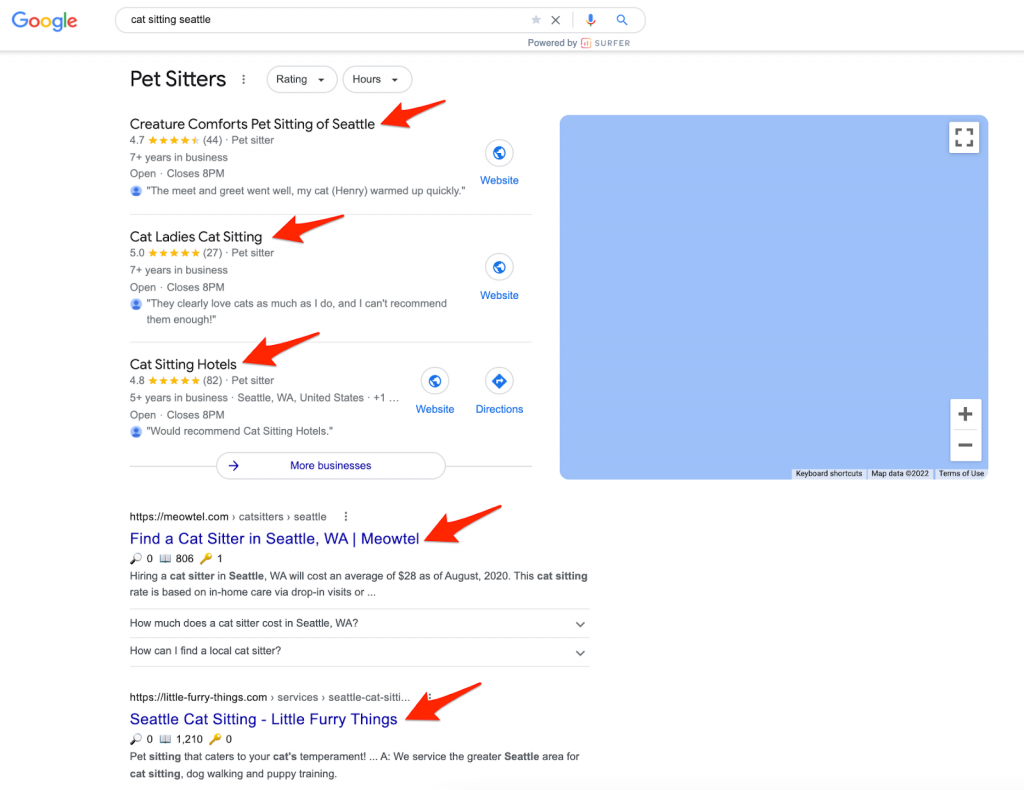
Many smaller brick-and-mortar businesses feel insignificant compared to giant corporations. However, unlike their global counterparts, local businesses have the advantage of targeting a local market. Small businesses can appear in the (Snack) Pack Rankings and organic page rankings by using local SEO.
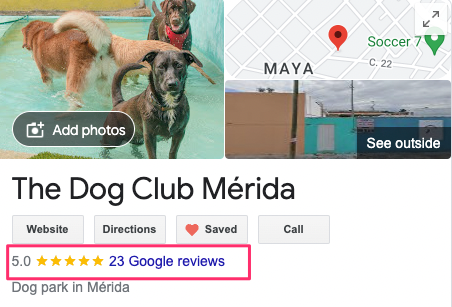
When using local SEO, the goal is to be in the Snack Pack Ratings. This is the little box you see appear at the top of the Google search results.
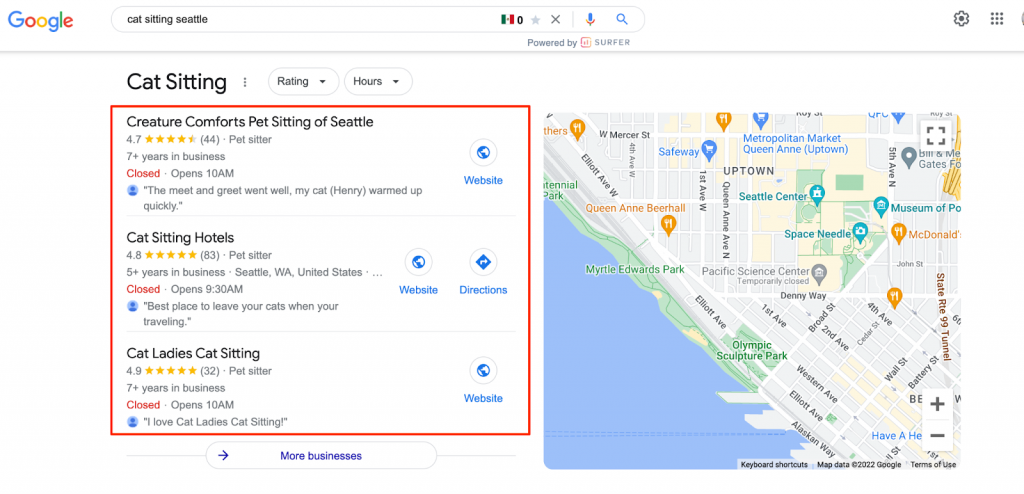
Within this box, you can usually find a business’s:
- Hours of operation
- Phone number, email, etc.
- Address
- Link to website
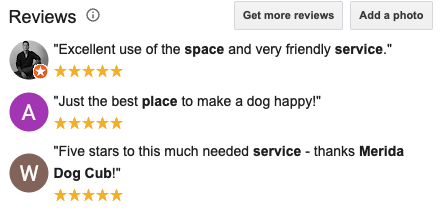
- Reviews and star rating
- Google map result
It’s important to program all this information into your Google Business Profile ( GBP ). It can ultimately persuade a potential customer to use your services while helping your business’s SEO ranking.
Even further, to optimize your GBP, make sure:
- The category is correct
- The website link is active and functional
- Relevant keywords are included in the title tag
- Perform regular updates of your posts
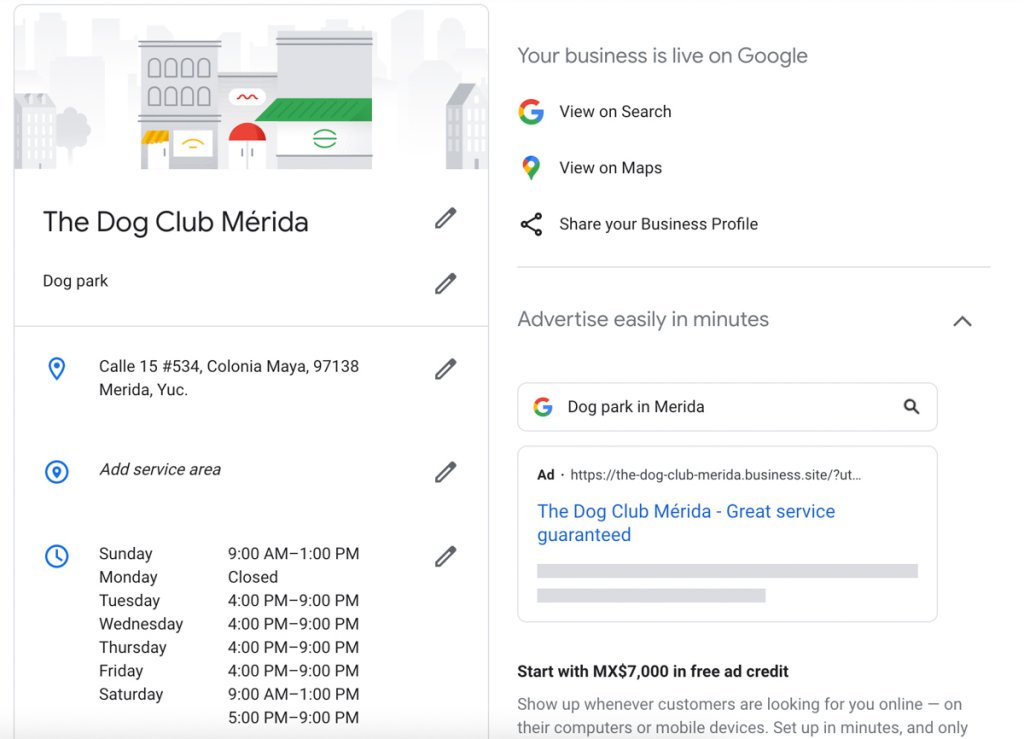
Once you fill out the information and optimize it, it should take a few weeks before you start seeing results. Remember that any form of SEO takes time and is worth the wait!
Increase Site Speed
A technical SEO tip is to ensure your site is always running quickly since search engines prefer when page loading times are faster.
There are a few things you can do to obtain high website speeds, including:
- Minimize ‘HTTP requests’ and keep the use of scripts and plugins to a minimum.
- Use a CSS stylesheet instead of multiple CSS stylesheets or inline CSS. CSS stylesheets tell a website browser how to display your website.
- Make your image files as small as possible.
- Compress your web pages.
- Shrink your site’s code by deleting unnecessary spaces, line breaks, or identification in your HTML, CSS, and Javascript.
Above all, possibly the most important way to ensure your site is running quickly is to choose a good hosting service. You can have this easily with SiteGround Hosting. We use all the newest technologies, including ultra-fast networks, ultrafast PHP, multiple server software solutions, etc.
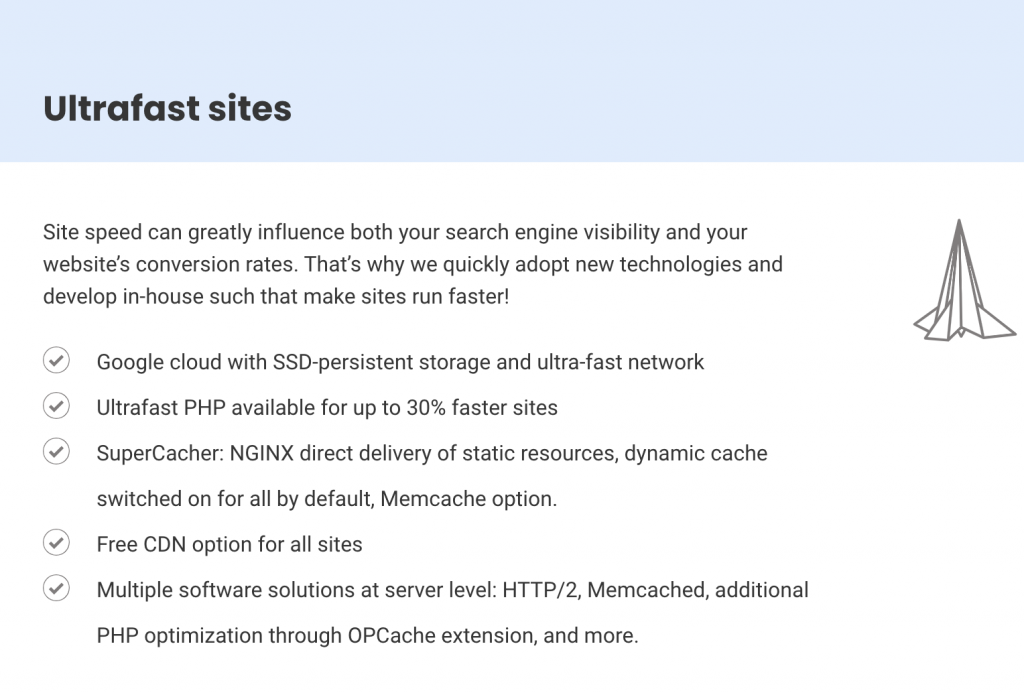
And, if you’re set up on WordPress, the SiteGround Optimizer plugin lets you boost the speed of your website without having much tech knowledge.
Your site’s speed needs to be consistent across all devices to boost your ranking, so once again, make sure to test it on every device.
Use Paid Ads (PPC)
While SEO and content marketing can bring in many new clients, paid ads have a ton to offer, too. In fact, a Trend Statistics study shows that 80% of marketers focus on Google Ads for PPC, proving that marketers know the effectiveness.
Paid ads are useful to build brand awareness, and since most of the time they appear in front of customers who have expressed interest in the product with their online activity, the leads are way more likely to convert than those from organic traffic.
Content marketing and SEO are always winning practices, but you might have noticed it’s very competitive. The internet is full of businesses of all sizes, all striving to make the top of the search results. It guarantees that you’ll always need existing domain authority.
The five most common types of paid ads include:
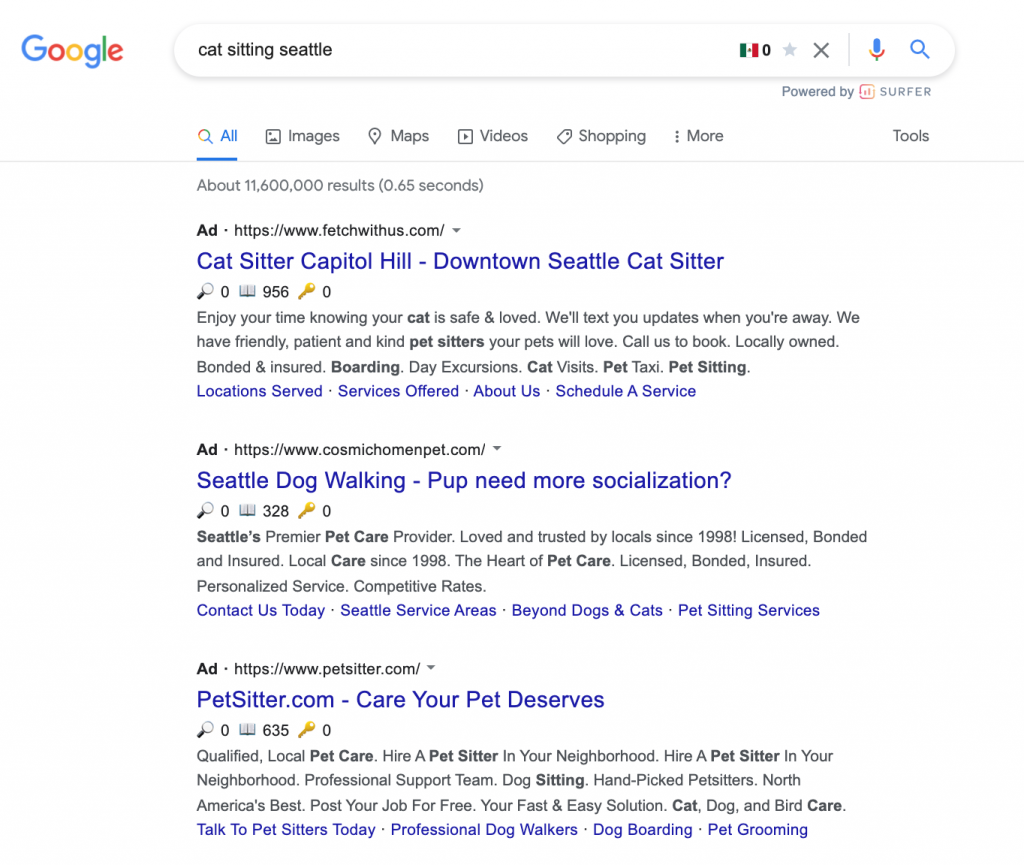
- Search ads: These ads appear first on Google’s search results, above all organic rankings. They look the same as regular search results except for the little “Ad” text in the corner.
- Display ads: These banner ads appear in footers, headers, between text, and sidebars of content pages like blogs and product profiles.
- Social media ads: You can program these ads on social media platforms. Each platform will have its objective, but the ads are generally highly targeted and allow a lot of flexibility in how you program them.
- Google shopping ads: Used by eCommerce owners and appear in the carousel on the results page when users search for a specific item.
- Retargeting ads: These ads get specifically placed in front of users when they didn’t convert the first time they saw the product and were close to the checkout.
This list just includes the most common types of ads, but there are many different types. The ad you use depends on your business’s needs and audience.
There are a few tips for general success, whatever type of ad you choose.
Firstly, filter your audience to reach your ultimate target. When programming and launching an ad, you obviously want as many people to see it as possible. But, what’s most important is the right people seeing it.
Most ad tools allow you to filter your buyer personas and get specific with demographics, geographics, needs, interests, etc. You should use more granular keywords to get the most out of your budget.
For example, Facebook ads allow you to reach hyper-targeted audiences with geographic location settings, interests, ages, gender, etc.
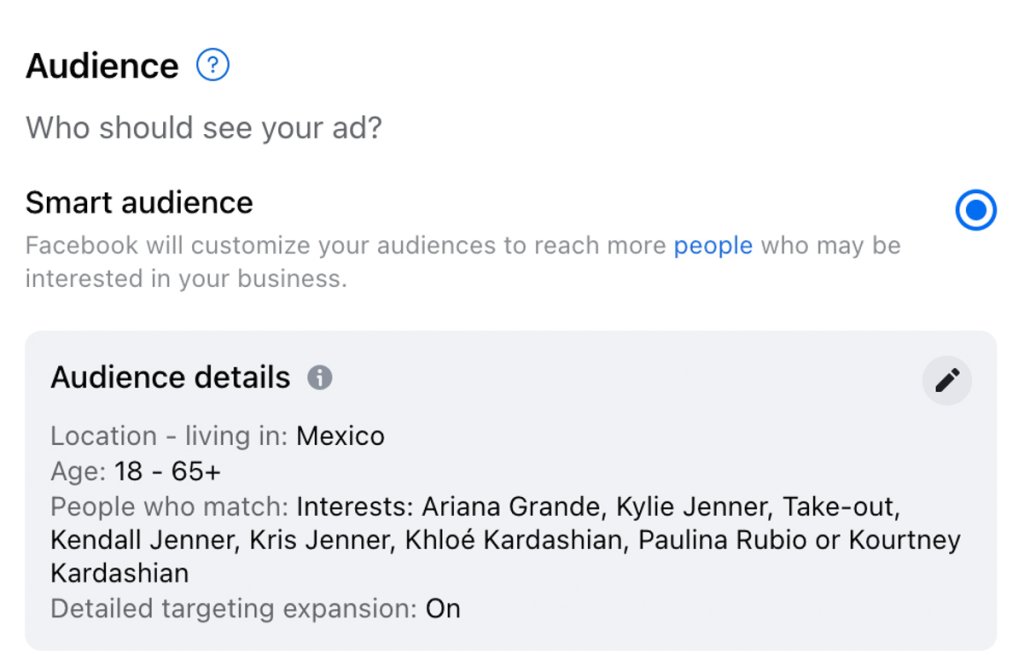
Another crucial tip for paid ads is regularly tracking your KPIs, as it’s the only way to know what’s working and dig into the data. Google and social media platforms make it simple for you to track your KPIs with data dashboards and metrics.
Is Paid Advertising a Worthy Alternative to SEO?
Now, you might be wondering if paid advertising is an alternative to investing in SEO. The truth is, when it comes to small business ads, it’s never a one thing or the other situation. Your strategy should include organic and paid advertising, with complementary campaigns that help you find your audience (and help them find you).
While paid advertising does lead to quicker results, the real question here is whether those results are sustainable for your business or will be short-lived.
Paid advertising can take a big bite from your budget, especially if you’re using it constantly to substitute SEO. Another downside is that clicks never guarantee sales. It’s one thing to get people to click your ad, but you also have to convince them your product is worth buying.
However, SEO is a long-term investment that will give you long-term results if you’re willing to be patient.
Sum Up
If you have a small business, you need to take these digital marketing tips and add them to your marketing plan. Some of these tips will be more effective depending on your business.
Having said that, it’s important to think outside of the box and try different areas you think will be effective for your business. This is especially true as the digital landscape is constantly changing, and businesses are forced to adapt to keep a competitive advantage and gain new customers.
If you have any questions about our digital marketing tips, leave a comment below!
[subscribe_cta]