
How to use AI to start a business, from first idea to first customer

Abstract of starting a business using AI

AI can help with almost every part of starting a business, from researching an idea to building your website. The hard part is knowing which tools to use, when to use them, and what to decide yourself, and that’s where a lot of first-time founders get stuck. This guide shows how to use AI to start a business in 7 steps, from your first idea to your first customer, with a clear sign at each step that you’re ready to move on.

Key takeaways:

  • Using AI to start a business works best one step at a time: problem, validation, offer, legal setup, website, first customers, and automation.
  • Each step comes down to 3 things: what AI handles, what you decide, and the customer evidence that says you’re ready to move on.
  • Most new businesses can benefit from 3 kinds of AI help as they grow: an AI assistant, an AI website builder, and built-in AI tools that handle routine site, store, and email tasks.
  • You can use AI for every step without coding, from researching problems to building your site and handling routine updates through chat.
  • Add automation when a task becomes repeatable, such as a welcome email for new subscribers, and skip automations for situations you haven’t run into yet.

How to use AI to start a business in 7 steps

The safest way to use AI to start a business is to let it research, draft, and build while you keep the decisions. That’s because AI can certainly summarize a market, write an offer, and generate a website, but it can’t confirm that real customers want what you’re selling. 

Steve Blank, the Stanford lecturer behind the customer development method, made this very point to CNBC in March 2025. He conveyed that AI speeds up a founder’s work, but it doesn’t remove the need to test assumptions about who your customers are and what they want.

With that in mind, here’s how to start a business using AI in 7 steps:

  1. Find a specific problem worth solving
  2. Validate your business idea with real customer evidence
  3. Turn the problem into a clear offer
  4. Set up your business legally
  5. Build the minimum business website you need with AI
  6. Get your first customers
  7. Let AI handle the repetitive business tasks

Step 1: Find a specific problem worth solving

A business starts with a problem that a specific group of people already wants solved (even if they haven’t realized it yet!). This is where AI is particularly good at finding such problems in public conversations. That said, it’s much worse at judging which one of those problems truly deserves the next year of your life. 

When starting a business with AI, either starting point works:

  • You already have an idea. Use AI to look for evidence that the problem exists outside your head, and to see how people deal with it today.
  • You don’t have an idea yet. Start with a group you know well, such as your former industry, a hobby community, or local businesses, and use AI to explore what they struggle with.

Once you start noodling over a specific problem and idea, you need to ask yourself whether that problem is actually worth solving. Usually it is when it shows a few of these signs:

  • It comes up again and again in reviews, forums, and social posts.
  • People already spend money or time on a workaround.
  • You can reach the people who have it.
  • You understand it well enough to solve it better than the current options.

Now, every AI model will give its own spin on what it finds and concludes. So rather than depend on one, SiteGround AI Studio gives you several AI models in one workspace, so you can ask more than one the same question and see where they align. Plus, you can continue to use this as a resource throughout your business creation process, leveraging access to the various models in order to the best output possible. (Note that AI Studio usage is token-based, and a current free monthly allocation comes with qualifying paid SiteGround services.)
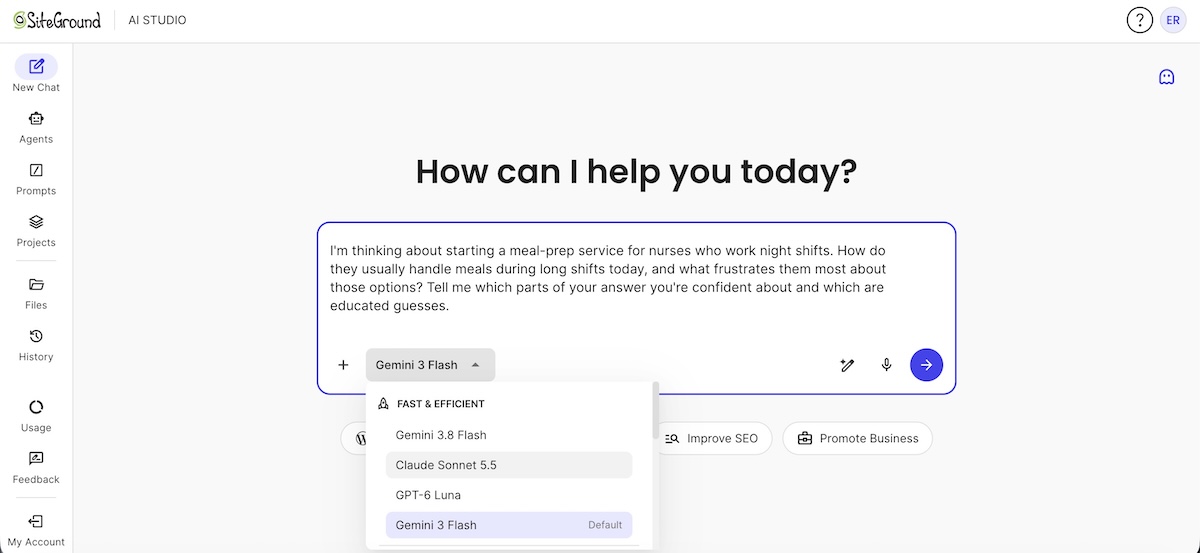
SiteGround AI Studio interface with various LLM chat models

Step 1 at a glance

  • AI handles: exploring where a problem shows up and how people deal with it today.
  • You decide: which problem is worth your time, based on the signs above.
  • You’re ready for Step 2 when: you’ve picked one problem, for one customer group you can reach, that shows at least a few of the aforementioned signs.

Step 2: Validate your business idea with real customer evidence

Step 1 showed the problem exists. Step 2 checks, directly with the people who have it, whether they want someone to solve it. In a CB Insights analysis of 431 venture-backed startups that shut down since 2023, 43% cited poor product-market fit, the most common underlying cause after running out of cash. This step is the cheapest place to catch it.

Two methods work well, and you can run them side by side:

  • Conversations. Talk to 10-20 people in your target group and ask about the last time they had the problem. Try to find people beyond just your own circle of family and friends in order to ensure transparent and varied responses. 
  • Something people can react to. Share a short description of the solution you have in mind, in your conversations or in the communities from Step 1, and ask people whether they’d want to hear when it launches. If your idea is a tool or app, Coderick AI can even build a simple working demo to show instead. Either way, this is a quick test, and your actual business website comes later, in Step 5.
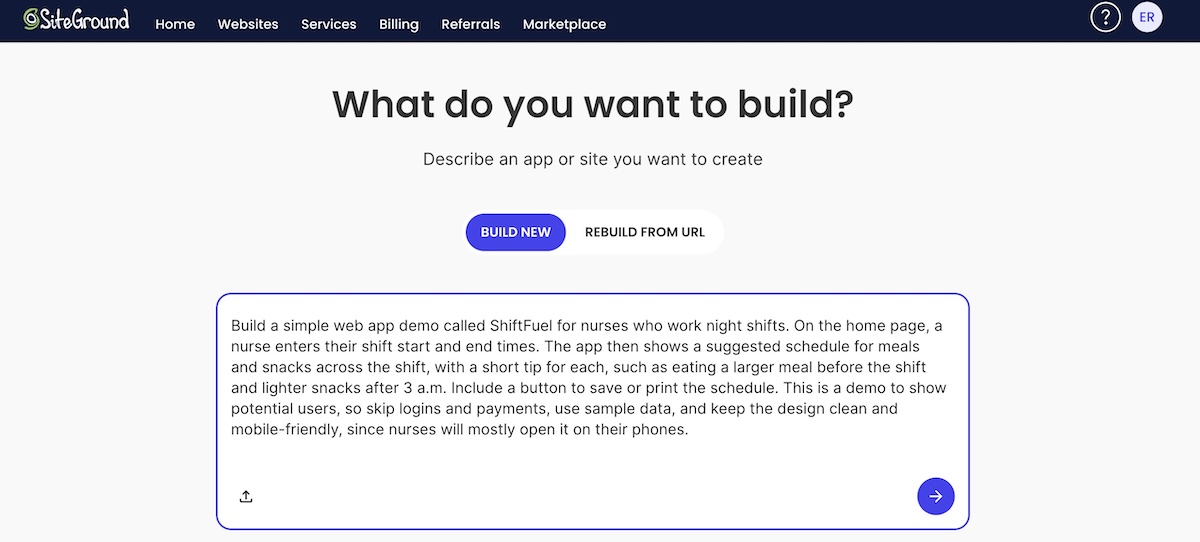
Coderick AI chat field for creating your own web app

AI can then definitely jump in to help you draft interview questions as well as summarize what people tell you, even finding patterns or noteworthy sentiments. 

Step 2 at a glance

  • AI handles: drafting interview questions and summarizing what people told you.
  • You decide: who to contact first, where to dig deeper or pivot, and how much interest counts as enough.
  • You’re ready for Step 3 when: several people you’ve contacted directly confirm the problem and show interest in a solution, such as asking when it’ll be available.

An offer is the specific thing you’ll sell, to whom, for what result, and at what price. This step turns the interest you found in Step 2 into something a customer can more concretely say yes or no to.

Step 3: Turn the problem into a clear offer

An offer is the specific thing you’ll sell, to whom, for what result, and at what price. This step turns the interest you found in Step 2 into something a customer can more concretely say yes or no to.

Write your offer in one sentence

Fill in this template using the words people used in your Step 2 conversations:

For [customer] who [problem], I offer [solution] so they can [outcome], unlike [current alternative], for [price].

For example: “For independent physiotherapists who lose hours each week to appointment reminders, I offer a done-for-you text reminder setup so they can cut no-shows, unlike chasing patients by phone, for $150 plus $30 a month.”

AI is useful here for drafting a few versions and listing the objections a skeptical customer would raise. Its drafts tend to sound generic, so pick the one closest to how your customers talk, and tweak as necessary. At the end of the day, the strongest unique selling proposition usually names one specific result your competitors don’t claim.
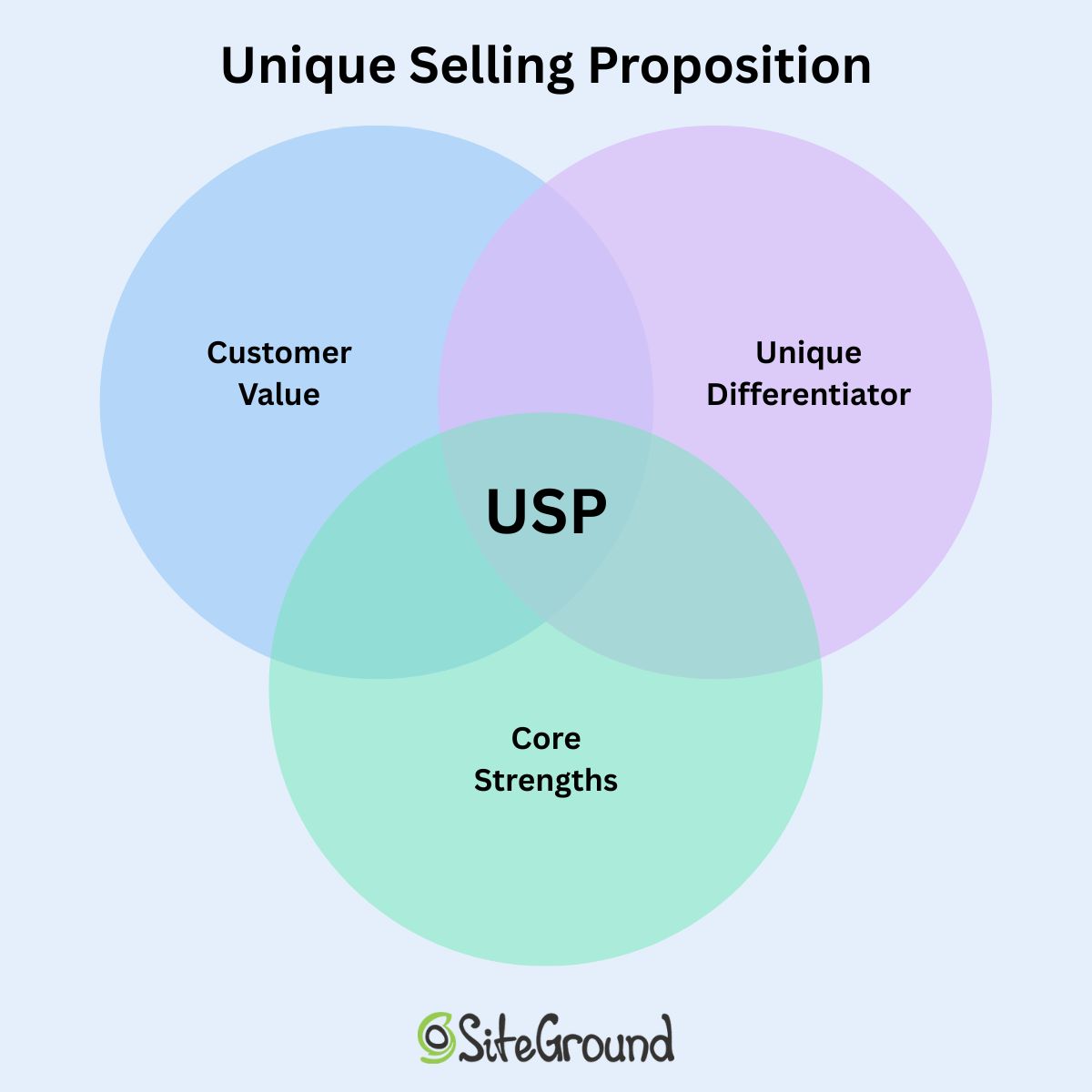
unique selling proposition venn diagram combining value unique differentiator and core strengths

Set a starting price

A starting price usually sits between two numbers:

  • Your floor: what it costs you to deliver, including your time, materials, and any software or payment fees. Below this, every sale loses money.
  • Your ceiling: what customers spend on their current workaround, in money or time, and what competitors charge for something similar.

AI can help you gather both, such as summarizing competitor prices or adding up your costs, but check the numbers it gives you. Pick a price in that range you’d be comfortable defending out loud, and expect to adjust it after your first few sales.

Once you’ve got your offer dialed, AI can help expand it into a one-page business plan covering customer, offer, channels, and startup costs.

Test it before you build

Show the offer to the people you spoke with in Step 2, through a message, a one-page document, or a call. If you can, ask for a pre-order, as this is the strongest way to assess true interest. This can be done easily by jumping to Step 5, where will cover this step in more detail. 

Step 3 at a glance

  • AI handles: drafting the offer, generating alternatives, gathering pricing data, and predicting objections.
  • You decide: the final wording, the price, and the format.
  • You’re ready for Step 4 when: people consistently ask how to buy, accept the price without heavy pushback, or commit to a pre-order or booking. If the response is polite interest and nothing more, revise the offer first.

Step 4: Set up your business legally

Legal setup is where AI works best as a translator and worst as an authority (which it of course loves to do). Rules for business structure, registration, taxes, and licenses vary by country, state, and industry, so every answer AI gives you here is a draft to check against an official source or a professional.

US readers can start with the U.S. Small Business Administration’s business guide, which covers structure, registration, tax IDs, and licenses. Elsewhere, your national government’s business portal or a local accountant is the right reference.

Pick a name and register your domain

You need a name before you can register the business, so start here — and AI is a great brainstorming partner for this exercise. Give it your offer, customer, and tone, and ask for 20 options with a one-line reason for each. 

Meanwhile, when it comes to choosing a domain, SiteGround’s AI domain name generator works from your keywords, and every name it suggests is already available, so you can skip checking availability one name at a time.
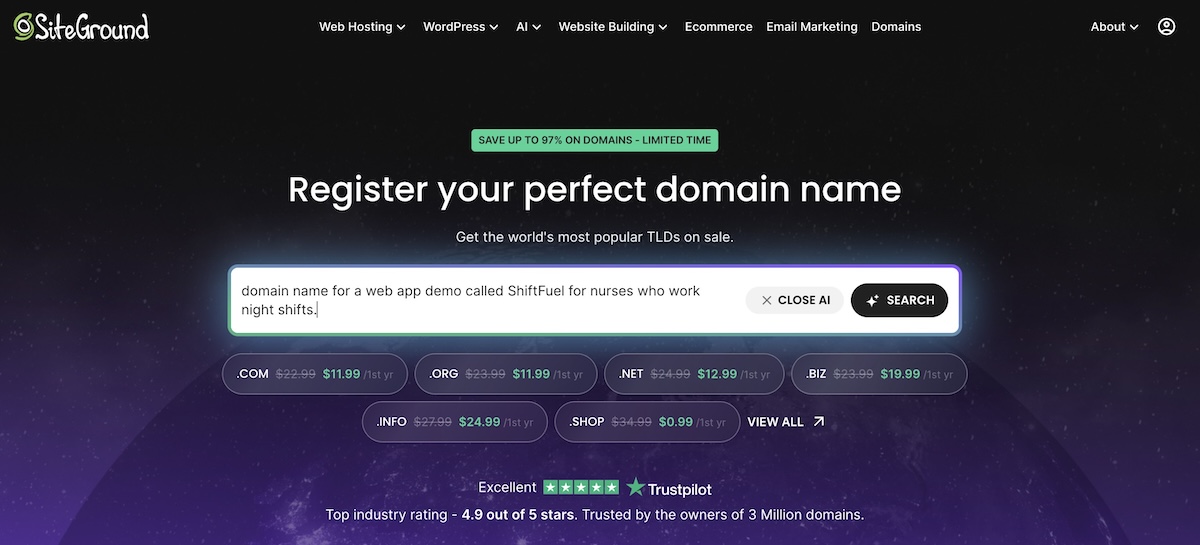
Using the SiteGround AI domain name generator to find a domain name

Note: Before you settle on a business name or register your domain, search your country’s trademark database for the name. Just because a domain is available doesn’t mean the name is free to use.

Choose a business structure

Your business structure decides two things: whether your personal savings are at risk if the business owes money, and how much paperwork you’ll handle. More protection usually means more paperwork. The names and rules vary by country, but the basic options look similar:

StructurePersonal liabilityPaperworkTypical fit
Sole proprietorshipYou’re personally responsible for business debtsLowestTesting a service business on your own
PartnershipShared among partnersModerateTwo or more founders sharing ownership
LLC or limited companyGenerally limited to the businessModerate, with registration and annual filingsMost small businesses once revenue is steady
CorporationLimited to the businessHighestBusinesses planning to raise outside investment

AI can explain these trade-offs for your situation if you give it your location, expected revenue, and whether you’ll have partners. The final choice, and an accountant’s sign-off, stay with you.

Register, get your tax ID and licenses, and separate your finances

A typical setup checklist covers:

  • Registering your business name with the relevant authority
  • Getting a tax ID, such as an EIN in the US
  • Applying for any licenses and permits your industry or city requires
  • Opening a separate business bank account
  • Getting insurance that matches your risks

A useful prompt: “Create a checklist of registrations, tax IDs, and licenses for a [type of business] in [city, country], and name the government office that handles each one.” Check every item on the official site. Links to government pages are a common place for AI to invent URLs, so always check sources.

Step 4 at a glance

  • AI handles: name ideas, explaining your options, and drafting checklists.
  • You decide: your name, your business structure, and which questions need an accountant or lawyer.
  • You’re ready for Step 5 when: your name and domain are secured, your business is registered, and your finances are separate.

Step 5: Build the minimum business website you need with AI

A minimum website is the smallest version that lets a customer understand your offer and take the next step. Everything else can wait until customers ask for it.

Choose your build path

Pick the path that matches what the business needs to do on day one:

If you needUseKeep in mind
A simple business site with no code, and no selling via the siteSiteGround Website BuilderAI drafts the pages, and you edit the copy and images
Custom functionality, such as a booking flow, calculator, or client portalCoderick AIStripe payments and custom domains depend on your plan, and features like confirmation emails or access rules need to be requested explicitly in your prompt
An online store for productsSiteGround EcommerceIncludes the AI Store Agent for sales questions later
Full control over your site’s design and features, with plugins to add almost anythingSiteGround Hosting for WordPressMore setup than a builder, but managed hosting takes care of much of the admin, including WordPress updates, daily backups, and security. The AI Agent for WordPress, included with every plan, handles day-to-day site tasks through chat.

Not every business aligns with every option. A consultant who books calls rarely needs a store, and a jewelry maker rarely needs a custom web app.

Note that for taking those pre-orders or deposits from Step 3 online, a simple store is the quickest route. With SiteGround Ecommerce, you can start with just your one offer so early buyers can pay you directly, then add more products as orders come in.

Develop your branding

Whichever path you choose, AI can draft branding basics in a flash. Give it your offer, customer, and name, and ask for:

  • 3 or 4 logo concepts
  • A color palette and a pair of fonts
  • A short brand voice guide with a few example sentences

You choose which direction fits, and you keep it consistent across your website, emails, and social profiles.

Add the pages you need

For most new businesses, that’s 4 pages:

  • A home page that states the offer from Step 3
  • A page or form to buy, book, or get in touch
  • An about page that explains who’s behind the business
  • Your policies (typically linked in the website footer)

example of a website homepage with just the essential pages

AI can draft the copy for each page from your Step 3 offer. Edit it until it sounds like you and uses your customers’ words.

As for policies, most business websites need three:

  • A privacy policy explains what personal data you collect, such as names and email addresses, and how you use it. In many places, the law requires one as soon as your site collects that data.
  • Terms of service set the rules for using your site and buying from you.
  • A refund policy tells customers what happens if they want their money back.

AI can draft all 3 from a short description of your business. Have them reviewed before you publish, especially if you sell to customers in regions with strict privacy rules, such as the EU.

Step 5 at a glance

  • AI handles: building the site, drafting page copy and policies, and branding drafts.
  • You decide: which build path fits the business, and the look.
  • You’re ready for Step 6 when: a stranger can land on your site, understand the offer, and take the next step without asking you a question.

Step 6: Get your first customers

Your website is live, but nobody knows it exists yet. Your first customers usually come from the people you talked to in Step 2 and the places you found them in Step 1, so start there.

Use AI to draft outreach, not replace it

A website marketing strategy for a new business usually leans on a few channels:

  • Direct messages to people who have the problem you picked in Step 1
  • Community posts in the forums and groups where your customers spend time
  • Social media on 1 or 2 platforms your customers already use, with posts about the problem you solve as much as the product. For more tactics, see how to go from social media likes to business leads.
  • Local search listings, if you serve a specific area
  • Partnerships with businesses that serve the same customers

AI can help with the writing behind each channel, from personal messages to community and social posts to your local listing. Keep the sending and replying personal, though, since early customers can tell when a message was written for everyone.

Build an audience you own

Most of the channels above run on someone else’s platform. Followers on social media and members of online communities belong to those platforms, which decide who sees your posts and can change the rules anytime. That’s why it’s worth building at least one channel you control, and for most new businesses, that’s an email list.

Email marketing means sending updates and offers directly to people who’ve given you their email address. To start a list, add a sign-up form to your site and offer something useful in exchange for an address, such as a checklist built from the questions people asked in your Step 2 conversations. 

Be sure to set up an automated welcome email at the same time as the form, so every new subscriber hears from you right away. SiteGround Email Marketing can draft it with its built-in AI writer and send it automatically once you’ve set everything up.
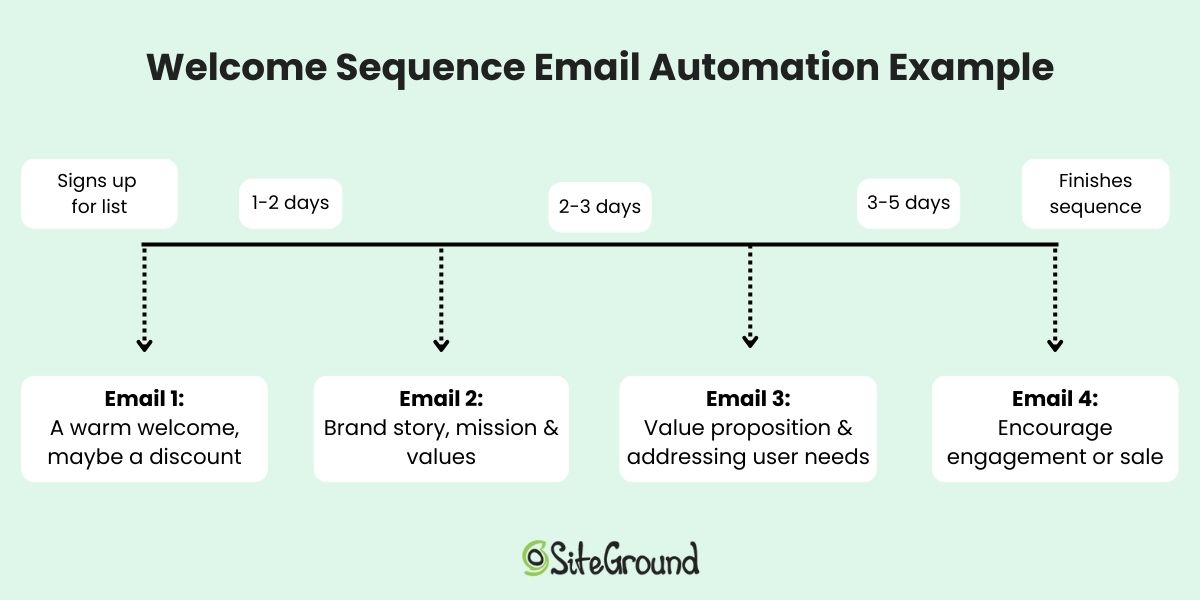
Welcome sequence email automation sequence example

Measure what actually brings customers in

Track a small set of numbers from the start:

  • Where your customers come from. Website analytics typically show which sites, searches, and posts send you visitors. To connect those visits to actual sales or inquiries, set up conversion tracking in a free tool like Google Analytics, which records the source behind each one.
  • How many visitors become inquiries or sales. Compare your visitor count with the inquiries or orders you got in the same period.
  • What each customer costs you. Add up the time and money you spent on a channel, and divide by the customers it brought in.
  • How many customers come back. Watch how many orders come from returning customers over time.
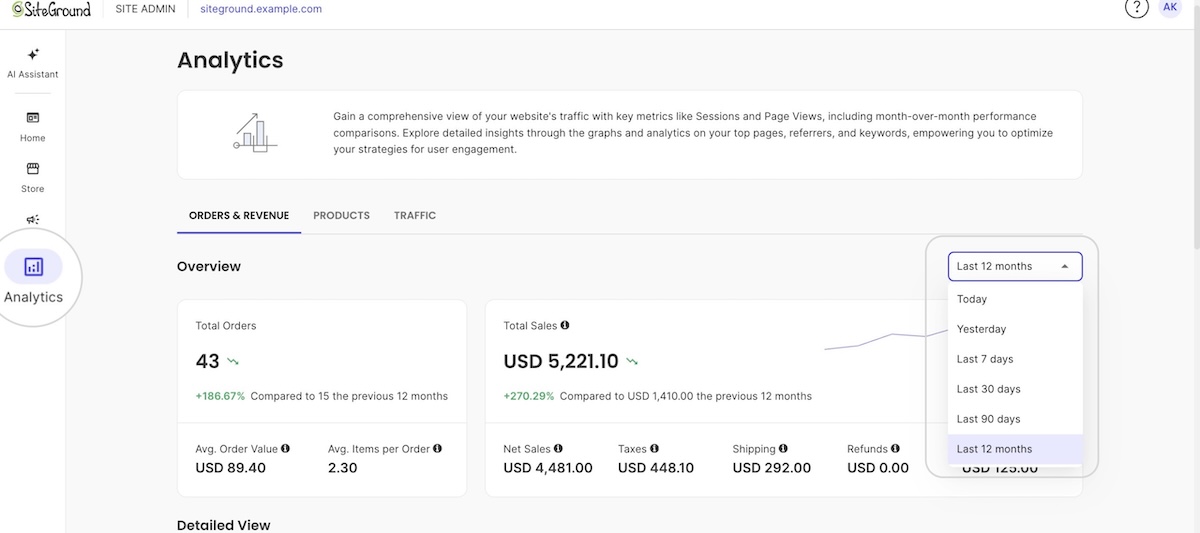
Analytics orders and revenue dashboard for SiteGround Website Builder

Worth noting: If you build with SiteGround Website Builder or SiteGround Ecommerce, the built-in Analytics section covers most of this. It shows your visits, page views, and top referrers, and stores also get a list of every order showing whether the customer is new or returning, plus your best-selling products. You can also ask the AI Store Agent about your numbers in plain language, such as your average order value. On any platform, AI can turn your numbers into a monthly summary of what’s working.

Step 6 at a glance

  • AI handles: drafting outreach and emails, and summarizing your sales data.
  • You decide: which channels get your time, and what goes out under your name.
  • You’re ready for Step 7 when: at least one channel brings in customers predictably, and you know which one it is.

Step 7: Let AI handle the repetitive business tasks

Running a business comes with a steady stream of tedious tasks: a welcome email for every new subscriber, regular site updates, and the same customer questions over and over. They multiply as you grow, so it pays to hand them to AI once the process works consistently instead of waiting until they pile up. Just be sure to skip automations for situations you haven’t run into yet, like a five-email sales sequence before anyone has bought.

Three kinds of work are usually worth handing over first:

  • Emails. The welcome email from Step 6 already runs on its own. As your list grows, SiteGround Email Marketing’s built-in AI writer can also draft your regular updates and newsletters, as well as allow you to automate other email sequences.
  • Site and store upkeep. On a WordPress site, the AI Agent for WordPress handles plugin updates, content edits, and settings changes through chat. In a SiteGround Ecommerce store, the AI Store Agent can make store changes for you. Both ask for your permission before making bigger changes.
  • Repeat customer questions. AI can turn the questions you keep answering into an FAQ page and a set of reply templates. Review them before they go live.

For anything involving refunds, payments, or customer data, keep a person in the loop.

Step 7 at a glance

  • AI handles: drafting your emails, along with routine site and store updates.
  • You decide: which tasks to hand over, and which changes need your approval.
  • You’re done when: the tedious work runs in the background, and a quick check now and then is all it needs.

Your first customer matters more than your first prompt

Getting stuck on which AI tools to use, and when, is an easy way for a business idea to stall. Weeks go into comparing options instead of talking to customers. The 7 steps above take most of those choices off the table: each stage has one job, a short list of what AI handles, and a clear sign that you’re ready to move on. Knowing how to use AI to start a business mostly comes down to taking it one step at a time, and letting real customers tell you when you’re ready for the next one.

It also helps to have one partner for the whole journey instead of a pile of tools to compare. SiteGround brings core digital tools together as you build and grow your business, from researching your first idea to your domain, website, store, email marketing, and the AI agents that take the tedious work off your plate, with each piece added as you need it.

[111]

Frequently asked questions

Can you start a business using AI?

Yes, you can start a business using AI for research, writing, branding, and building your website. AI can’t confirm demand for you, so pair it with real customer conversations before you invest in building.

What AI tools do I actually need to start a business?

Most new businesses can benefit from 3 AI-enhanced tools at the start: an AI assistant for research and writing (such as ChatGPT, Claude, and Gemini), an AI website builder for your site or store, and built-in AI tools that handle routine site, store, and email tasks.

Can AI validate a business idea?

AI can speed up the research behind validation, such as summarizing competitors and drafting interview questions. It can’t validate a business idea on its own, because validation comes from what real customers do: sign up, book, or pay.

How can I use AI to start a business if I can’t code?

You can use AI for every step of starting a business without writing any code. AI assistants work in plain language, so they can help you research problems, draft your offer, write your marketing, and answer customer questions. No-code tools like SiteGround Website Builder and Coderick AI then build your site or web app from a description, and AI agents can handle routine site and store updates through chat.

Can AI build my business website?

Yes. SiteGround Website Builder can build your business website with AI, and you then fine-tune the copy, images, and layout yourself. If you need a web app or custom functionality, or prefer a less structured, chat-based way of building, Coderick AI creates your site from plain-language prompts. Either way, review the copy, design, and functionality before launch.

When should I automate business tasks with AI?

Start automating business tasks with AI from the beginning, as you set up each part of your business, such as a welcome email when you add a sign-up form. Skip automations for situations you haven’t run into yet, approve bigger changes yourself, and keep a person in the loop for anything involving payments, refunds, or customer data.

Thinking about affiliate marketing but worried you’ve missed your chance? 

A person working on a laptop with an affiliate marketing dashboard in the background showing reporting data, a social media notification of 20K+ new likes, and a monthly commission widget displaying $14,800

Getting started in affiliate marketing in 2026 might feel a bit like arriving late to a party. Every niche is flooded with content, AI is generating articles faster than anyone can read them, and the classic advice to “just write reviews and add links”  isn’t as effective as it was in the early days.

However, industry trends paint a different picture. Studies show that the vast majority of brands still actively use affiliate marketing and that the market continues to generate record revenue. This indicates that the industry is not in decline, but is instead undergoing a transformation. The affiliates losing ground are those who rely on volume without being authentic, while the most successful are those who create useful content and recommend products they really use and like.

So you haven’t missed the party, you’ve simply arrived at a time when building trust and delivering value are no longer optional, but essential for staying competitive. This guide will teach you how. 

Key takeaways:

  • Grand View Research values the 2025 global affiliate marketing industry at $22.6 billion, with projections reaching $35.7 billion by 2031. Supporting this growth, Rakuten Advertising finds that 81% of brands worldwide are running an active affiliate program.
  • Select a niche that aligns with your genuine interests. Creating content consistently is much easier when you are personally invested in the topic.
  • Prioritize “evergreen” channels like a blog, YouTube, or Pinterest. Unlike short-lived social media feeds, content on these platforms is indexed by search engines, allowing it to generate traffic and revenue years after publication.
  • Seek affiliate programs with a long cookie window, a reliable payout history, and, most importantly, a high customer satisfaction rate, as every recommendation is a direct extension of your own brand and the trust you’ve built with your audience.
  • Implement conversion tracking from day one. Understanding which content drives sales and which link placements perform best allows you to double down on what works and cut what doesn’t.
  • Focus on your individual progress and milestones. Comparing your entry-level earnings to the revenue of industry veterans who have spent years building their brand is counterproductive to your success.

What is affiliate marketing? 

Affiliate marketing is a partnership between you and a brand, in which the latter aims to reach new prospects, and pays you each time one of those prospects takes a specific action. Most commonly, that action is making a purchase, but programs may also pay per click, per lead, or for any other defined outcome.

You aren’t tied to a single brand or product category, either, so you can partner with as many companies and earn from all of them at the same time. However, just because you can, doesn’t mean you should. Affiliates who build trust with their audience by sharing products they believe in and actually use are more likely to get their viewers to act on their recommendations, and therefore receive commissions.

How does affiliate marketing work? 

Once you apply to a company’s affiliate program and get accepted, you’ll receive a unique link to track your referrals, either through email or in your affiliate dashboard. That link is what connects your recommendation to the sale. You can embed it as hyperlinked text in an article, place it on a button, add it to an image, share it in your social media bio, or send it directly in a message. 

Your link can also offer added value to the person clicking on it, whether it’s a coupon code for a physical item, or a free trial and discounted first year for a service-based platform.

How affiliate marketers get paid?

Affiliate marketers typically earn income through one of two primary commission models:

  • One-time (flat) commission: you earn a fixed amount or percentage when someone completes the required action through your link once, regardless of whether they stay a customer. 
  • Recurring commission: you earn a percentage every month for as long as the customer stays subscribed.

To make the difference concrete, if you refer someone to a $40/month vibe coding tool that pays a 60% commission, you earn $24 every month that person stays subscribed. After 12 months, that single referral has earned you $288. In contrast, a one-time commission on that same sale would have only paid you $24 once.

The tradeoff: Programs offering recurring commissions build income over time, but your long-term earnings depend on the product’s quality and customer satisfaction. On the other hand, programs with flat-rate commissions often use tiers, where the amount you earn per sale rises as your referrals grow.

You should also consider the payout logistics, as these directly influence your cash flow. Many programs maintain a minimum threshold, meaning you must earn a certain amount, like $100, before you can withdraw your funds, or they follow a set schedule that only releases payments on a specific date once a month.

Beginner takeaway: Choose at least one program from each model. One-time commissions give you a nice quick win, while recurring commissions build steady passive income as you grow. SiteGround’s affiliate program, for example, gives you the opportunity to benefit from either model: you get tiered flat commissions for hosting referrals or recurring earnings on some of the other services for up to one year. Plus, the payouts are weekly with no minimum threshold, so you don’t have to wait around or hit high sales targets just to get paid for your work.

Types of affiliate products

The niche you operate in and the type of products you recommend are closely connected, and together they set the ceiling for how much you can earn per referral.

Affiliate product typeTypical commissionCommon nichesWhat to know
Physical products5–15% per saleHome, fitness, fashion, beauty, outdoorEasier to recommend because people recognize the brands, but lower earnings per sale mean you need significant traffic volume to earn meaningfully
Digital products and online courses20–50% per saleAnything related to education and personal developmentHigher earnings potential per referral; requires more trust-building because the buyer cannot touch or try the product before purchasing
Subscription servicesVaries widelySaaS (web hosting, email marketing, ecommerce, video streaming, creative software)Some of the highest-earning programs available; buyers typically take longer to decide since they are committing to an ongoing subscription

However, a high commission rate only matters if people act on your affiliate link. A 50% commission on a product you have never used and don’t believe in will almost always earn less than a 10% commission on something you sincerely recommend and your audience trusts enough to buy. 

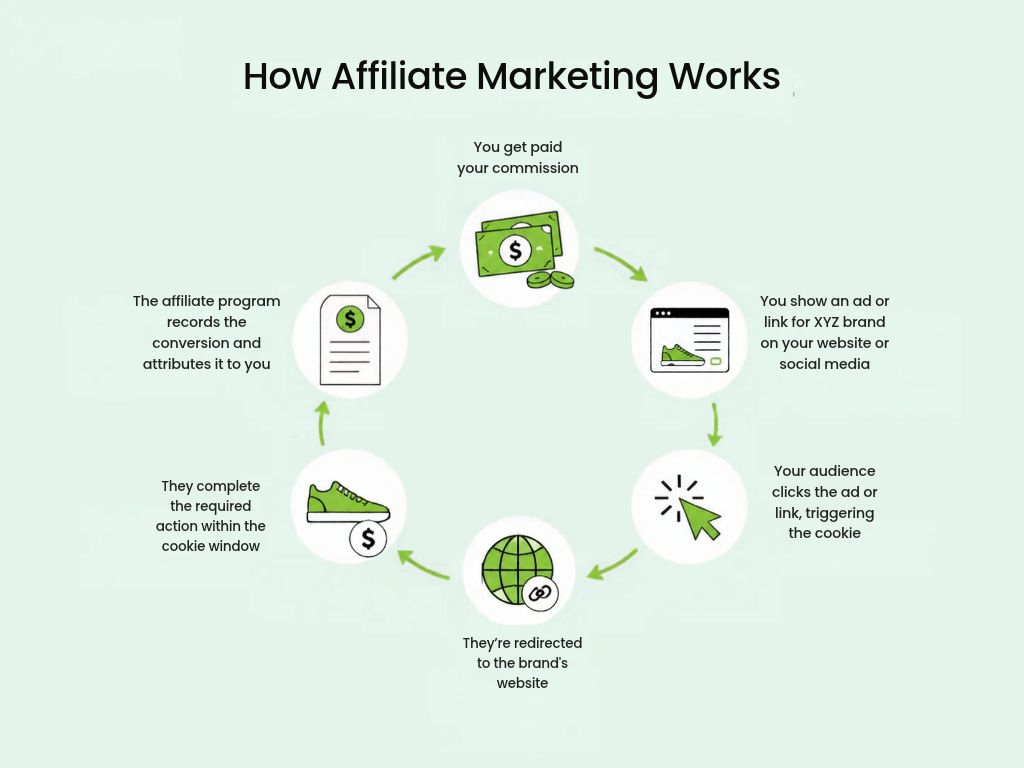
When someone clicks on your link, a small file called a “cookie” is stored in their browser. This cookie contains your unique affiliate ID and stays active for a set period of time, during which they need to buy, sign up, or complete whatever the program requires. 

Cookie windows vary depending on what you are promoting. Physical products tend to come with shorter windows, sometimes just 24 hours, whereas digital products and subscription services can offer up to 60 days. The longer the cookie window, the more time your referral has to come back and complete the action while still crediting you. 

A circular diagram showing how affiliate marketing works in five steps: you share an affiliate link on your website, blog, or social media; a customer clicks the link; they are redirected to the merchant's store through a tracking link; they complete a purchase; the affiliate program records the transaction and pays you your commission.

How much can you make with affiliate marketing in your first year?

It varies enormously depending on where you’re starting from. A blogger with existing traffic who adds affiliate links to content they’re already publishing can start seeing commissions within weeks. A professional with an established reputation in their field recommending tools they already use can convert their credibility into income relatively quickly. But if you’re starting from total zero, your first year is less about earning and more about building the foundation that income eventually comes from. 

Here’s roughly how the first year tends to go for a complete beginner:

  • Months 1–3: You join a few programs, add links to your content, and focus on building your presence on your chosen platform; while it’s possible to make sales at this stage, it’s not really realistic.
  • Months 4–6: You can expect a few sales here and there, but these will start to show you what content resonates with your audience and what products they actually want.
  • Months 7–12: The most consistent affiliate marketers at this stage report earning between $200 and $500 per month, although these figures aren’t set in stone and may vary.

How to start affiliate marketing in 5 steps 

Now that you have a solid understanding of the fundamentals, here’s a step-by-step guide to getting you closer to earning your first affiliate commission.

Step 1: Pick one niche you can sustain 

Your niche is the main topic around which your affiliate content and online identity revolve, and this is why you need to choose it wisely.

You can take two main routes here: either target a high-commission niche if maximizing the affiliate income is your priority, or focus on a passion or hobby you’re really knowledgeable and enthusiastic about. Choosing the latter is often the smarter move, as leveraging existing expertise saves you time from learning an entirely new field and helps you stay consistent while waiting for the first affiliate sale to come. 

To validate whether this is the best affiliate niche for you, you need to check the demand, to see if people are actively looking for related content. For example, if you want to specialize in “web hosting,” simply enter that keyword along with other similar terms into one of following tools:

  • Google Ads Keyword Planner: It shows search volume data, competition levels, and keyword ideas directly from Google’s own database. 
  • Ubersuggest: It gives keyword search volume, competition level, and content ideas for any niche, but the free plan is limited to only 3 searches per day. 
  • Keyword Surfer: A free browser extension that shows search volume directly in Google results as you type.
  • Ahrefs: A full SEO platform covering keyword research, competitor research, and site audits, however it requires a paid plan starting from $29/month.


Pro tip: When validating your niche, look at the total demand across a cluster of related keywords (the one you enter and the ones that pop up as suggestions) rather than judging it by a single term’s monthly search volume. Search interest varies widely from niche to niche and topic to topic, so the combined picture across several related terms is a much more reliable signal than any one keyword alone.

Step 2: Set up your content distribution platform(s)

Now that you have an idea of what you’ll be talking about, you need to understand where your target audience hangs out most. While you can post content whenever you want and use whichever format you feel most confident with, by placing it where you’re sure people will search for it, your efforts won’t be in vain. 

The best way to figure this out is to put yourself in their shoes: search the topics you want to cover, watch what comes up, check the comments on popular YouTube videos in your niche, see who is engaging on LinkedIn or Reddit, and notice which platforms surface the most active conversations. You’ll spot patterns quickly. Start with the platform where your audience is most active and engaged, test a couple if you are not sure, and narrow it down to the one that gets traction.

Here’s a breakdown of the main platforms in which marketers promote affiliate products:

PlatformTypeContent lifespanBest forProduct types
Affiliate marketing website/blogSearch engineYearsIn-depth reviews, tutorials, comparisons, roundupsSoftware, SaaS, web hosting, financial products, electronics
YouTubeSearch engineYearsProduct demonstrations, how-to videos, honest reviews, unboxingTech gadgets, cameras, software tutorials, fitness equipment
PinterestVisual search engineMonths to yearsInspirational and visual niches; repurposing existing blog contentHome decor, fashion, food, fitness, beauty, finance
Community channels (Reddit, Facebook groups)Search engineDays to weeksHigh-intent recommendations within niche communitiesNiche gear, software tools, courses, anything with an engaged community
Social media (TIkTok, Instagram)Discovery channelHours to daysBrand awareness, short-form demonstrations, driving traffic to primary platformPhysical products, lifestyle, beauty, fashion


Pro tip: Some affiliate programs ask for proof of an online presence before approving you. Therefore, set up your account(s) and publish a few pieces of content early to increase your chances of getting accepted.

Should you use paid advertising or banner ads for promoting affiliate products?

While it’s not prohibited, most affiliate programs don’t allow you to send paid traffic straight to your affiliate link, and platforms like Google or Facebook might suspend your account if you try. To get around that, you’d have to set up a dedicated landing page first, which will cost you additional money. And even then, you’re paying for every click whether someone completes an action or not, which means your budget can disappear fast with very little to show for it.

Paid ads are most effective when you already have a steady stream of organic traffic that actively generates conversions, but they aren’t a good place to start with as a beginner.

Step 3: Find affiliate marketing program(s) worth joining

This is where things start getting exciting. Even though you might want to sign up for every program you come across (which will quickly become hard to manage), focus on finding a few solid ones with fair commissions and simple tracking.

Where to find affiliate programs?

One way is by typing “[brand name] affiliate program” directly into your browser for any company whose products you want to recommend, or “[niche] affiliate program” to search for available programs in your field. If a brand doesn’t list one on their site, don’t hesitate to email them directly. This way you can negotiate commissions from the start and build a relationship ahead of the competition.

Alternatively, you can join an affiliate network. This is a platform that brings together hundreds or thousands of brands in one place, allowing you to browse and apply to multiple programs from one place. If you run into any technical or administrative issue with your account, though, it might take quite some time since it has to go through the network’s support team rather than being resolved directly with the brand.

Affiliate networkIn-house program 
ExamplesAwin, CJ Affiliate, ImpactSiteGround’s affiliate program
Program varietyHundreds of brands in one placeMultiple products to promote (managed hosting, WordPress hosting, website builder, ecommerce, vibe coding, email marketing)
Commission ratesVaries widely by merchantUp to $100 per hosting sale, scaling with monthly volume or 60% recurring commissions from any other SiteGround service; custom deals for top performers are available
Cookie durationVaries by merchant60 days
TrackingVaries by network; some offer SubID supportTrack clicks, sales, and conversion rates by creating separate campaigns for each platform or piece of content
SupportPlatform-level supportDedicated affiliate manager
PayoutVaries by networkWeekly, no minimum threshold
Best forBeginners exploring what’s available across a nicheAnyone

How to evaluate if an affiliate program is worth it?

Not all programs are built the same. Before recommending a brand to your audience, take a moment to look over these key criteria to make sure the partnership is worth your time and effort:

  • Cookie duration: at least 30 days for digital services and 1 week for physical products. 
  • Commission structure: recurring commissions or tiered commission structures that reward higher sales volumes with increased rates.
  • Payment reliability: check how often the program pays, what the minimum payout threshold is, and whether there is a history of delayed payments.
  • Brand reputation: recommend companies that have a high customer satisfaction rate, since a bad customer experience will reflect on you too, not just the brand.
  • Support: some programs provide dedicated affiliate managers and marketing materials, making it easier for the affiliate marketer to promote the brand. 
  • Tracking and analytics: go for programs that allow you to create different links for different pieces and placements, and show you the number of clicks and sales generated by each, so you know what performs and what does not.

Step 4: Leverage content and traffic strategies

Affiliate marketing is a content marketing business after all. Your links mean nothing without content that people can find, read, and most importantly, trust, which is why what you publish and how you optimize it for both search engine and AI models matters as much as which programs you join.

How to know what to write about?

The content formats that convert most include product reviews, comparisons, “best X for Y” roundups, how-to guides, and tutorials. However, your choice of format should align with your target keyword and search intent. For instance, a user searching for “best email marketing software for small business” demonstrates transactional intent and is likely seeking a comparison. Conversely, someone searching “how to send a newsletter” has informational intent and prefers a step-by-step tutorial.

Here’s how to find the right keywords and topics on each platform:

  • For a website/blog: use the same tools you used to validate your niche.
  • For YouTube: type your topic into the search bar and note what autocomplete suggests, or use vidIQ. It’s a free browser extension that overlays keyword search volume and competition scores directly on YouTube pages as you browse.
  • For Pinterest: you can either do the same trick with the search bar or look at Pinterest Trends. It’s a free tool showing you growing and seasonal trends you can hop on. 
  • For community forums: note the questions that come up repeatedly. The most upvoted unanswered questions are your best content opportunities
  • For social media: search your niche hashtag (for example, #webhosting) to see what content people are engaging in. 

How to drive traffic to my content? 

Every platform has its own rules for getting content discovered.

  • On YouTube, your keyword should appear in the video title, thumbnail, description, and even closed captions. 
  • On Pinterest, it goes in the pin title, description, and the text overlaid on the image itself, and if you add your pin to a board specifically named after this keyword, even better. 
  • For a website or blog, since search engine optimization covers a lot more ground, it’s best to follow a dedicated SEO checklist.
  • In forums and communities, detailed and specific answers rank better in search results than short replies, and platforms like Reddit even allow you to publish longer, blog-style posts that can rank on their own. 
  • On social media, you should include your keyword in captions, on-screen text, and say it out loud in videos since TikTok transcribes audio for search indexing.

People buy when they sense an authentic experience and your affiliate link should appear at the exact moment your recommendation feels most natural, not wherever it is most convenient for you.

  • On a blog, that means linking within the text when you first mention the product, adding it to comparison tables and buttons where the reader is already in decision mode. 
  • On YouTube, most put it in the description with a clear call to action like “Try it now: [affiliate link]” or in a QR code in your video, for people watching on their TV. 
  • On social media, one way is a link in bio since there’s nowhere else to add it, and another is “comment [word] and I will send you the link,” which you can automate with a third-party tool. 
  • On Pinterest, you can add your affiliate directly to your post.

Disclosing your affiliate partnerships is not optional, it’s required by the FTC in the US and by the CMA and ASA in the UK. But there’s also a practical reason to do it: 57% of consumers name transparency as the most important value they look for in a creator. 

Here’s what a compliant disclosure looks like on each platform:

  • Blog or website: add a short statement at the very top of any post containing affiliate links, before the reader reaches any recommendation. For example: “This post contains affiliate links. If you purchase through them, I may earn a commission.”
  • YouTube: check the “paid promotion” box when uploading the video, mention the affiliate relationship verbally at the start, and include a written line in the description. Doing all three keeps you fully compliant.
  • TikTok: turn on TikTok’s disclosure setting and add hashtags like #ad or #affiliatelink at the beginning of your caption. 
  • Instagram and Facebook: use the built-in paid partnership label that Meta provides for affiliate and sponsored content, pair it with a short statement in your caption for maximum transparency.
  • Forums and communities: add a brief note alongside every affiliate link you share; a simple (affiliate link) in parentheses next to the URL is enough and keeps you compliant without interrupting the flow of your answer.

Is AI helping or hurting affiliate marketers?

AI tools have made it easier to research keywords, generate first drafts, and handle other repetitive tasks that experienced affiliates now use as a regular part of their workflow. The problem, though, is that it has also flooded every niche with content where AI did all the thinking and the writer contributed nothing original. AI-generated avatars, voiceovers, and faceless video content are becoming increasingly common, raising valid concerns about whether AI is undermining the visibility of authentic content.

The good news is that search engines are getting better at spotting this kind of content, and readers are too. At the end of the day, people buy from people they trust, and you can’t build that trust if you’re not really there. The affiliates who use AI to work faster while still showing up authentically in their content, are the ones winning in this debate. 

Step 5: Measure performance and fine tune whenever needed

Knowing that a conversion happened is useful, but knowing where it came from is what lets you repeat it. Some affiliate marketers use SubIDs: labels added to tracking links to identify the source of each click, including the platform, content piece, or specific placement. Others rely on performance metrics in their affiliate dashboard, though the available data varies by program.

SiteGround’s affiliate dashboard makes this straightforward with custom campaign tracking. You can create separate campaigns for each platform or piece of content, label them accordingly, and compare their total and unique clicks, number of sales and their conversion rate side by side. You can even create a branded short link like siteground.com/go/yourbrand, which is especially useful for creators who share links verbally with their audience. 


Pro tip: Review click and conversion data monthly. High traffic with no clicks calls for a clearer call to action or link placement, while clicks without sales indicate a product-audience mismatch. If no one clicks, refine your content; if no one buys, adjust your offer.

The 3 affiliate marketing mistakes that can get you stuck

We’ve touched on some of these already, but they’re worth emphasizing one more time so you’re sure you’ll avoid them. 

1. Trying to sell instead of solving a problem

The most common mistake beginners make is sharing their affiliate links everywhere and waiting for clicks. This approach almost never works. What really converts is content that addresses a specific problem and presents the product as the logical solution.

2. Recommending products you haven’t actually used

Reviews assembled from pricing pages and other people’s opinions all read the same, and AI can produce them faster than you can. What sets your content apart is proof you were there: screenshots of the actual dashboard, numbers you measured yourself, the thing that annoyed you in week two.

3. Failing to track where your conversions come from

Many beginners fail to set up tracking properly, relying only on total clicks and earnings. Without knowing which specific piece of content, link placement, or platform drove a sale, you won’t know what works or how to replicate your success.

30-day affiliate marketing action plan: how to not waste your first days

  • Pick a niche and confirm there is both search demand and active affiliate programs in it.
  • Set up accounts on the platform(s) where your target audience spends most of their time.
  • Apply to a few affiliate programs in your niche.
  • Conduct keyword research to plan your first ten content pieces.
  • Optimize every piece of content for organic search.
  • Place your affiliate links strategically where users are most likely to click.
  • Configure tracking parameters before publishing your first link live.
  • Commit to a consistent publishing schedule.
  • Analyze your performance metrics monthly to identify effective tactics and adjust accordingly.

You’re now ready to begin your affiliate marketing journey 

The journey of an affiliate marketer starts with one niche and one honest recommendation. Most beginners overcomplicate the process. In reality, showing up consistently, publishing, testing, tracking, and improving is what separates successful affiliates from those who give up early.

If you decide to focus on website building, ecommerce, email marketing or vibe coding, SiteGround’s affiliate program is an ideal place to start. It offers both tiered and recurring commissions, 60-day cookies, weekly payouts, and a dedicated affiliate manager to assist you every step of the way.

 FAQs about affiliate marketing for beginners

Can I start affiliate marketing with no experience?

Yes. All you need to start affiliate marketing is a niche you know well enough to create content about consistently, a platform where your target audience looks for recommendations, a few relevant affiliate programs, and the right keywords to reach your audience.

Can I start affiliate marketing for free?

Yes, affiliate marketing is one of the most low-risk endeavors you can pursue. You can create content on virtually any platform simply by opening a free account, and affiliate programs are free to join. If you promote products you already use and like, you don’t need to spend money purchasing anything new. Additionally, you can generate content ideas using free search tools, meaning your primary investment at the start is simply your time.

Can you make $100 a day with affiliate marketing?

Yes, but it’s not a beginner’s outcome. Getting there requires either significant traffic at modest commission rates, or a smaller but highly targeted audience and high-ticket programs where one or two sales a week is enough to hit the target. Affiliates who reach that level consistently have usually been publishing for at least a year or more.

Do you need a website to start affiliate marketing?

Yes, you can start affiliate marketing without a website, though most affiliates eventually create one. Some of the main benefits are that you have full control over your content (no host can ban your account, limit your reach, or decide who sees your posts), and if something goes wrong you can restore it from a backup instead of waiting on a support team. A well-ranked blog post can also keep bringing in visitors and commissions for months or years after you publish it, with only occasional maintenance rather than the constant output social media demands. Some affiliate programs, particularly in the SaaS space, may require proof of an established website before approving your application.

What is the difference between an affiliate program and an affiliate network?

An affiliate program can be hosted in-house or featured on a network. In-house programs are managed directly by the brand with their own dedicated team and dashboard, while affiliate networks are third-party platforms that host multiple merchant programs under a single login, allowing you to browse and apply to various brands from one place.

If I already have an established audience, does affiliate marketing hurt their trust in me?

No, but only if you prioritize your audience over the commission. You should disclose clearly, only recommend products you would stand behind regardless of what they pay, and keep affiliate content to a reasonable share of your output.

Branding Basics: A Step-by-Step Guide to Building Your Brand

Abstract of brand basics for businesses

A strong, memorable brand multiplies the value of your business, shaping how people perceive you, driving their decisions, and building lasting value that goes far beyond logos, colors, or slogans.

I’ve spent years working on branding from both sides of the table, helping large corporations build consistent, recognizable brands, and later launching small business and startup brands of my own. That range taught me what it takes to make a brand stand out when resources are limited and every decision matters.

This guide walks entrepreneurs and small business owners through every step, from defining your mission to creating visuals and building consistency, whether you’re launching something new or refreshing an existing identity.

Key Takeaways:

  • Branding is about shaping perception through every interaction—not just logos or visuals.
  • A strong brand starts with a clear mission and a deep understanding of its audience.
  • Consistent storytelling, voice, and visuals are what turn awareness into trust and loyalty.
  • Brand guidelines ensure your identity stays cohesive as your business grows and evolves.
  • The most successful brands are built intentionally, executed consistently, and refined over time.

What Is Branding?

Branding is the practice of actively shaping how people perceive your business through every interaction, touchpoint, and message. It’s the overall impression your company branding leaves on customers and prospects, and, very importantly, the perception that sticks with them after.That means it’s much more than just your logo or color palette. 

It goes beyond, including your visual identity, tone of voice, messaging, and even how you handle customer support. When done right, branding builds recognition, trust, and emotional connection—the foundation for long-term loyalty. 

Why Does Branding Matter?

Branding matters because it directly shapes whether customers trust you, remember you, and choose you over competitors. It’s not a “nice to have,” especially for entrepreneurs and small businesses competing against bigger names. Effective branding builds recognition, communicates brand values, and creates trust, all of which can directly influence customer decisions and revenue.

Key reasons branding matters include:

  • Builds trust and credibility with customers and partners.
  • Differentiates you from competitors in a crowded market.
  • Creates emotional connections that drive loyalty.
  • Guides strategic decisions across products, marketing, and partnerships.
  • Supports long-term growth as you scale your business while maintaining a recognizable, consistent identity.
  • Contributes to brand equity: according to IPA research, strong, well-recognized brands can command higher prices and attract loyal customers, and Harvard Business School Online notes their value can even appear on the balance sheet as goodwill when a company is acquired.

Ultimately, good branding turns a business into a memorable, trusted, and valuable asset, one that strengthens relationships, drives revenue, and positions the company for sustainable success.

I’ve seen this firsthand in my own career—both working on branding for Fortune 500 companies and later building a premium consumer brand of my own. The difference between a product that people notice and one they overlook almost always comes down to branding—not budget. When a brand is thoughtfully built and consistently executed, it opens doors: partnerships, press, distribution, loyalty, and long-term value.

How Do You Build a Brand?

As you’ve surely gathered by now, brand building isn’t as simple as creating a logo. To truly create a lasting and impactful brand, you must go through the process of defining, expressing, and refining who you are as a business. The steps below will help get you there, with a step-by-step plan for creating a brand that feels authentic, resonates with your target audience, and stands the test of time. Let’s jump on the branding bandwagon.

1. Identify Your Mission

Every strong brand needs a clear mission before you even touch colors or designs. That’s because your company’s mission defines why your business exists beyond making a profit—that is, what change you want to create, what need you meet, and what value you bring to your customers’ lives. 

This clarity becomes the beating heart of your brand strategy, serving as the foundation for everything—from how you communicate to how you design. It ensures your messaging stays consistent and your decisions remain aligned as your business grows.

When I launched my olive oil brand, this step was pivotal. My goal wasn’t simply to sell a product; it was to help people understand what makes truly great olive oil—why sourcing matters, how harvest timing affects flavor, and what quality tastes like. That mission of education and appreciation shaped every decision afterward: the storytelling, the packaging, even the language on the bottle. Because the mission was clear and genuine, the rest of the brand flowed from it naturally.

If you’re unsure where to start with your brand, ask yourself:

  • Why did I create this business in the first place?
  • What problem am I helping people solve?
  • What makes my approach different or better?

Once you’ve answered those questions, summarize your mission in one clear statement. For a kitchenware business, this could look something like: “We craft premium kitchen tools that help home chefs cook with confidence and flair.”


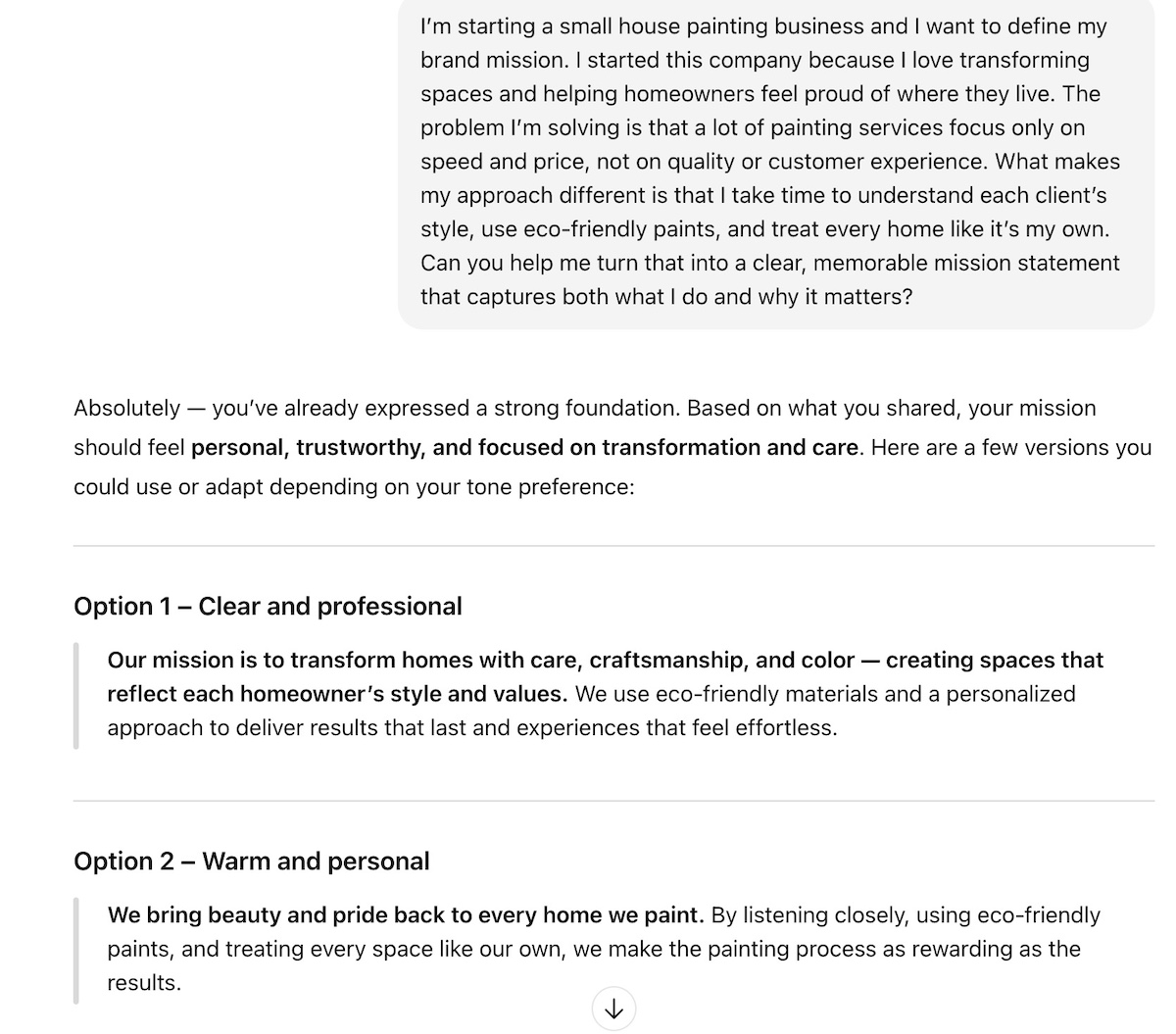
If you’re struggling to articulate this mission, don’t be afraid to turn to your favorite AI. For instance, with the right ChatGPT prompts, AI can help synthesize your thoughts so that you can come up with a clear and powerful mission statement.

chatgpt prompt asking chatgpt to help develop a brand's mission

At the end of the day, keep it simple and authentic. Your mission should be easy to remember and easy to believe. It’s not marketing mumbo jumbo; it’s the heart and soul of your brand.

2. Define and Understand Your Audience

Once you know why your brand exists, the next step is understanding who it’s for. Your brand should speak directly to the people who will benefit most from what you offer. To do that effectively, you need to know them inside and out.

Start by identifying your ideal customer:

  • Who are they (age, location, interests, lifestyle)?
  • What challenges or frustrations do they face?
  • What motivates their decisions—price, quality, convenience, values?
  • How do they want to feel after engaging with your brand?

The goal isn’t just to define demographics but to understand mindset and emotion. The more clearly you picture your target audience, the easier it is to create messaging, visuals, and experiences that resonate.

One of the best ways to do this is to actually get to know your audience. Real insight doesn’t come from assumptions; it comes from listening. In my experience, that process has looked very different depending on the size of the business. When I worked with large corporate brands, we relied on structured research like surveys and focus groups to test messaging and understand customer needs. But when working with early-stage startups or building brands from scratch, we got much closer to the customer by interviewing people directly to uncover their frustrations, motivations, and what they wish existed in the market.

Those conversations don’t just validate your assumptions about your product and its brand, but in fact often reshape them. And that’s where real brand clarity comes from: not guessing what people want, but hearing it in their own words.

Once your audience becomes crystal clear, you can visualize your target customer by creating a simple buyer persona—a short description of a fictional but realistic example of your ideal audience. For instance:

“Freelancer Fiona is a 35-year-old designer who works remotely and relies on digital tools to stay organized. She values brands that save her time, simplify her workflow, and speak to her in a straightforward, professional tone.”

When you define and understand your audience, your branding shifts from being about what you want to say to what they need to hear.

Pro tip: As part of this process, think also about how your customer interacts with your brand from start to finish. Building a customer journey map can help you better understand who they are, what they need, and how your brand can meet them every step of the way.

3. Build Your Brand Story

Your brand story shows how your mission meets your audience’s needs, connecting why you exist with who you’re here to serve, and how you solve their problems or make their lives better.

A strong brand story is more than a list of milestones or a marketing pitch. It’s an emotional thread that helps people feel what your brand stands for and why it matters.

What I’ve found again and again—both when building my own brand and when working with startups—is that this step becomes far more natural when you’ve really done the work in the previous two. When you’re clear on why you exist and who you serve, the story almost starts telling itself. It stops feeling like something you have to “craft” and instead becomes the way you genuinely talk about your business, because you’re rooted in purpose rather than a slogan.

To shape your story, focus on these elements:

  • Origin: How did your brand begin? What inspired you to start?
  • Purpose: What problem or need sparked your idea?
  • Transformation: How do you make your customers’ lives better or easier?

Here’s a simple example:

“After a decade in big-agency PR, a communications strategist saw how smaller companies struggled to get noticed without huge budgets. She started her own boutique agency to change that—giving startups, small businesses, and entrepreneurs the same storytelling power as global brands. Her mission: to make great PR personal, strategic, and accessible.”

A great brand story acts as a bridge between who you are and who you serve. It helps your audience see themselves in your journey, and that connection is what turns awareness into loyalty.

4. Develop Personality and Voice

Your brand’s personality is how it feels to your audience—friendly or formal, bold or reassuring, playful or sophisticated. It’s what makes your brand memorable and relatable, setting the tone for every piece of communication you create. Just like in personal branding, your brand’s voice should sound like you—consistent, distinct, and aligned with your values.

To define your personality, think of your brand as a person. How would they speak? What kind of energy would they bring to a conversation? Use these questions to guide you:

  • What three adjectives describe your brand’s character?
  • How do you want customers to feel when they interact with you?
  • What tone best fits your industry and your values?

Once you’ve defined your personality, translate it into a brand voice—the words, tone, and style that bring that personality to life. For instance, a real estate business with a confident, approachable personality might use conversational language and storytelling examples to simplify complex topics.

A consistent voice helps build trust, and by extension, your brand. Whether you’re writing a press release, social post, or email marketing, your audience should always recognize you. 

When I was creating social media content and marketing emails for my own brand, I made a point of keeping the tone playful and approachable—almost as if I were speaking to a close friend. This wasn’t random; we knew our target audience well, and that kind of voice felt authentic to them and helped build a genuine connection.

Example of an email newsletter with a playful brand voice

One of the most important ways to put your brand voice into action is through email marketing. Tools like SiteGround Email Marketing make it easy to stay consistent, no matter the audience or channel. The built-in AI writer can help you craft copy that fits your tone perfectly—whether you’re looking for something neutral, promotional, professional, or social-media specific. This ensures your content reflects your personality and strengthens your brand with every send.

5. Create Visual Identity

Your visual identity is what makes your brand instantly recognizable. It includes the colors, fonts, imagery, and other design elements that communicate who you are and what you stand for. But, importantly, it’s not just about looking good! It’s about creating a cohesive visual language that reflects your personality and brand values at a glance.

That’s right: a cohesive and consistent visual identity creates brand recognition across every touchpoint, from your website to social media to marketing materials. Thinking about your brand holistically like this ensures all elements work together to express your personality clearly and consistently. 

When your visual identity grows out of a brand you’ve taken the time to understand deeply, the design becomes more than decoration, and becomes shorthand for your values and story. In my own career, building both my brand and brands for early-stage startups, the visual process became far easier and much more authentic when we first got clear on who we were serving and why. Once that foundation was in place, the visuals weren’t guesses or random style choices, but instead became extensions of our story and purpose.

With that in mind, these are the branding elements you’ll want to focus on:

Logo: Your logo is the centerpiece of your brand, but what’s most important is designing it with your entire brand in mind. Before diving headfirst into logo creation, contemplate the full picture, including the other elements listed below. 

Also consider how and where your logo will be used—on your website, email headers, social media profiles, printed materials, merchandise, and even as a tiny favicon in a browser tab. Planning for all these applications ensures your logo works everywhere and aligns with your overall brand.

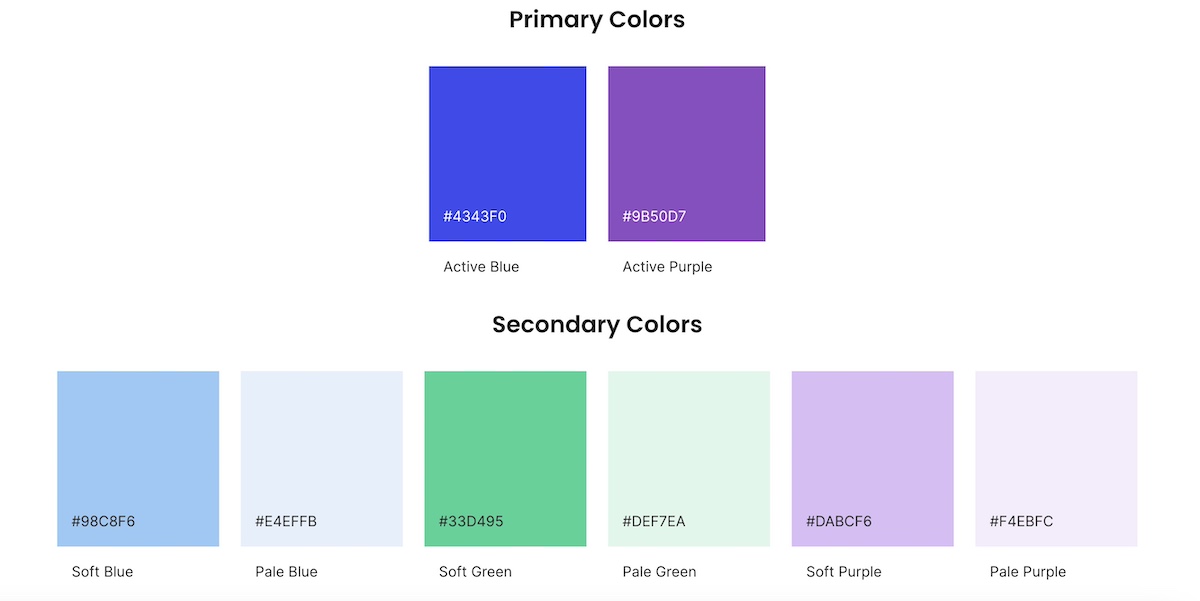
Color palette: Choose colors that reflect your brand’s mood and values. Many brands use a system of primary, secondary, and even tertiary colors: primary colors define your brand at a glance, secondary colors complement and support the primary palette across marketing materials and digital channels, and tertiary colors can be used sparingly for accents or special campaigns, adding depth without diluting your identity.

Example of branding color pallete with primary and secondary colors

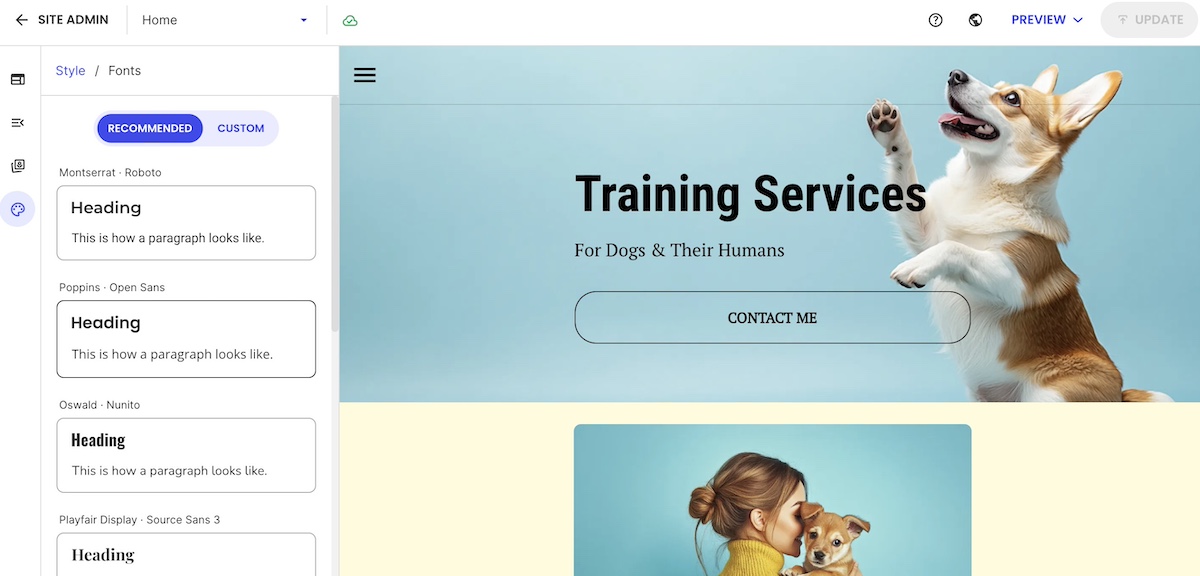
Typography: Your fonts should align with your brand’s tone—for example, modern and clean for tech, classic and elegant for luxury, or bold and friendly for lifestyle brands. Many brands choose two main fonts: one for headlines to grab attention and convey personality, and another for body copy to ensure readability.

Imagery and graphics: Define your photography and illustration style. Are your visuals polished and professional, or candid and authentic? Also pay attention to color tones, lighting, and composition so that your imagery has a consistent mood and brand style.

Brand elements: Consider supporting design elements like icons, textures, or patterns that can reinforce your style.

If you’re unsure how to define these elements, tools like ChatGPT or other AI can be a helpful resource. By providing details you’ve already clarified—such as your mission, audience, and brand personality—ChatGPT can suggest ideas for color palettes, fonts, and other design elements. You can even use ChatGPT to create a website, helping you implement your brand consistently across your content.

6. Produce Brand Guidelines

Once you’ve settled on these elements, remember that the key to successful branding isn’t just creating a beautiful brand—it’s being consistent with it. When your visuals, voice, and messaging align across your web design, social media, packaging, and marketing materials, they reinforce your identity and make your brand more memorable.

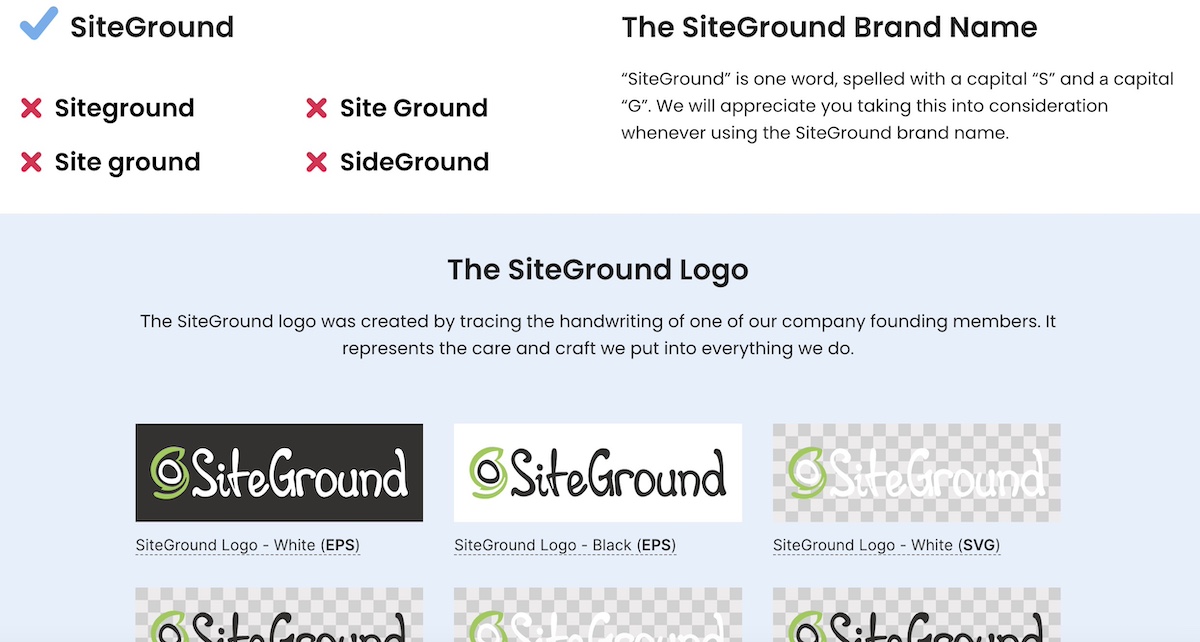
Brand guidelines help make this happen. They act as a manual for your brand, allowing anyone—whether on your team or external partners—know exactly how to execute your brand, and equally important, how not to. They don’t just document the elements we’ve covered above, but they also provide concrete examples of correct and incorrect usage.

Example of SiteGround brand guidelines including logo dos and don'ts

During my years managing brand strategy for a large corporation, I learned that true brand building means letting guidelines become your watchwords. So much so that, many years later, I still remember our main pantone color code—PMS 208!—because it was ingrained in every project and interaction. That precision and consistency is what builds and maintains brand equity. 

A solid set of guidelines typically covers:

  • Color codes and typography
  • Logo usage rules, including correct and incorrect examples
  • Voice and tone guidelines

Even for small businesses, the lesson holds: treat your brand like it matters, and it will. Well-crafted guidelines make it possible to uphold that consistency, so your brand stays cohesive, professional, and memorable no matter who is communicating it.

This level of detail is oh so important. That is, to build a strong, recognizable brand (and even protect it legally), you need to be meticulous about maintaining consistency across every interaction.

7. Implement Branding 

Defining your brand is of course only the first step in brand building; the real impact comes from applying it. So now it’s time to use your newly created guidelines to really bring your brand to life. 

This is where consistency truly pays off. When I launched my own brand, I didn’t have a massive marketing budget, but every detail—from packaging and website to social media visuals and tone of voice—was carefully aligned. That consistency helped our brand stand out, getting noticed by major retailers and featured in high-profile national magazines and newspapers, and even landing coverage on the news. It proved that when your brand is cohesive and thoughtfully executed, it can generate recognition and credibility that no budget alone can buy.

Here are some ways to put your branding into action:

  • Packaging and physical materials: If you have tangible products, make sure packaging, labels, and even shipping materials reflect your brand.
  • Presentations and documents: Use consistent branding in slides, PDFs, and internal/external documents.
  • Team alignment: Make sure employees and contractors understand your brand guidelines and the value of following them. When your team knows why consistency matters, they’re better able to represent the brand accurately and maintain its impact across every interaction.
  • Advertising campaigns: Apply your brand strategy consistently in paid ads, both online and offline, so your brand messaging and visuals are instantly recognizable.
  • Create templates for social media marketing: Ensure your posts, graphics, and captions consistently reflect your colors, fonts, and tone of voice.
  • Implement branding in email marketing: Use consistent visuals, messaging, and layouts in all your campaigns so subscribers immediately recognize your brand.
  • Reflect your brand on your website: From colors and fonts to imagery and messaging, every website page should reinforce your brand identity.
Example of a website builder where you can choose the right fonts for your brand

8. Evolve With the Times

Even the strongest brands aren’t meant to stay frozen in time. As your business grows, your audience shifts, or the market evolves, your brand should adapt too—but always with intention. The goal isn’t to reinvent yourself every year, but to refine and refresh in ways that keep your brand relevant while preserving what makes it recognizable.

A few signs it might be time to evolve your brand:

  • Your business has grown or changed direction significantly
  • Your audience has shifted since you started
  • Your market or competitors have changed around you

From my experience working for a large, time-tested corporation in Silicon Valley, brand refreshes were sometimes necessary to stay current. We approached this by working closely with designers to identify the most valuable elements of the brand—the elements that audiences instantly recognized—and keeping those as a guiding thread in the refresh. The result was a brand that felt modern and upgraded, but was still just as recognizable as before.

This approach applies to any brand: evolution doesn’t mean starting from scratch. It means maintaining the essence of who you are—your mission, values, and overall feel—while updating the elements that help you stay current. Maybe your logo becomes simpler, your color palette more modern, or your messaging more attuned to your audience’s current mindset. But the throughline should always remain: your audience should feel that it’s still you, just a sharper, more confident version.

If you handle it thoughtfully, evolution strengthens brand equity and reinforces brand recognition, helping your brand feel both familiar and forward-thinking.

From Strategy to Reality: Branding Basics in Action

When all is said and done, a strong brand only works when it’s built thoughtfully and implemented consistently. Every decision—from messaging and visuals to customer interactions—should reflect the brand identity you’ve carefully defined. With that, you can project a brand that resonates with your audience and becomes a lasting, recognizable asset.

The SiteGround Website Builder makes it easy to bring your brand to life online. With customizable templates, built-in design tools, and full control over colors, typography, and layout, you can apply your visual identity seamlessly across every page. Whether you’re launching your first site or refreshing an existing one, it helps ensure your brand feels cohesive, polished, and uniquely yours from the moment visitors land on your homepage.

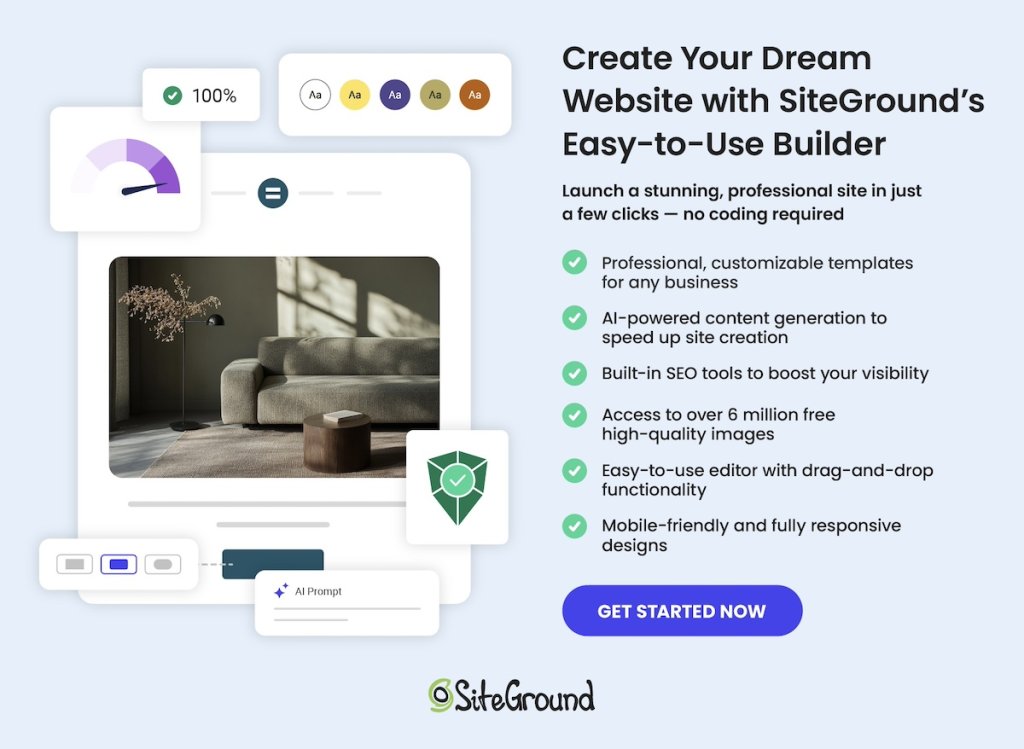
A promotional image for SiteGround's Easy-to-Use Website Builder featuring a mockup of a website with a living room photo. The text highlights creating a professional site without coding, offering customizable templates, AI-powered content generation, built-in SEO tools, access to over 6 million free high-quality images, an easy drag-and-drop editor, and mobile-friendly designs. Includes a "Get Started Now" button and the SiteGround logo.

Frequently Asked Questions

What are common branding mistakes to avoid?

The most common mistake is inconsistency, using different colors, tones, or messaging across platforms until people stop recognizing you. Others include skipping the mission-and-audience work before jumping straight to logos and colors, copying a competitor’s look instead of building your own identity, and refreshing your brand so often it never has a chance to build recognition.

Does branding work differently for a startup versus an established business?

The fundamentals, defining your mission, understanding your audience, building a visual identity, stay the same either way. Startups are usually building that identity from scratch with limited resources, while established businesses are more often refining or evolving a brand that already has recognition and equity worth protecting.

What’s the difference between a brand and a logo?

Your logo is one visual element, a symbol or mark that represents you. Your brand is everything people think and feel about your business: how you communicate, how you treat customers, and the overall impression you leave, of which your logo is just one part.

How long does it take to build a brand?

There’s no fixed timeline. Working through the mission, audience, story, and visual identity steps can take anywhere from a few weeks for a small business to several months for a larger company, and a brand keeps evolving well after that initial work is done.

Do I need a big budget to build a strong brand?

No. The steps in this guide, defining your mission, understanding your audience, creating a consistent visual identity, are about clarity and consistency, not spending. Some of the most recognizable brands started with limited resources and grew their recognition through consistent execution over time.

This article was originally published in October of 2025 and then updated in October of 2026.