

Social media and email marketing solve different problems: social builds your audience, email deepens the relationship. For small business owners and solopreneurs, the answer isn’t to pick one; it’s to stop treating them as separate. This article shows you how.
Key takeaways:
- Social media finds you new people; email is how you keep them coming back.
- Your social followers and email subscribers aren’t the same people and running campaigns across both reaches more of them.
- Seeing the same message twice is often what makes someone finally click.
- A signup link in your bio and social icons in your emails are enough to get started.
- One piece of content can work on both channels. Just change the format, not the idea.
What is social media and email marketing?
Social media marketing and email marketing are two digital marketing channels that help small businesses reach, engage, and convert their audience.
- Social media marketing uses platforms like Instagram, Facebook, LinkedIn, or TikTok to help people discover your business through content like posts, stories, videos, and comments.
- Email marketing is the practice of sending messages to a list of people who’ve chosen to hear from you (your email list), giving you a direct line to an audience that already knows who you are.
Email vs. social media: what each one can’t do alone
Used together, social media and email are a core part of any integrated marketing strategy. But before we get to the “together” part, let’s look at what each one is missing on its own.
What social media can’t guarantee
Social media gives you reach, but not control. When you post, the platform’s algorithm decides who sees it and it’s rarely all of your followers. That’s because organic reach on most platforms has been shrinking for years, as reported by ADdictive. Therefore, your followers aren’t guaranteed to see your content. When a platform tweaks its algorithm, businesses that relied solely on organic reach have seen their engagement drop by half overnight — with no warning and no recourse.
What email can’t do for discovery
Email gives you a direct line to people who already know you, but it can’t help new people find you. You can only send to the list you have, and if that list isn’t growing, neither is your reach.
Why small businesses need both
So each channel has a ceiling the other helps break through. Here’s what that looks like for a small business.
Integrate social media to grow your email list
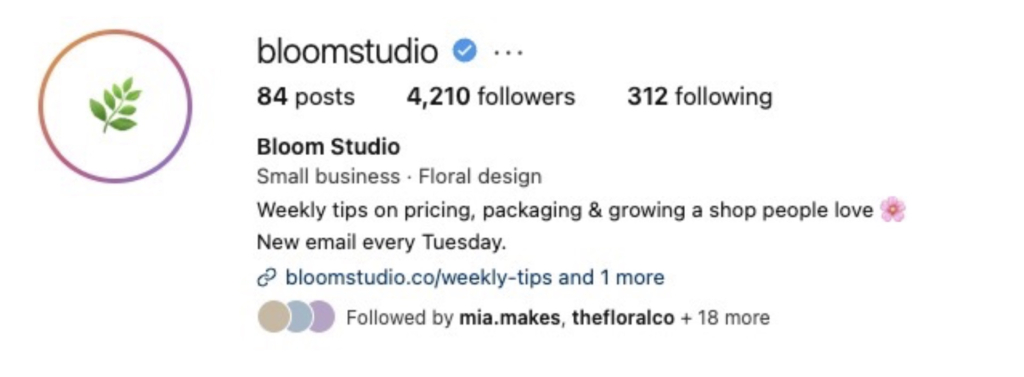
Social media marketing puts you in front of people who don’t know you yet and some of them will want to hear more. That’s your opportunity to convert a follower into a subscriber. A bio link pointing to a signup page, a post promoting a free resource, or a lead magnet tied to content you’re already sharing can all drive signups without a paid ad in sight.
This is especially worth keeping in mind if your audience skews younger. Gen Z may live on social media, but they’re also active email users when the content is relevant and doesn’t feel like a broadcast. Мost of them checking their emails multiple times a day, according to Campaign Monitor.
With SiteGround Email Marketing, you can create signup forms in minutes and share them anywhere, including your social profiles.
Use email to get more subscribers on social
Your email subscribers have already signed up to hear from you, which makes them far more likely to follow you on social media than someone who stumbled across your profile.
A simple nudge in your email newsletter gives subscribers a specific reason to follow you on social. Something like “we’re dropping an exclusive discount code on our Instagram tomorrow” or “join us on Facebook this Thursday for a live Q&A” can go a long way.
Extend the reach of a single campaign
There’s an advantage that’s easy to overlook: your email subscribers and your social followers aren’t usually the same group of people. Some follow you on Instagram but never signed up for your emails. Others are on your list but don’t follow you anywhere on social.
A freelancer announcing new packages can email existing clients while posting on LinkedIn to get in front of potential new ones. A local shop running a seasonal promotion can hit their subscriber list and pin the offer to their Instagram profile at the same time. Same campaign, two audiences, more chances to convert.
Communicate the same message across both channels
Seeing the same campaign twice: once in an inbox, once on a social feed, makes people more likely to act on it. According to WifiTalents, email and social media combined generate 30% higher engagement than either channel alone.
Someone who ignored your email might act when they spot the same offer on Instagram. Someone who scrolled past your post might finally click when it lands in their inbox. That second touchpoint is often what makes the difference.
Five best practices for a combined email and social media marketing strategy
Now that you know what each channel brings to the table and why they work better together, it’s time to get into the how. Here are five things you can start doing today.
#1. Start with a signup form on your social channels
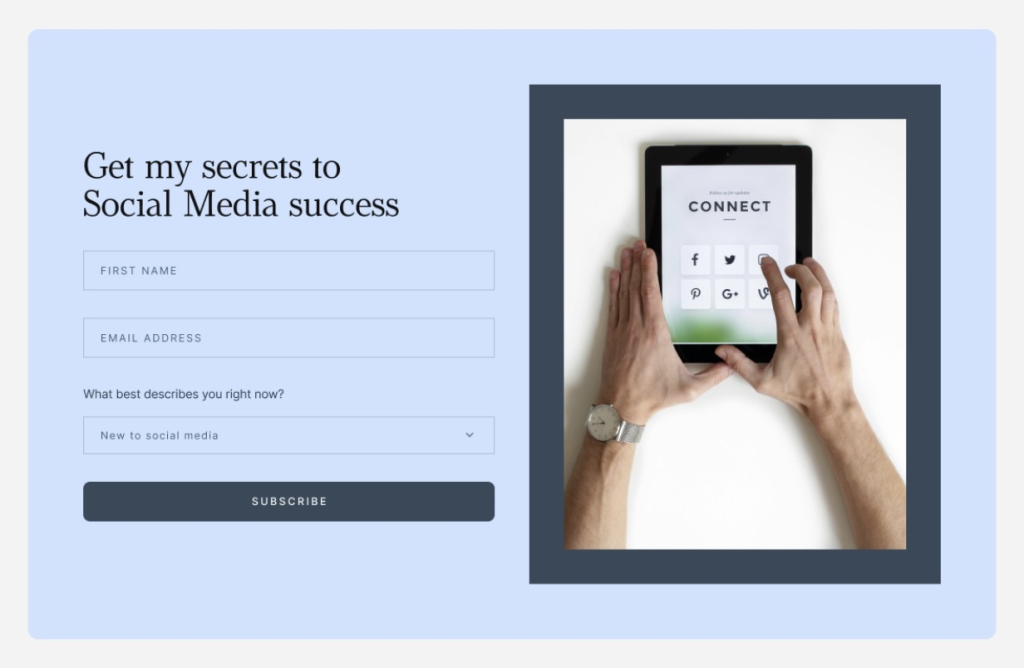
The simplest way to turn social followers into email subscribers is to make signing up easy and obvious. Think about how many people follow you on social, engage with your posts, and then disappear. No way to reach them outside of whatever the algorithm decides to show them next. A signup form bridges that gap. Add a link to your bio, include it in your posts when relevant, and if you’re running a lead magnet or a freebie, make the form the destination. The key is giving people a clear reason to hand over their email. “Get weekly tips” works better than “join our newsletter.”
With SiteGround Email Marketing, you can create and customize signup forms in minutes and drop the link anywhere your audience already is. There’s also a ready-to-use Subscribe page with no design work needed, you can just copy the link and share it on your social profiles, in your bio, or anywhere else your audience lands.
Of course, a signup form only works if people actually want to sign up.
#2. Promote your newsletter as a content destination
Most people won’t sign up for a newsletter just because it exists. But they will sign up for something that sounds worth reading. On social, treat your newsletter like a product: share snippets of what’s inside, tell people what they’ll get that they won’t find on your feed, and post consistently about it. A behind-the-scenes look at your last issue, a quote from a recent edition, or a “here’s what we covered this week” post all give followers a reason to want in.
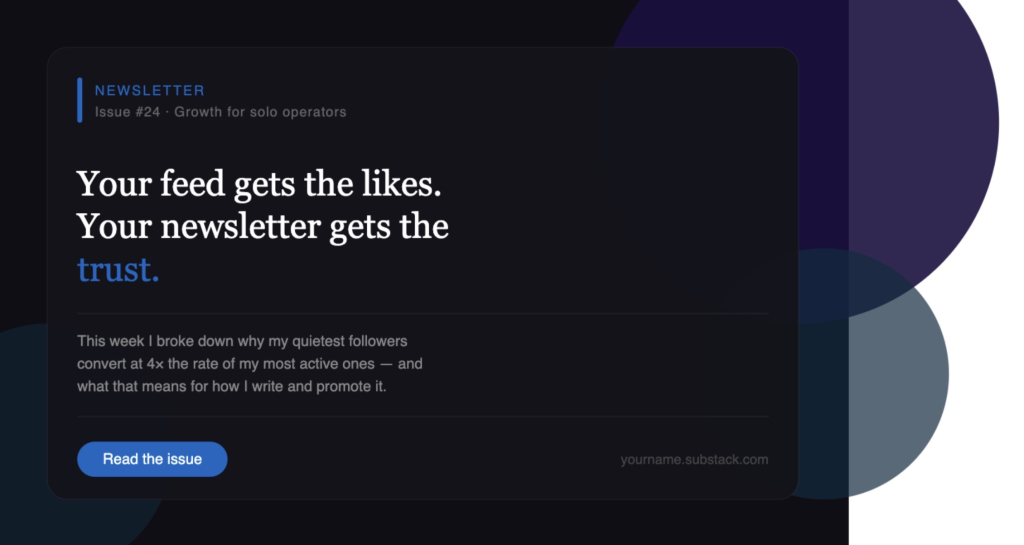
If you want to take it a step further, SiteGround Email Marketing’s View in Browser feature gives each of your emails a public link, meaning past issues can be browsed online like a blog. Share that link on social and people can read your previous emails before deciding to subscribe. Add a signup form to the page and you’ve turned a single social post into a list-building opportunity.
#3. Add social links to every email you send
Your subscribers are already engaged enough to open your emails, so give them an easy way to find you on social too. Adding social icons to your emails takes minutes, but don’t just drop them in your footer and call it done. Give people a reason to click. A line like “we post daily tips on Instagram that don’t make it into the newsletter” is far more compelling than a row of logos.
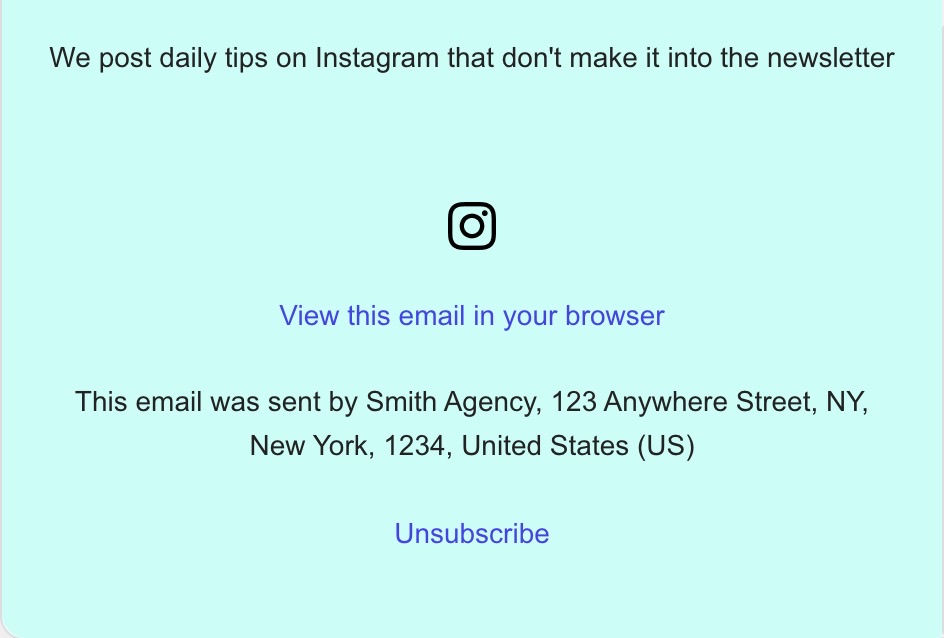
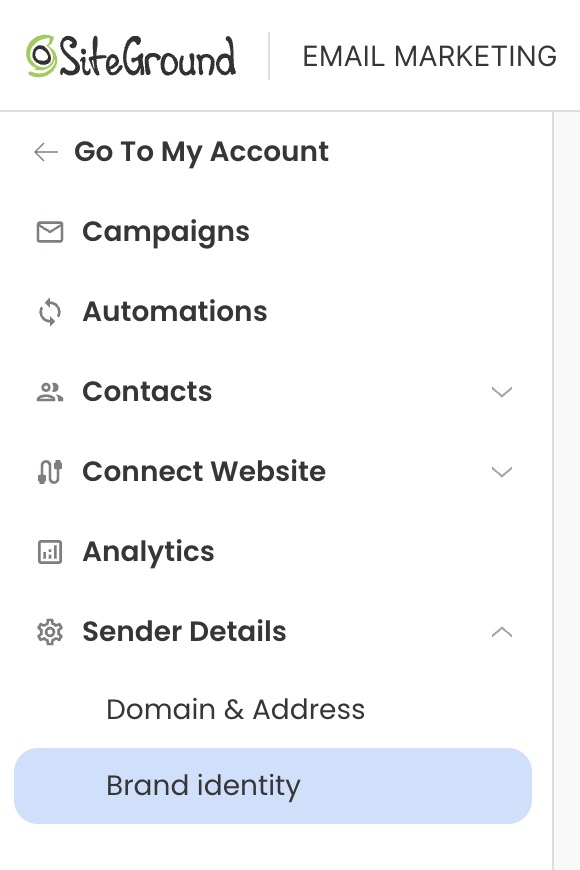
SiteGround Email Marketing lets you add social links directly to your email templates through Brand Identity. Set it up once and they’ll appear in every email you send automatically, without you having to think about it again.
#4. Use social to tease what’s coming in email (and vice versa)
People act on anticipation. A teaser post on social media before your email goes out: “something good is landing in inboxes tomorrow” or “we’re sharing our full pricing breakdown in this week’s newsletter, subscribe to get it”, creates a reason to pay attention before the message even arrives. It also rewards subscribers for being on your list, which makes them less likely to tune out over time.
On the flip side, use your emails to point subscribers to something happening on social like a live session, a poll, or a limited-time story. A fitness coach teasing their next workout plan email on Instagram, or a freelance designer using their newsletter to invite subscribers to a LinkedIn live session — small moves that keep both audiences engaged and curious.
And if you’re already sharing content across both channels, you might as well get double the mileage out of it.
#5. Repurpose content across both channels
You don’t need to create separate content for every channel. If you’ve ever stared at a blank Instagram caption after already writing a newsletter that week, you know the feeling. The fix isn’t always more content; it’s the same content, reshaped for each channel.
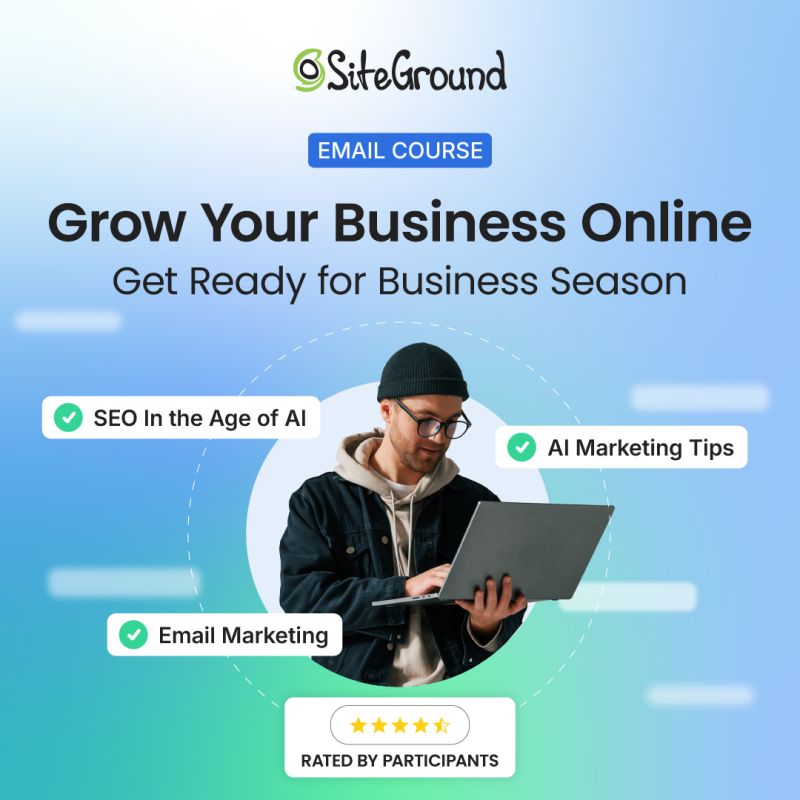
A newsletter section can become a carousel post. A social post that got strong engagement can become a full email. A how-to you wrote for your list can be broken into a three-part Instagram series. The content is already there — repurposing it just means adapting the format, not starting from scratch. Take SiteGround’s Grow Your Business Email course, for instance, delivered as an email series and promoted across social media at the same time. Same content, different format, reaching people on both channels without doubling the workload.
Email and social media marketing: putting it all together
Email and social media are better as a team and connecting them doesn’t take much. Use social to grow your list, use email to work that list, and let both channels carry your campaigns further than either one could alone. Start small, stay consistent, and the two channels will start pulling in the same direction.
[58]
Frequently asked questions about social media and email marketing
Neither is better than the other. They serve different purposes. Social media is better for reaching new people and building awareness. Email is better for converting and retaining an audience you’ve already built. Used together, they cover the full email customer journey.
Add a signup link to your bio, promote your newsletter regularly in your posts, and give people a specific reason to subscribe — a free resource, exclusive content, or a discount. The clearer the benefit, the more likely people are to sign up.
Yes. You don’t need a complex stack to connect the two channels. SiteGround AI Studio brings both together in one place — the Email Marketing Agent builds full campaigns from a single prompt and sends them directly into SiteGround Email Marketing, while the Social Media Managers turn the same message into channel-ready posts for Facebook, Instagram, and LinkedIn. Same workspace, both channels covered.
Posting inconsistently, focusing on follower count over engagement, and treating every platform the same. Another common one: using social as a broadcast channel rather than a two-way conversation. The businesses that get the most out of social media show up regularly, respond to comments, and give their audience something worth engaging with.