
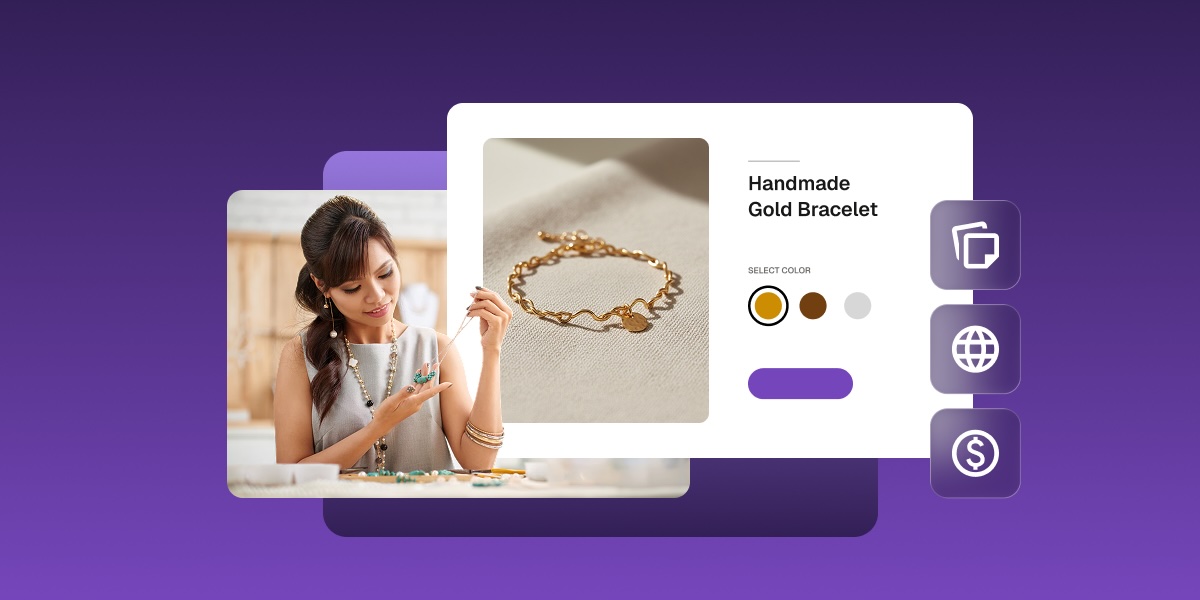
Your kitchen table is covered in jewelry, candles, soap, you name it, and everyone keeps asking if you sell it. Time to make that a yes. Selling homemade and handmade products means picking a channel that matches what you’re making, pricing around that channel’s fees, and building toward your own online store once the per-sale cut starts eating into your margin. Start with a low-commitment channel to test demand, then move to your own site once fees justify the switch.
Key takeaways:
- Marketplaces and your own store solve different problems: one gets you selling online fast, the other keeps more of each sale once fees start adding up.
- Cost-plus pricing needs to include your time and overhead, not just materials, or you’re not actually pricing a business.
- If wholesale is ever a real possibility, price for it from day one: a direct-to-consumer price alone can lock you out of a retail deal later.
- Owning your own store also means owning the customer relationship, since marketplaces typically restrict using buyer data for marketing beyond the platform.
- Test demand with a small batch, a local pop-up, or a limited listing before committing to a full production run.
- Most hobby sellers can start as a sole proprietor; forming an LLC can wait until inventory, risk, or income grows enough to justify it.
Here’s the full six-step path, starting with the one decision everything else depends on: knowing you actually have something worth selling.
Step 1: Decide what to make and validate there’s demand
If you already have a product idea, this step tells you whether it’s worth building a business around before you sink money into inventory. Every step after this one assumes you’ve settled on a specific product.
How to spot a profitable homemade product idea
A good homemade product idea hits three marks:
- Repeatable to make. You can produce it again and again without the process draining you.
- Real margin. Materials, your time, and what it sells for actually pencil out once you do the math.
- Existing demand. People are already searching for or buying similar items somewhere.
Jewelry, candles, and soap tend to score well on the margin test because materials cost is low relative to perceived value. That is, a product that takes four hours to make and sells for $15 fails that test even if the other two check out.
Quick ways to test demand before you invest
Testing an idea doesn’t require betting on a full production run. Four low-cost ways to validate first:
- A local pop-up or craft fair table. A weekend at a market tells you more about real buying behavior than weeks of guessing.
- A small social test batch. Post a handful of finished pieces on social media or in a relevant community and watch for actual purchase interest, not just likes.
- A limited marketplace listing. List five to ten units on Etsy before committing to a full production run.
- A quick, no-code website. Setting up a basic online store lets you test a real product page and checkout without weeks of setup or a full marketplace commitment.
If none of those produce interest, that’s useful information too. It’s cheaper to learn that from ten units than from two hundred.
Step 2: Handle the legal and business basics
None of this replaces a lawyer or accountant, but you need to know what to check before you take your first payment. Keep this practical: flag what applies to you, then confirm the specifics for your state and product category.
Do you need a business license or LLC?
Most hobby sellers don’t need an LLC to start slinging handmade items or selling crafts online. A sole proprietorship, which typically requires no separate formation, covers most first-time sellers, and you can add an LLC later once revenue and liability exposure both grow enough to justify it. It starts to matter once:
- You’re carrying real inventory instead of making pieces to order.
- You’re shipping fragile products that could cause injury if something goes wrong.
- Your income changes your tax situation enough to want the legal separation.
Check your state’s requirements and the U.S. Small Business Administration’s guide to business licenses and permits before you assume either way.
Permits and rules that vary by product
Non-food handmade goods like jewelry, candles, soap, art, and home decor generally face far lighter permit requirements than food items, but they’re not permit-free. Most makers in this category need to check a few things regardless of what they’re crafting:
- A sales tax permit, since most states require you to collect and remit sales tax once you’re selling regularly, whether through a marketplace, at a fair, or from your own site.
- A home occupation permit or local business license, if you’re producing from home and your city or county requires one for a home-based business.
- Product-specific safety rules, which vary by category. Candles are covered by an industry fire-safety labeling standard (ASTM F2058) that most marketplaces and retailers expect even though it’s technically voluntary, and soap marketed with moisturizing or other beyond-cleansing claims shifts from the CPSC’s lighter “true soap” category into FDA cosmetic labeling rules.
Cottage food laws, allergen labeling, and health department permits sit in a separate, stricter category that applies specifically to baked goods and other food products, and those requirements shift by state and even by county. If you’re making food items rather than handmade crafts, SiteGround’s bakery website builder guide covers that compliance in more detail.
Step 3: Where to sell handmade items: marketplaces, local, or your own store
This is the decision that shapes everything after it. Your channel determines your fee structure, and your fee structure determines your price in Step 4. There’s no universally “best” option here: it depends on how much traffic you can drive yourself versus how much you’re willing to pay a platform to bring buyers to you.
Selling on marketplaces (Etsy, Amazon Handmade, and alternatives)
Etsy stacks a listing fee, transaction fee, and payment processing to land around 10-13% combined, while Amazon Handmade charges one flat 15% referral fee, and both work better than eBay or Depop for a dedicated handmade storefront. (Fees accurate as of August 2026 — always check each platform’s current seller fee page before pricing.) Those fee percentages are only part of the picture when weighing an ecommerce platform against a marketplace, which also comes down to how much control and traffic you’re trading away.
Selling locally: markets, pop-ups, and consignment
Local selling carries its own cost structure, separate from either marketplace:
- Craft fairs and markets typically charge a flat booth fee, often $25 to $150 for a weekend, regardless of what you sell.
- Consignment shops take a percentage cut of each sale instead, commonly 30 to 50%, in exchange for handling the retail floor space for you.
Local selling is a natural extension of the demand testing from Step 1: real buyers, no storefront commitment yet.
Selling from your own website
Your own store has no per-sale marketplace cut. On a typical $16 item, Step 4 works through the exact numbers, but that’s roughly $1.50 to $1.80 more in your pocket per sale than a marketplace takes, before you’ve changed anything about the product itself. A few other things come with owning the storefront:
- You own the customer relationship. Etsy’s seller policy restricts using customer data beyond Etsy-related communications unless the buyer opts in elsewhere. Your own checkout can capture an email with consent, feeding straight into the repeat-customer tactics in Step 6.
- You’re not competing in someone else’s search results. A marketplace search for “handmade ceramic mug” returns thousands of sellers ranked by that platform’s algorithm. Your own product pages compete in Google instead, where SEO effort compounds rather than resetting with every algorithm change.
- You control the presentation. Photography, the maker story, bundling, subscriptions: marketplaces standardize these into a fixed listing format, while your own site builds the page around what actually sells your product.
- You skip platform-mandated fees on top of your base rate, like Etsy’s Offsite Ads program, which can add another 12-15% on sales it attributes to itself.
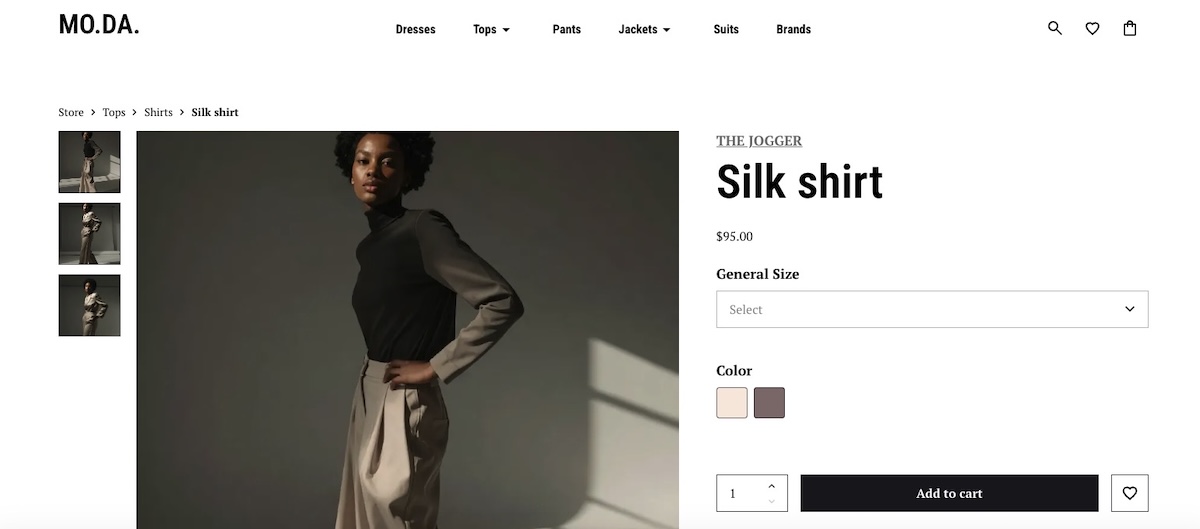
The trade-off: you’re now responsible for driving your own traffic, which is what Step 6 covers. Apparel and accessory makers should check SiteGround’s clothing website builder guide and online boutique guide for category-specific setup; food sellers should use the bakery guide referenced in Step 2 instead.
Step 4: Price your homemade products so they’re actually profitable
Pricing comes after the channel decision on purpose. The same candle needs a different price on an Etsy shop than it does on your own store, because one of those channels is taking a cut and the other isn’t.
A simple cost-plus pricing formula
Cost-plus pricing adds up materials, your time at a real hourly rate, and overhead, then layers a margin on top. Here’s a candle priced that way:
| Cost component | Amount |
| Materials (wax, wick, container) | $4.00 |
| Time (20 min at $20/hour) | $6.67 |
| Overhead (packaging, utilities) | $1.00 |
| Base cost | $11.67 |
| + 40% margin | ~$16.35 |
| Rounded price | $16-17 |
Skipping the “time” line is the single most common mistake first-time sellers make. If your time isn’t in the formula, you’re not running a business. You’re subsidizing one.
Pro tip: the $16-17 price above works if you’re only selling direct to customers. It falls apart if you also want to sell through shops or boutiques, because retailers who resell your product usually want to buy it at about half of what they’ll charge their own customers, a standard called keystone pricing. That’s where the math gets tight: you can’t just raise your own retail price to make room, since customers won’t pay a wildly higher price for the same candle just because a boutique might carry it someday. In practice, most makers either accept a thinner cut on wholesale orders than textbook keystone, or price a little higher from the start so there’s some room without pricing themselves out of their own direct sales. Decide which trade-off you’re making before a shop asks for wholesale terms, not after.
Factoring in shipping and packaging for fragile items
Breakable goods like ceramics, candles, and glass jewelry need protective packaging: sturdy boxes, void fill, and “fragile” handling labels can add $1 to $4 per shipment depending on item size. Skip it to save a few cents and it comes back as breakage claims, returns, and refunds, all of which cost more than the packaging would have. Build that cost into your product price or charge it separately at checkout. Either way, price it in upfront.
Adjusting your price for marketplace fees vs. your own store’s margins
Take that same $16 candle across three channels:
| Channel | Fee | You net |
| Etsy | ~10-13% combined | ~$14.00-14.40 |
| Amazon Handmade | 15% flat | $13.60 |
| Your own store | 2.9% + $0.30 processing | ~$15.24 |
That’s the entire argument for eventually moving toward an owned store: the product doesn’t change, but the channel decides how much of that $16 actually reaches you.
Step 5: What you need to launch your own online store
If you’ve decided your own online store is the right path, the channel comparison and fee math earlier in this guide already told you why. What’s left is a short, concrete list: five things to actually set up before you’re taking orders.
The launch checklist
- A domain name that matches your brand and is short enough to say out loud. Your business name is the obvious first choice; if it’s taken as a .com, a close variation usually reads better to customers than an unfamiliar extension. Beyond the name itself, buying a domain involves a few checks before and after registering it that are worth getting right the first time.
- High-performance hosting built for stores. A store handles more simultaneous visitors and heavier pages than a blog, especially around a sale or a feature in someone’s newsletter, and slow load times cost you sales directly: shoppers abandon a cart faster than they’d tolerate a slow blog post loading.
- A payment processor connected and tested before launch, not after your first sale comes in. Run a real test purchase with a real card before you announce the store, so a broken connection doesn’t surface for the first time on a paying customer.
- Shipping rates and zones set up to match your actual costs. This matters most for fragile items: a flat rate that doesn’t account for the extra packaging from earlier loses money on every heavier order, so build that packaging cost into the rate itself rather than absorbing it.
- At least one full product page built and a complete test checkout run, from browsing to confirmation email, so you catch a broken step before a customer does.
SiteGround Ecommerce covers four of these in one place: domain registration, hosting built for stores, direct payment integration so orders don’t need manual reconciling against a separate processor account, and built-in shipping zone and rate tools so you can set different rates by region without a separate plugin. Its built-in AI Store Agent even gets you a head start on the fifth, generating product titles, descriptions, and categories so the test checkout is really all that’s left to do yourself. If you’re weighing it against other options, SiteGround’s guide to the best platforms to create an online store breaks down the tool-by-tool differences.
Step 6: Market your homemade business and get repeat customers
This step matters most if you’re running your own store, since a marketplace’s built-in traffic disappears once you’re on your own site, though several of the tactics below help no matter where you sell. Getting your first sale is the hard part everyone focuses on. Getting your fifth sale from the same customer is where the actual business starts.
Social media and content that actually sells
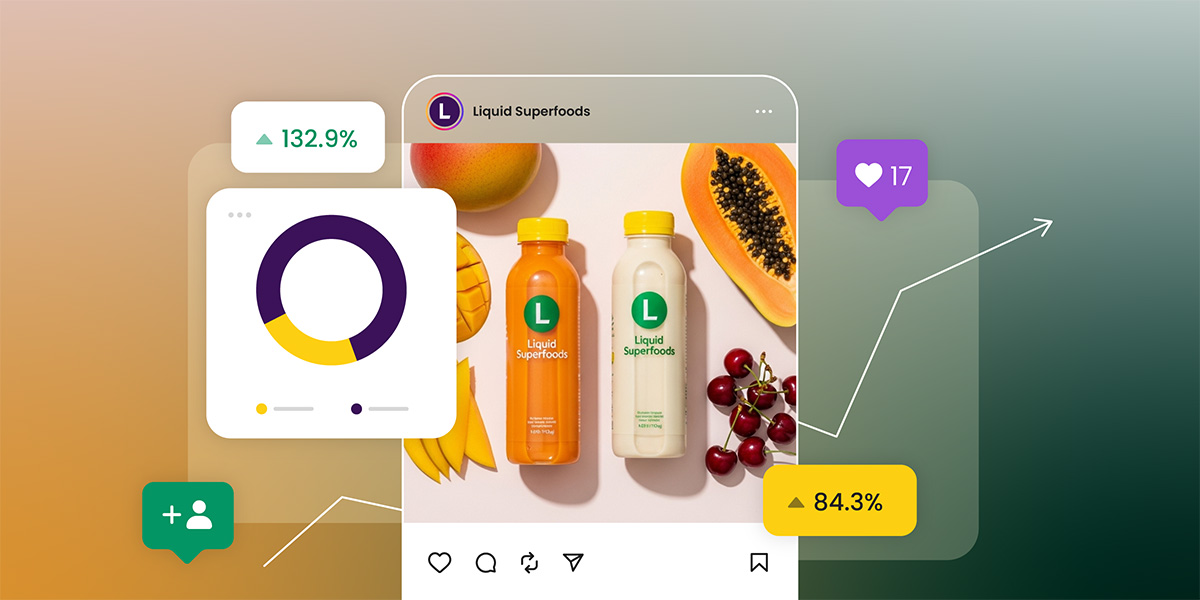
Short-form video and photo content showing your making process performs unusually well for handmade goods specifically, because the process is the product’s story. A 30-second clip of a juice being made or a ring being soldered sells more than a polished product photo alone, which is the whole logic behind marketing a small business on Instagram: show the making, not just the finished piece.
Email, local SEO, and other ways to reach new buyers
Beyond social content, a short list of channels is worth setting up early:
- Email marketing — the highest-return marketing channel for repeat buyers.
- Local SEO — matters if you also sell at local markets or from a studio, since “handmade jewelry near me” searches convert differently than broad marketplace traffic.
- Cross-promotion with other makers — swapping mentions or bundling with complementary sellers, especially at shared craft fairs.
These three barely scratch the surface of a full small business marketing plan, but they’re the ones with the fastest payoff for a handmade seller specifically.
Turning first-time buyers into repeat customers
Most sellers stop marketing the moment the order ships, which is exactly when a repeat customer is won or lost. Three tactics do most of the work:
- A packaging insert with a discount code for the next order.
- A direct request for a review once the order’s arrived.
- A follow-up email a week or two after delivery, asking how the product held up.

Ready to turn your homemade products into a real business?
The path is the same regardless of what you’re making: validate the idea, handle the legal basics, pick a channel, price around that channel’s fees, and market for repeat business once you’re selling consistently.
When you’re ready to run your own storefront, SiteGround Ecommerce bundles the hosting, checkout, domain, and shipping tools into one place, backed by expert support, so you can launch without stitching together separate services or learning a new platform from scratch.
[103]
Frequently asked questions
For most first-time sellers, a marketplace like Etsy is the fastest place to start because of the built-in audience, and your own store makes sense once fees start eating a meaningful cut of margin. See the marketplace, local, and own-store breakdown above for the full decision framework.
Amazon Handmade, eBay, and Depop are the three most common Etsy alternatives, each suited to different product types, price points, and craft businesses. Amazon Handmade is an online marketplace that tends to work best for higher-priced items, while eBay and Depop fit resale-adjacent or fashion-leaning goods.
Usually not to start. Most hobby sellers begin as a sole proprietor and only form an LLC once sales volume, inventory risk, or tax complexity grows enough to justify the paperwork.
It depends on the difference between material cost and perceived value rather than any single “best” product. Jewelry and candles often carry strong margins because materials are cheap relative to what buyers are willing to pay, which ties back to the validation criteria in Step 1.