
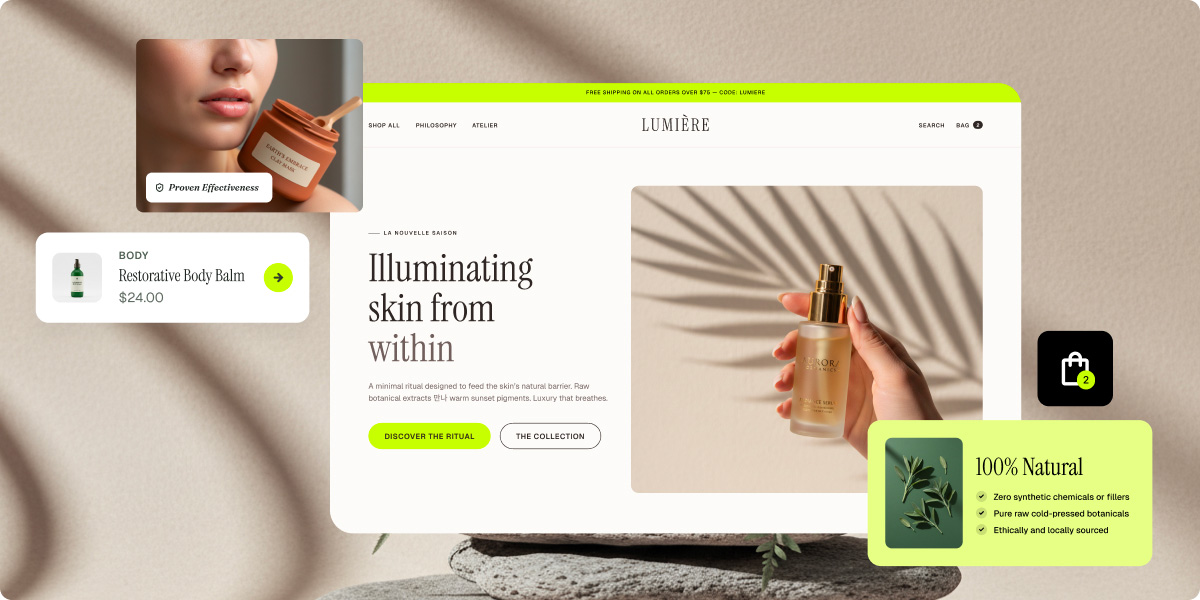
Yes, you can make real money selling beauty products online, whether that’s a lip oil you’ve been mixing in your kitchen or a wholesale account with a supplier three time zones away. Getting there takes the right niche, some unglamorous legal groundwork, and an online store that ticks all the right boxes to make your business a success.
Key takeaways:
- Private label, reselling, and handmade aren’t interchangeable: each comes with a different cost structure, margin, and workload.
- Legal and licensing requirements run deeper for beauty than for most product categories, and skipping them is the fastest way to get a store shut down.
- Compliance isn’t just federal. State-level rules can apply based on where your customer lives, not where your business is registered.
- Registering a business name and legally owning that name are two different things, and conflating them is a common early mistake.
- An all-in-one platform handles most of the technical setup, from product variants to payments, which is central to how to sell beauty products online without hiring a developer.
- Photography and honest ingredient information do more for conversion than traffic volume, regardless of which business model you choose.
Step 1: Choose your beauty niche and business model
The beauty industry has room for another brand: U.S. shoppers are on pace to spend $30.73 billion on beauty and personal care products online in 2026, growing roughly 8.4% a year, faster than any other beauty sales channel, according to Statista.
But if you plan to jump in, first you must start with a decision that shapes everything else: are you formulating, reselling, or making the product yourself? Most sellers land in one of three lanes, and each one comes with a different cost structure and a different list of Step 2’s legal boxes to check.
Private label
Partner with a manufacturer that already has a formula, a moisturizer base, a lip gloss, a shampoo, and put your own name, packaging, and branding on it.
- Choose from an existing formula menu instead of commissioning one from scratch
- Minimum order quantities are manageable for a first-time seller
- Margins run higher than reselling, since you’re not the tenth seller of an identical product
Reselling
Buy finished, branded beauty products at wholesale and mark them up. It’s the more straightforward way to sell cosmetic products online if you’d rather test a niche than build a formula.
- Fastest route to inventory: no formulation or packaging decisions to make
- Thinnest margins of the three models
- Bound by the brand’s minimum advertised price rules, so pricing isn’t fully yours either
Handmade beauty products
Make the product yourself: cold-process soap, whipped body butter, small-batch lip balm, really any body products mixed in your own kitchen or a rented commercial space.
- Full creative control over the formula, packaging, and branding
- The model most associated with wanting to sell beauty products from home
- You’re the manufacturer of record, so every compliance box in Step 2 is yours to check
Whichever lane you pick, most beginners are working with limited capital, so it’s worth pairing your niche decision with a plan for starting an online store on a budget before you spend on inventory or a logo designer.
| Business model | Startup cost | Control over formula | Typical margin |
| Private label | Low to moderate | Choose from existing formulas | Higher |
| Reselling | Low | None | Lower |
| Handmade | Low, but time-intensive | Full | Highest, if priced right |
Step 2: Handle legal, licensing, and safety requirements
| A quick disclaimer before the specifics: this section is a general overview, not legal advice. Requirements, fees, and exemption thresholds shift by state, product type, and over time, so confirm current rules for your specific product and location with your state’s licensing office, the FDA, or a lawyer before you rely on any number below. |
This step is an easy one to procrastinate over, but it’s also the one most likely to shut your store down if you ignore it. So let’s break it down so that you can check it off your list.
Registering your beauty business
A sole proprietorship has no state filing fee to form and works fine for testing the water, but your personal assets aren’t separated from your business liabilities, which matters in a category prone to allergic-reaction claims.
- Sole proprietorship: no state formation fee, though a DBA filing (needed if you’re selling under a brand name rather than your own legal name, which most beauty sellers are) typically runs $10 to $100
- LLC: $35 to $500 in one-time state filing fees, separates personal and company assets. Several states also charge an ongoing annual franchise tax on top of that filing fee. California’s is $800 a year minimum, regardless of income, so check your state’s full cost, not just the filing fee
- EIN: free and instant from the IRS, needed once you open a business bank account or hire anyone
Worth noting: Most beauty sellers make the jump to an LLC once they’re taking real orders.
Getting a seller’s permit and sales tax basics
Most states require a seller’s permit before you can legally collect ecommerce sales tax, and you’ll need one in your home state at minimum, plus any state where you have nexus (a warehouse, an employee, or enough sales volume). Handmade cosmetics and private label products are generally taxed the same way as any other tangible good, though a few states carve out exceptions for specific categories, so it’s worth a quick check with your state’s department of revenue before you launch.
FDA cosmetic regulations and MoCRA compliance
The Modernization of Cosmetics Regulation Act (MoCRA), in effect since 2023, requires most facilities that manufacture or process cosmetics to register with the FDA and list every product they sell, including its ingredients.
- Facility registration renews every two years, anchored to your facility’s own initial registration date rather than a single fixed deadline. Facilities that registered back in 2024 are hitting their first renewal window this year
- New products must be listed within 120 days of hitting the market
- A small-business exemption applies if your average annual revenue is under $1 million
The exemption doesn’t cover everyone, though. It doesn’t apply if your products:
- Come into contact with the eyes, like mascara or eyeliner
- Are injected
- Are ingested
- Are intended to alter appearance for more than 24 hours, like gel nail polish or brow tint
Cosmetic labeling requirements
Every cosmetic label needs a handful of required elements, split across the front-facing panel and the ingredient panel.
- Identity statement: what the product is, like “facial moisturizer,” on the front panel
- Net quantity of contents: also on the front panel
- Ingredient list: standardized INCI names, short for International Nomenclature of Cosmetic Ingredients, in descending order by weight (anything under 1% can be listed in any order after the rest)
- Warning statement: required wording for certain product types, such as aerosols
- Name and address of whoever’s responsible for the product
Product liability insurance for beauty sellers
Allergic reactions and skin irritation complaints happen even with a well-tested formula, and a single claim can outstrip whatever you’d saved by skipping insurance. General liability policies that include product coverage for small or home-based beauty sellers typically run a few hundred dollars a year for $1 million to $2 million in coverage through insurers that specialize in handmade goods, and most don’t require a storefront or employees to qualify.
State-specific rules to watch
Federal rules aren’t the only ones that apply. California’s Proposition 65 requires a clear and reasonable warning before selling a product containing a listed chemical to a California resident, and it applies based on where your customer lives, not where your business is registered, so an online store based in Ohio can still trigger it. Businesses with fewer than 10 employees are formally exempt, but the exemption doesn’t change the fact that liability follows the sale, not the location.
Trademarking your brand name and logo
Search the USPTO’s trademark database before you commit to a name, and ideally before you order packaging with that name printed on it. This clearance check is free and worth doing no matter when, or whether, you file a formal application.
- Search the USPTO database for exact and confusingly similar marks
- Check your state’s business entity registry, plus your target domain and social handles, for the same name already in use
- A DBA lets you legally operate under a name, but it doesn’t protect that name or stop someone else from using something similar
Formal federal registration is a bigger, later step, and plenty of small or home-based sellers reasonably wait until the business has traction before filing. If and when you do:
- USPTO filing fee: $350 per class, using pre-approved goods and services descriptions to avoid extra surcharges
- Attorney-assisted filing typically runs $750 to $1,750 all in for a single class; self-filing skips that cost but carries more risk of a rejected application
- Budget 10 to 14 months from filing to registration in a clean case, and longer if the USPTO issues an office action, which happens to the majority of applications
Whether or not you file this year, getting your branding basics locked in early, name, logo, and visual identity together, makes that clearance search easier because you’re evaluating one direction instead of five.
Step 3: Source reliable suppliers or manufacturers
Sourcing is where your business model from Step 1 becomes a real supply chain, and vetting takes longer than most first-time sellers budget for.
Private label manufacturers
Vetting a private label manufacturer comes down to three things: their formula catalog, their minimum order, and their paperwork.
- Minimum orders typically run a few hundred to a few thousand units per SKU
- Many offer sample kits so you can test formulas before committing
- Ask for a certificate of analysis and safety data sheet for every formula under consideration, not just the ones you like on first smell
White-label manufacturers
White-label takes private label (Step 1) one step further: you’re picking from the manufacturer’s existing packaging too, not just the formula.
- Cuts development time further than private label
- Leaves you with less to differentiate on besides branding and marketing
- Often the fastest route to a finished, ready-to-sell product
Wholesale suppliers
Finding a legitimate wholesale account takes more digging than searching “wholesale beauty supplier” and picking the first result.
- Contact the brand directly to ask about an authorized reseller or wholesale account, since going through an unauthorized middleman raises the risk of gray-market or counterfeit stock
- Ask directly whether the supplier allows resale on your own branded website, since some agreements restrict sales to marketplaces only
- Get the wholesale price list and minimum order requirements in writing before you commit, terms quoted verbally tend to shift
Vetting three or four manufacturers before you commit eats real hours, and building time-saving systems for running your online business early pays off long after sourcing wraps up.
Step 4: Build your store
This is where niche, licensing, and suppliers turn into an actual beauty ecommerce store a customer can buy from.
Choose how to sell
Beauty sellers face the same ecommerce platform vs. marketplace decision every seller does, and it comes down to the same three tradeoffs: cost, control, and where your buyers actually come from.
Selling on marketplaces
Marketplaces hand you built-in traffic and a checkout system you don’t have to build, which makes them a fast, cheap way to test whether a product sells before you invest in a full storefront.
- Fees stack up fast: Etsy, for example, charges a $0.20 listing fee per item that renews every four months until it sells, a 6.5% transaction fee, and roughly 3% plus $0.25 in payment processing, adding up to close to 10% in combined fees before advertising even enters the picture
- You don’t own the customer relationship or email list, just the individual transactions that pass through
- The marketplace can change its fee structure, algorithm, or policies without asking you first, and your customer base goes with it if your account is ever suspended
Building your own branded store
A branded store trades that percentage cut on every sale for a flat cost that doesn’t change with volume, so the math tips further in your favor the more you sell.
- You own the customer relationship, the email list, and every piece of data that comes through checkout
- Building an ecommerce website today means picking a platform that bundles the catalog, checkout, shipping, and tax into one system, instead of stitching together a separate builder, payment processor, and tax tool the way it used to work
- The tradeoff is traffic: a new store starts with zero visitors, and every one has to come from search, social, ads, or word of mouth, the same cost a marketplace charges you in fees instead
Feature strong product photography
Beauty sells on visuals more than almost any other category, so the platform you build on needs strong image zoom and gallery support built in, since a swatch that looks muddy on a phone screen costs you the sale before the description even loads. Mobile-first matters even more here: beauty discovery happens overwhelmingly on phones, through social feeds and search, not desktop browsing.
Add product variants for shades, scents, and sizes
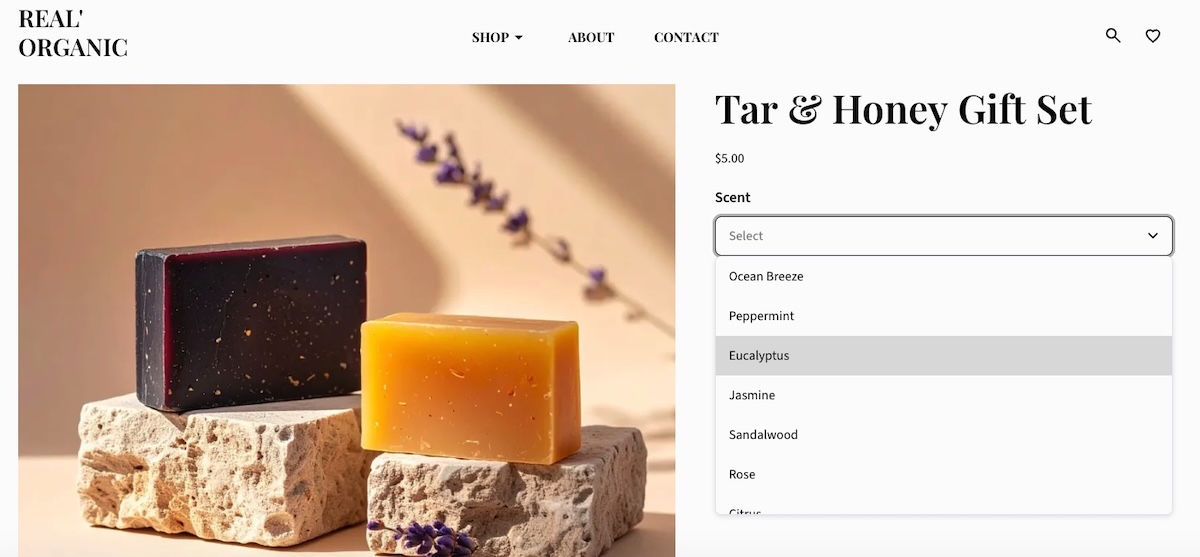
A lipstick that comes in 12 shades doesn’t need 12 separate product pages. Managing shade, scent, and size as variants on a single listing keeps your catalog manageable and keeps your SEO from splitting across duplicate pages competing with each other.
Write product descriptions that include ingredients and compliance info
This is where Step 2’s labeling requirements actually show up on the page: the full ingredient list in INCI names, net weight, and any required warning statement belong in the description or a dedicated specs section of each product detail page, not buried in a PDF nobody opens. Customers increasingly check ingredient lists before buying, so treating that information as a selling point, not a compliance afterthought, works in your favor.
Accept secure payments
Whatever platform you choose, checkout should accept the payment methods your customers already trust: credit and debit cards, digital wallets like Apple Pay and Google Pay, PayPal, and for some categories, bank transfers or cash on delivery.
If you want the mechanics of how to accept payments online spelled out step by step, including PCI compliance basics, that’s worth a closer look before you go live.
Handle shipping, including restricted items
Configure your shipping methods (zones, rates, and carrier options) before your first sale, and keep a running list of restricted items like aerosols and alcohol-based products (perfume, some nail polishes) so you don’t overlook them, since carrier rules for these vary by transport method.
Where SiteGround Ecommerce fits in
SiteGround Ecommerce brings everything in this step together in one system: storefront setup, product variants, photography-friendly templates, optimized product pages, and payments and shipping. All of it runs on SiteGround’s platform, with support available around the clock if something trips you up. That’s the assembly work most beauty sellers dread, already done.
Starting building your online store now>>
Step 5: Create product pages that convert browsers into buyers
Traffic doesn’t matter if the product page doesn’t close the sale, and beauty shoppers are unusually skeptical, since they’re putting the product on their skin. Whether you’re figuring out how to sell makeup products online or building a skincare line, product pages carry the weight of proof.
Product photography
Beauty shoppers need to see more than a pretty bottle before they trust a new brand on their skin.
- The product in its packaging
- Swatched on skin in natural light
- A close-up of texture or size
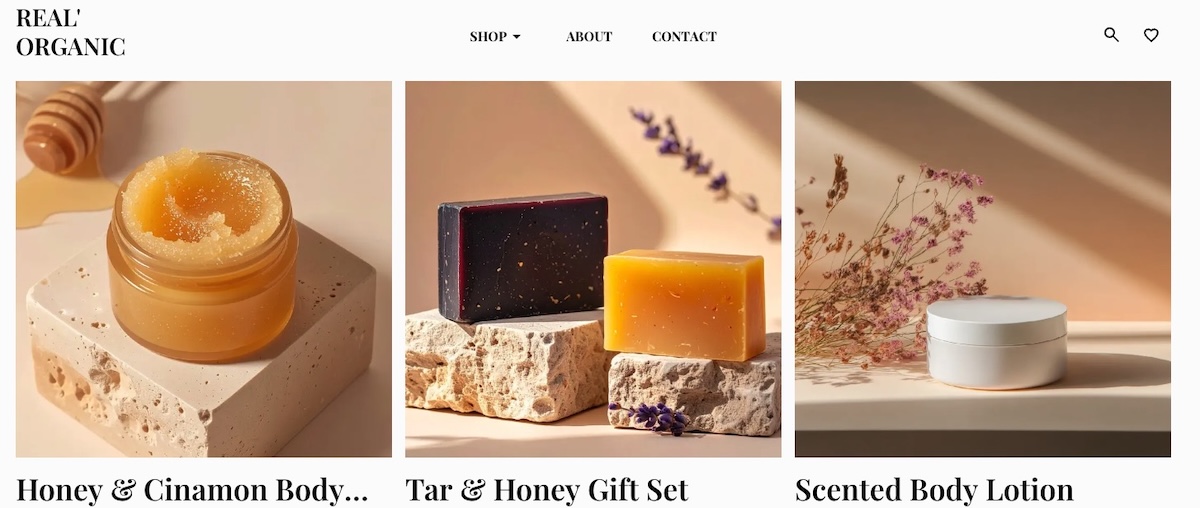
A single hero shot with perfect studio lighting looks nice but doesn’t answer the question every beauty shopper actually has: what does this look like on a real person? Good ecommerce website design ideas that convert treat photography as functional information, and not just decoration.
Descriptions
Lead with what the product does and who it’s for, then back it up with the ingredient list and texture details a skincare or makeup shopper actually reads before buying. Following basic SEO for ecommerce product pages, working the way real consumers search into your titles and descriptions naturally, helps you get found for the exact terms beauty shoppers already use.
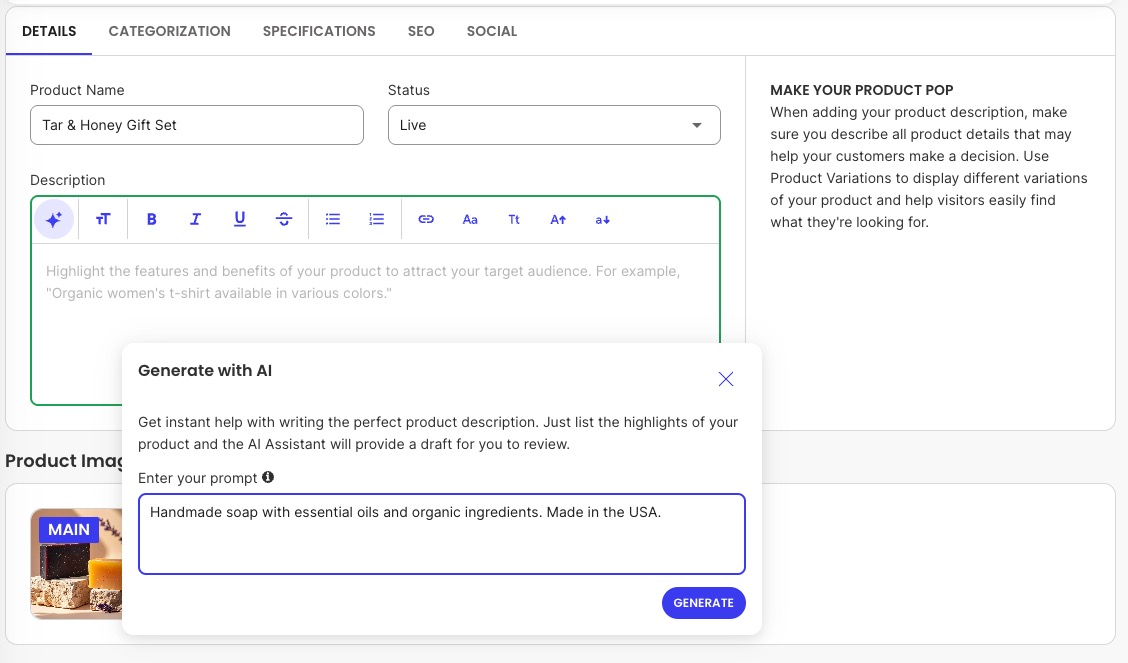
Pro tip: Need a little copywriting inspiration? A built-in AI writer, like SiteGround’s, makes it extra easy to craft the perfect product description on the fly.
Customer reviews
“Will this work on my skin type” isn’t something a spec sheet can answer, which is why reviews and social proof matter more in beauty than in almost any other category. Displaying star ratings and written reviews directly on the product page, especially ones mentioning skin type or shade match, does more for conversion than almost any other single design decision you’ll make.
Certifications and safety claims
If a product is cruelty-free, vegan, or dermatologist-tested, say so clearly, and only if it’s actually true. Overstating a certification you don’t hold is exactly the kind of overclaiming that erodes trust fast in a category where customers already read labels closely.
Trust signals and badges
A few small additions reduce the hesitation beauty shoppers feel before trying a new brand on their face.
- Secure checkout badges
- Clear return policies
- Visible customer service contact information
None of this replaces a good product, but it removes the friction that stops an otherwise interested buyer from finishing checkout.
Step 6: Market your launch and land your first sales
Hitting publish doesn’t summon customers (wouldn’t that be nice?). Nobody’s going to stumble onto a brand-new beauty website by accident, which means the next three things matter as much as everything you just built.
Social media marketing
Instagram and TikTok are where beauty discovery happens, which is why social media marketing is the highest-leverage channel for a new brand: short-form video (a shade swatch, a texture close-up, a quick tutorial) tends to outperform static product photos when you have no existing audience.
Paid ads
A modest budget on Instagram, TikTok, or Google ads can get your first sales moving faster than organic reach alone, especially when you’re starting with zero followers and zero reviews. Target narrow (skincare for combination skin, not “beauty” in general) and track cost per click and conversion rate before scaling spend. Small business marketing covers paid ads alongside the other channels worth testing at launch.
Influencer seeding
Sending product to micro-influencers, typically 10,000 to 100,000 followers, in exchange for honest coverage, not a guaranteed post, usually delivers a better return than paying a handful of larger creators for one sponsored post. Disclose the relationship clearly. The FTC requires it, and skipping it is the kind of shortcut that backfires publicly.
Email marketing
Capture emails from day one, even before launch, with a waitlist or early-access offer. A beginner’s guide to ecommerce email marketing is worth reading before your first campaign, since a solid welcome sequence is what turns a new subscriber into a first customer for a brand nobody’s heard of yet.
Step 7: Track performance and scale
Launching is the easy part. Knowing whether it’s working matters just as much, especially once you’re deciding what to reorder. Three numbers are worth watching from day one:
- Conversion rate: Ecommerce conversion rates for beauty tend to run a bit higher than the overall ecommerce average, since it’s a repeat-purchase category, but the exact number varies a lot by source and by price point.
- Average order value (AOV): Bundling complementary products (a cleanser with a moisturizer, a shade with a matching lip color) and setting a free-shipping threshold just above your current average order value are the two most reliable levers for raising AOV without discounting.
- Repeat purchase rate: Skincare and haircare are consumable products, so this matters here more than in almost any other category. As your catalog and traffic grow, website speed matters just as much as it did on launch day, since a slower site quietly erodes the repeat purchases you worked hard to earn.
When and how to expand your product line
Expand once you have reliable repeat purchase data telling you what customers already buy together or ask for in reviews, not before. A second product launched too early, before the first one has proven demand, usually just splits your limited marketing budget and inventory cash two ways instead of growing the business.
Your beauty brand is ready to launch
Seven steps, one honest sequence for how to sell beauty products online: pick your niche and business model, handle the legal and licensing groundwork that’s easy to overlook, source suppliers you’ve actually vetted, build a branded storefront, write product pages that earn trust, market the launch, then track the numbers that tell you what to do next. None of it requires a developer, a warehouse, or six figures of startup capital.
SiteGround Ecommerce is built to get a beauty brand from idea to first sale without the technical detour. Product variants, secure payments, shipping, and tax all live in one place, so the time you’d spend wiring plugins together goes into your formula, your photos, and your first hundred customers instead.
[103]
Frequently asked questions
It depends on whether you’re starting small by testing a niche on a marketplace or building a branded store for the long haul. For a branded store, look for an all-in-one platform, like SiteGround Ecommerce, that bundles hosting, payments, and shipping, with real human support if something goes wrong.
There’s no single “beauty license,” but you’ll typically need a business registration, a seller’s permit for sales tax, and, unless you qualify for the small-business exemption, FDA facility registration and product listing under MoCRA if you manufacture or process cosmetics.
Yes, but “homemade” doesn’t mean unregulated: you’ll still need business registration, compliant labeling, and, depending on your revenue and product type, FDA facility registration under MoCRA. Product liability insurance is worth budgeting for too, since a single allergic-reaction claim can cost more than years of premiums combined.
Skincare is the largest beauty category by sales, accounting for roughly a third of the U.S. beauty and personal care market, according to Grand View Research, with moisturizers and cleansers as the most consistently repurchased individual products.
Reselling can be profitable, especially as a low-cost way to test a niche, but margins run thinner than private label, since you don’t control the wholesale price and you’re bound by the brand’s minimum advertised price policy.