
Most bloggers spend the bulk of their time writing and almost none of it getting anyone to read what they wrote. Writing is the easy part. Getting a post in front of readers, and keeping it there, is the part that actually decides whether a blog grows or stalls.
Key takeaways:
- Writing takes up a small slice of running a blog people actually read; promotion, distribution, and audience-building take up the rest.
- A blog needs reliable hosting, a fast load time, and built-in social sharing and email signup tools in place before any promotion tactic can pay off.
- SEO, social media, email, guest posting, community engagement, and paid promotion are six separate channels, and no single one carries a blog on its own.
- Email is the only channel you fully own. A platform change or algorithm update can’t touch a list you built yourself.
- One post can keep earning traffic for months after publishing, as long as it keeps getting promoted instead of being left to sit.
- How to promote your blog comes down to picking two or three of these channels and running them consistently, not trying to do all six at once.
Get your blog ready to be promoted first
Six channels drive that promotion work: SEO, social media, email marketing, guest posting, community engagement, and paid promotion. Some call this a blog’s 80/20 problem: too much time on the post, not enough on getting it seen. (One well-known version of that split comes from blogger Derek Halpern of Social Triggers, who argued that most bloggers over-invest in writing and under-invest in getting it read.) None of the six channels work well on a shaky foundation, though, so that’s where to start.
Check these three things first:
- Hosting and speed. A slow site loses visitors before they read a word, and it undercuts every other promotion effort you make. If a shared link takes more than a few seconds to load, most people are gone before they see what you wrote, and no amount of promotion recovers that lost reader.
- Mobile-friendly design. Most blog traffic arrives on a phone, often straight from a social feed or a search engine result. A layout that breaks on mobile, text that requires pinching to read, or a signup form that’s impossible to tap, turns a curious visitor into a bounce before they’ve read past the headline.
- Built-in sharing and signup tools. Social share buttons and an email signup form need to already be on every post, not added later on the handful that happen to do well. A post can only be shared as easily as the tools on the page allow, and a reader who wants more from you but has no obvious way to sign up simply won’t.
A shortcut worth knowing: SiteGround Website Builder covers this checklist out of the box. It’s an easy way to build the site itself, with a dedicated blogging platform, ecommerce tools if you ever want to sell something, fast hosting, mobile-ready templates, and built-in social sharing and email signup, all without piecing together separate plugins.
Start building your blog with SiteGround Website Builder>>
1. Make your posts findable with SEO
Search engine optimization (SEO) is the channel that keeps working after you stop actively promoting a post. Get it right, and Google keeps sending readers for months. Here’s how to make good SEO for your blog a reality:
Target keywords readers are actually searching for
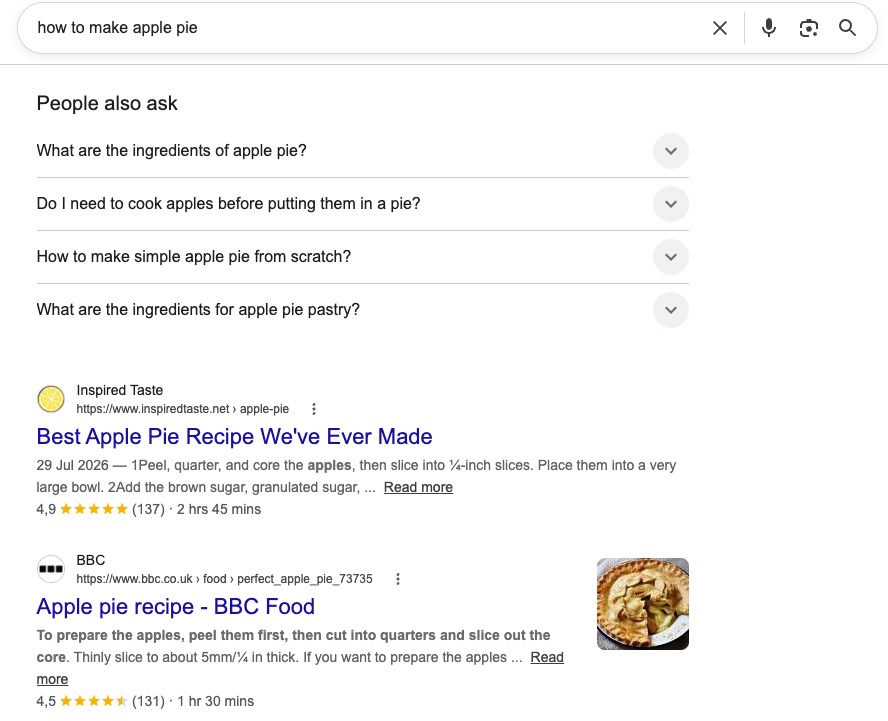
Before you write, do keyword research in order to check whether people are actually interested in your topic. Free tools like Google’s autocomplete and the “People also ask” boxes on a search results page show you real queries. Paid tools go further, showing search volume and difficulty. Google’s own Search Essentials guide is worth a skim if you’re new to this, since it covers the baseline requirements before any keyword strategy matters.
Build internal links between your blog posts
Every new blog post should link to at least two older, related posts. This does two things: it keeps interested readers on your site longer instead of bouncing after one blog article, and it tells Google which posts on your blog are related to each other. A blog with 30 posts and zero internal links behaves, to Google, like 30 unrelated pages.
Earn backlinks from other sites
A backlink is another site linking to your blog post. They’re one of the strongest ranking signals Google uses, because a link from another site is effectively a vote of confidence. You don’t need hundreds. A handful of links from sites in your niche, earned by writing something genuinely useful enough that other bloggers want to reference it, makes a bigger difference than a large batch of low-quality links. That’s the same standard Google lays out in its guidance on creating helpful, people-first content: blog content worth linking to is content worth reading first.
2. Show up where readers already scroll
Social media platforms put your posts in front of people who’d never find them through search. Here’s the social media game plan for your blog:
Pick 2-3 platforms where your audience actually is
Trying to post well on five platforms usually means posting badly on all five. So pick two or three where your specific audience spends time, and go deeper there instead of wider everywhere. A food blog probably belongs on Pinterest and Instagram. A B2B blog probably belongs on LinkedIn. If your audience skews younger and visual, Instagram marketing is worth the focused effort; if it doesn’t, that focused effort is better spent elsewhere.
Repurpose one post into multiple formats
A single 1,500-word blog post can become a carousel, a short video script, a thread, and three or four standalone social posts, each one native to the feed it’s posted in rather than a link dumped into a caption. That’s four or five separate chances for someone scrolling their feed to stop, engage, and discover the original article, from one round of writing. Repurposing is what turns “one post, one day of traffic” into “one post, ongoing traffic” on exactly the platforms covered above.
Use a consistent hashtag and posting schedule
You don’t need a content calendar tool for this. Pick two or three hashtags relevant to your niche and use them consistently, and blog post on a schedule you can actually keep, whether that’s daily or twice a week. Consistency matters more than frequency, as an audience that knows when to expect you shows up more reliably than one guessing at your schedule.
[39]
3. Own your audience instead of renting it
Social media platforms can change their algorithm overnight and cut your reach in half. Your email list can’t be taken away like that; it’s the one channel where you decide who sees what, and when.
Add a signup form to every blog post
The best place for a signup form is inline, partway through the post, right after you’ve delivered something useful. That’s the moment a reader is most likely to want more of what you write. Building an email list starts with making the signup ask this visible, not with finding the perfect incentive to offer.
Send a regular newsletter recapping new posts
A simple newsletter that recaps your latest blog posts, sent on a schedule readers can predict, does more for retention than an occasional one-off. It doesn’t need original blog content beyond what you’ve already written; a short intro and links to your recent posts is enough to keep your blog in front of people who’ve already said they want to hear from you.
A lead magnet, like a checklist, template, or short guide offered in exchange for an email address, can speed up that first signup too, giving new visitors a reason to join the list before they’ve read enough posts to want a recap on their own.
4. Borrow other people’s audiences
Every blogger with an audience started with zero readers. Guest posting and collaboration are how you reach people who already trust someone else’s recommendation.
- Write guest posts for niche-related sites. Find blogs and other websites that cover adjacent topics to yours, not identical ones, and pitch a specific relevant blog post idea rather than a generic “can I write for you.” A tight, useful pitch is the best way to achieve guest blogging success.
- Cross-promote with other bloggers or creators. Newsletter swaps, roundup posts, and shoutouts cost nothing but a few minutes of coordination, and they put your blog in front of an audience that’s already primed to trust a recommendation from someone they follow.
Keep in mind that neither tactic requires a large following to start. A blogger with 200 email subscribers can still swap newsletter mentions with another blogger who has 200 subscribers in a related niche, and both walk away with new readers.
5. Go where the conversation is already happening
Reddit threads, niche forums, and Facebook groups already rank for blogging advice, which tells you something: people are actively asking these questions in these spaces right now.
The rule here is simple: answer the question first, and link back to your blog post only when it’s genuinely the best answer to what was asked.
- A comment that’s just a link with no context reads as spam and usually gets removed.
- A detailed, helpful answer that happens to link to a post with more depth reads as a resource.
- Search for the questions your blog answers on the platforms your audience already uses, and show up as someone who’s actually helpful there before you ever mention your own content.
6. Pay to skip the slow part
Every channel above takes time to compound. Paid promotion is the one lever that can drive traffic the same day you spend the budget.
For a new blog, a small boosted-post budget on the platform where your audience already is can tell you whether a topic gets clicks before you invest more writing time in it.
- Worth it when you have something specific to test, like which headline or topic gets more clicks.
- Less worth it as a default strategy for every blog post.
Among the marketing channels available to a small blog, paid is the only one where results stop the moment the budget does. It works best as a small, deliberate line item in your small business marketing plan, paired with organic traffic and channels that keep compounding after you turn the ads off, not as a replacement for them.
Beyond publish: keep the traffic coming
That imbalance between writing and promoting doesn’t end once a blog post is live. A post left alone stops earning attention within a few weeks, or doesn’t get much attention to begin with. But if you resurface it in a newsletter, repurpose it into a new format, or link to it from a newer related post months later, that same piece can keep earning traffic well past its publish date, without a word of new writing.
Ready to put this into practice? The SiteGround Website Builder covers the ground this article walks through. It comes with fast, reliable hosting, a mobile-ready design built in, and email signup tools are built into the platform, ready to add to any post. SEO settings, like meta titles and clean URLs, live in the same editor you write in, so there’s no separate plugin to manage. Start a blog there, and the foundation is already in place.
FAQs about how to promote your blog
Yes. AI search and content saturation have made low-effort blog posts harder to rank, but that’s raised the ceiling for specific, well-promoted content rather than lowering it. Blogs that combine a clear focus with consistent promotion across two or three channels still build real audiences and real traffic.
There’s no single trick. It’s the combination of SEO that keeps a handful of blog posts ranking, a social presence that sends steady referral traffic, and an email list that brings readers back on schedule. Most blogs that hit this number are running at least three of the channels above at once, not relying on one.
Most commonly, the 80/20 rule for blogging refers to the Pareto principle applied to content: roughly 20% of your posts drive 80% of your traffic. There’s also a time-management version of the idea, popularized by blogger Derek Halpern, that flips the ratio: spend closer to 20% of your time writing and 80% promoting. Both are worth keeping in mind, since a blog needs both strong individual posts and consistent promotion to grow.
It varies widely by niche and monetization method, from a few dollars with display ads to significantly more through affiliate links or products, so there’s no single reliable figure. It’s a reasonable secondary goal once traffic is steady, but it’s tangential to the promotion work covered above.