
Trust has a price, and it’s usually the store paying it, not the shopper. A recognized retailer collects that premium without trying. A store nobody’s heard of has to earn it, sale by sale, and most conversion advice was written for the store that doesn’t have to. Here’s where that happens, and the five specific moves that close the gap faster.
Key takeaways:
- Shoppers spend 51% more with retailers they trust than with ones they don’t
- Nearly one in five cart abandoners (19%) say they left because they didn’t trust the site with their card information
- Well-known brands earn trust with minimal visual security cues; smaller, less familiar stores need stronger, more deliberate types of trust signals to get the same effect.
- A PayPal badge beats dedicated security seals at inspiring shopper confidence, because familiarity matters more than the technical claim behind a badge.
- Unpaid customer reviews and peer recommendations carry more weight in building trust than paid advertising.
- Five specific, evidence-backed moves make up a small store’s trust stack: recognized payment badges, visible shipping and return terms, a well-styled card field, prominent reviews, and reliable hosting.
Shoppers spend 51% more with sellers they trust
Consumers spend 51% more with retailers they trust than with ones they don’t, according to Forter’s 2024 Trust Premium Report. That premium isn’t distributed evenly: brands people already recognize get it by default. Stores nobody’s heard of have to earn it, one nervous checkout at a time.
The rest of this piece breaks down exactly where that premium gets tested in your checkout, and the five specific moves that help an unfamiliar store close the gap faster.
Why most trust advice doesn’t apply to a store nobody’s heard of
The trust stats everyone quotes come from the whole market at once. That means a shopper’s tenth order from a brand they’ve used for years gets averaged in with their first order from your store, which they found an hour ago.
To break it down: Baymard says 19% of cart abandoners didn’t trust the site with their card details. Forter says 78% abandon a checkout that feels too slow or difficult. Both numbers are averages of that mixed group.
Edelman’s 2026 Trust Barometer found that 88% of shoppers call trusting a brand an important or critical purchase factor, right up there with quality (89%) and value (88%). That puts trust on equal footing with quality and price, not as an afterthought.
And yet none of these reports split “a retailer I already know” from “a store I’ve never heard of.” That’s the split that actually matters if you’re the second one.
Averaged data hides the real number for unknown sellers
Cart abandonment surveys count every kind of store at once: department chains, marketplaces, and one-person shops nobody’s ever linked to before.
A shopper checking out at a store they already trust barely glances at the card field. A shopper landing on a business they found through an AI search result or a social ad has no history to lean on.
That’s the exact moment Baymard’s 19% distrust figure is measuring. It’s just diluted by everyone else who wasn’t hesitating in the first place.
No report isolates the real number for first-time, unfamiliar sellers. But it’s almost certainly higher than the pooled average lets on.
Recognized brands get a security pass that new stores don’t
Baymard’s research on perceived checkout security found something almost unfair: shoppers trust Apple and Walmart with barely any visual security cues at all. The name is doing the work a padlock icon would otherwise have to do.
Newer or less familiar sites don’t get that shortcut. That’s part of why website security fundamentals matter more for a store that’s still building a reputation than for one that already has it.
Baymard’s fix is simple: add visual reinforcement, like a border or shading, around the card entry field. It’s a small design change that borrows some of the confidence a big name gets for free. Baymard’s own explanation for why is refreshingly blunt: shoppers aren’t evaluating checkout security on any technical basis, they’re going on gut feeling, and anything that looks visually set apart or reinforced reads as safer, whether or not it actually is.
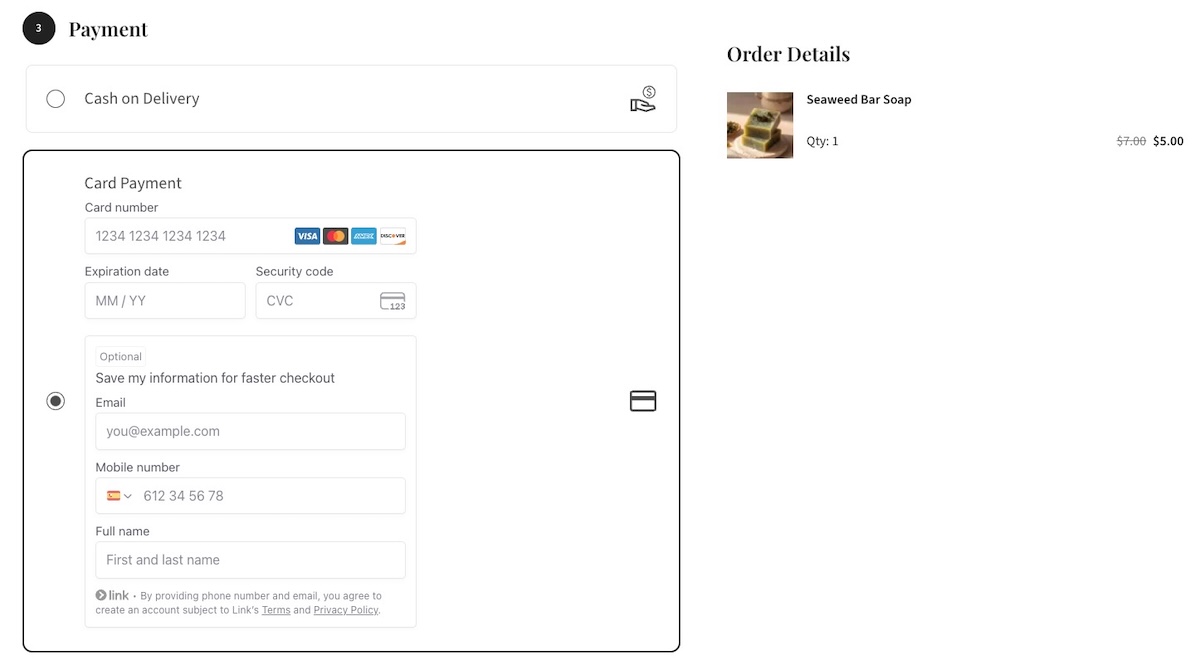
Most sites still skip it. 66% of major ecommerce sites have no visual emphasis on the card field at all, per Baymard’s latest count. Better than the 89% that skipped it in 2012, but still most stores.
Where trust actually gets tested in an unknown seller’s checkout
Consumer trust gets tested at three specific moments: the homepage, the product page, and the payment step. Get any of them wrong and you’re making one of the common ecommerce design mistakes that cost stores sales before checkout even starts.
When customers decide you’re safe to pay
As customers peruse your pages, a first-time visitor will check the following the same way they’d check a stranger’s references, because that’s exactly what they are:
- Shipping: 95% of shoppers say policy matters, and 53% have abandoned a purchase over a restrictive one, per Forter.
- Returns: 89% say policy matters, and 22% have abandoned a purchase over a restrictive one, per Forter.
- Payment: 9% abandon when a store doesn’t offer enough payment methods, and 10% leave after a card gets declined, per Baymard.
The payment step carries an extra test we already touched on: visual reinforcement around the card field is what makes that moment feel secure. A payment step that looks unfamiliar and offers only one way to pay is asking a first-time buyer to take two leaps of faith instead of one.
Which badge actually reassures a buyer at the payment step
Some trust signals don’t work the way people assume. CXL surveyed more than 2,100 shoppers and asked which badge gave them the most sense of security when paying online. PayPal won: 25% picked it as the top choice, ahead of Norton, Google Trusted Store, Visa-Mastercard, the Better Business Bureau, and McAfee.
That’s a payment logo doing more work than those five badges whose entire job is signaling security, and it comes down to recognition rather than accuracy: shoppers pick what looks familiar, whether or not it makes a security claim at all.
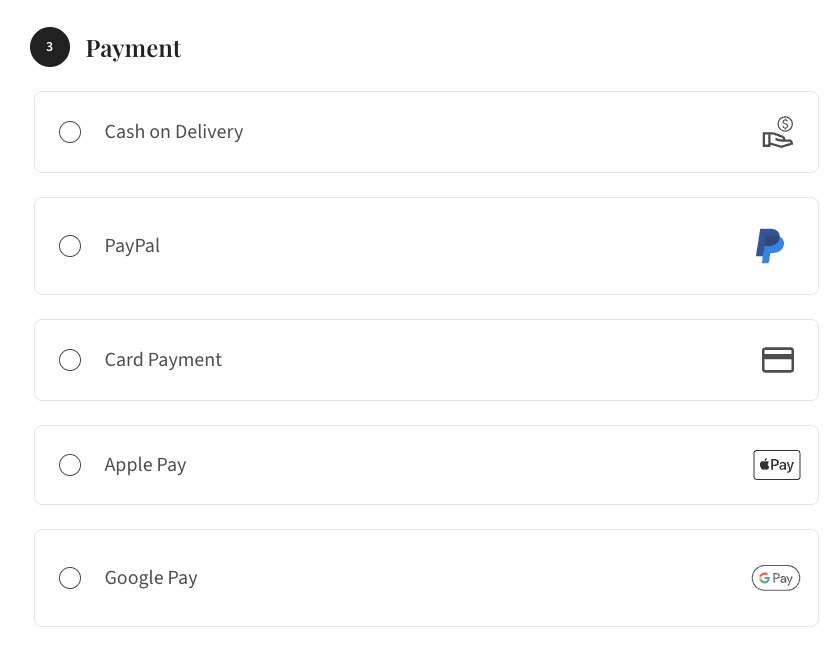
For a small store, a familiar payment logo can do more trust-building work than a generic secure-site seal from a vendor nobody’s heard of.
The small-store trust stack: five moves backed by data
Five specific moves make up a small store’s trust stack, each backed by its own data point instead of a guess. Here’s what to prioritize, and why each one earns its spot.
1. Choose recognized payment badges over generic security seals
We already saw that a recognized payment badge beats a dedicated security seal at inspiring confidence. Put that to use at your own checkout: skip the generic secure-site seal, and show whichever payment badges you actually accept instead.
If you already accept payments from PayPal, Apple Pay, or a major card network, display those logos during checkout. They’re doing double duty: processing the payment and reassuring a shopper who’s never bought from you before.
2. Make shipping and return terms specific and visible
We already saw that a restrictive shipping policy drives away over half of otherwise interested shoppers. The real fix is often visibility, not a better policy: show exact shipping costs and delivery windows before checkout, not three clicks into a policy page.
The same goes for returns. A “see our returns policy” link buried in the footer does nothing at the moment a shopper is deciding whether to buy. State the return window and who pays for return shipping right on the product page.

3. Add visual reinforcement around the card field
We’ve already covered why this matters: a bordered or shaded card field measurably increases how secure a checkout feels, and most stores still skip it. Implementing it takes minutes in most ecommerce platforms and instantly separates you from every competitor who didn’t bother.
4. Lead with third-party reviews over brand messaging
Your own product description will never be as convincing as someone else’s experience. Edelman’s 2026 Trust Barometer found that unpaid advocates, satisfied customers, and peers carry more weight in building brand trust than paid or owned channels, brand websites included.
Make sure real, verifiable customer testimonials and positive reviews are actually visible on product pages, not buried in a tab shoppers have to click to find. If you’re light on testimonials so far, social proof doesn’t have to mean five star reviews: user photos, client logos, video testimonials, and a specific customer feedback quote all work.
5. Don’t let a slow or broken checkout undo the other four
None of the four moves above matter if the checkout page doesn’t load, or doesn’t load quickly. Baymard’s research found that 17% of cart abandoners left because of website errors or crashes, and Forter found that 78% abandon a checkout that feels too slow or difficult in general.
The gains for fixing this are larger than most store owners expect. The hardest data on it happens to be mobile-specific: Deloitte’s “Milliseconds Make Millions” study found that shaving just 0.1 seconds off mobile page load time raised mobile retail conversion rates by 8.4%, and checkout-to-order completion specifically by 4.7%.
A recognized payment badge, a clear return policy, and glowing reviews don’t help a shopper staring at a spinning loading icon. Reliable, secure hosting is the layer everything else in this stack sits on top of, which is exactly why speeding up your website has to be part of the trust conversation, not a separate one.
You don’t need a bigger name, you need a better stack
A recognized brand inherited that 51% premium we opened with. A store nobody’s heard of has to build it, one evidenced move at a time: visible policies, a well-designed card field, real reviews, and a checkout that actually works.
Some of that stack is on you: writing the return policy, collecting reviews. The rest, like reliable uptime, checkout security, and payment options that don’t buckle during a sale, comes down to what your store runs on. SiteGround Ecommerce is built to cover that half of the list, so the trust you’re building shows up as revenue instead of an abandoned cart.
[103]
Frequently asked questions
A trust signal is any specific, verifiable detail on a store, like a recognized payment badge, a clear return policy, or social proof like a genuine customer review, that helps a shopper decide the business is safe to buy from. Recognition and specificity matter more than the signal simply existing.
The strongest examples, based on the data in this piece, are a payment badge shoppers already recognize, a visible and specific shipping and return policy, a clearly styled card field at checkout, and verifiable third-party reviews.
Some do and some don’t. Research from CXL found that a recognized payment badge like PayPal inspires more shopper confidence than dedicated security seals from vendors like Norton or McAfee, so a badge’s familiarity matters more than what it technically certifies.
There’s no fixed timeline. Trust accrues one verifiable proof point at a time, a policy a shopper can actually read, a review from a real customer, a checkout that works, rather than building up the way brand awareness does.