
GEO (Generative Engine Optimization) and How to Get It Right

Featured image of blog post "GEO (Generative Engine Optimization) and How to Get It Right"

The world of search is evolving faster than ever, and with it, the way we optimize content. If you’ve been following the buzz around generative engine optimization (GEO) and AI optimization, you know it’s a hot topic right now—everyone’s talking about it!

But here’s the thing: while many experts touch on GEO search, most don’t dive into the actionable insights you need to actually adapt and thrive in this new landscape.

I’ve researched, tested, and put together strategies that are not only valuable but also practical and easy to implement. 

This isn’t just theory or fluff; it’s real advice, based on real-world testing, that can make a difference for your content and rankings. If you’re ready to move beyond the basics and dive into the true potential of GEO, keep reading. This article will give you the tools you need to succeed.

[41]

AI is revolutionizing everything we thought we knew—it’s transforming content creation, reshaping marketing trends, and redefining the very nature of organic search and optimization. 

On one hand, it allows brands to produce more content faster, leading to an oversaturation of results on the search engine results page (SERP). 

On the other hand, Google is leveraging AI to deliver more comprehensive and accurate answers while simultaneously ensuring users spend more time within its ecosystem.
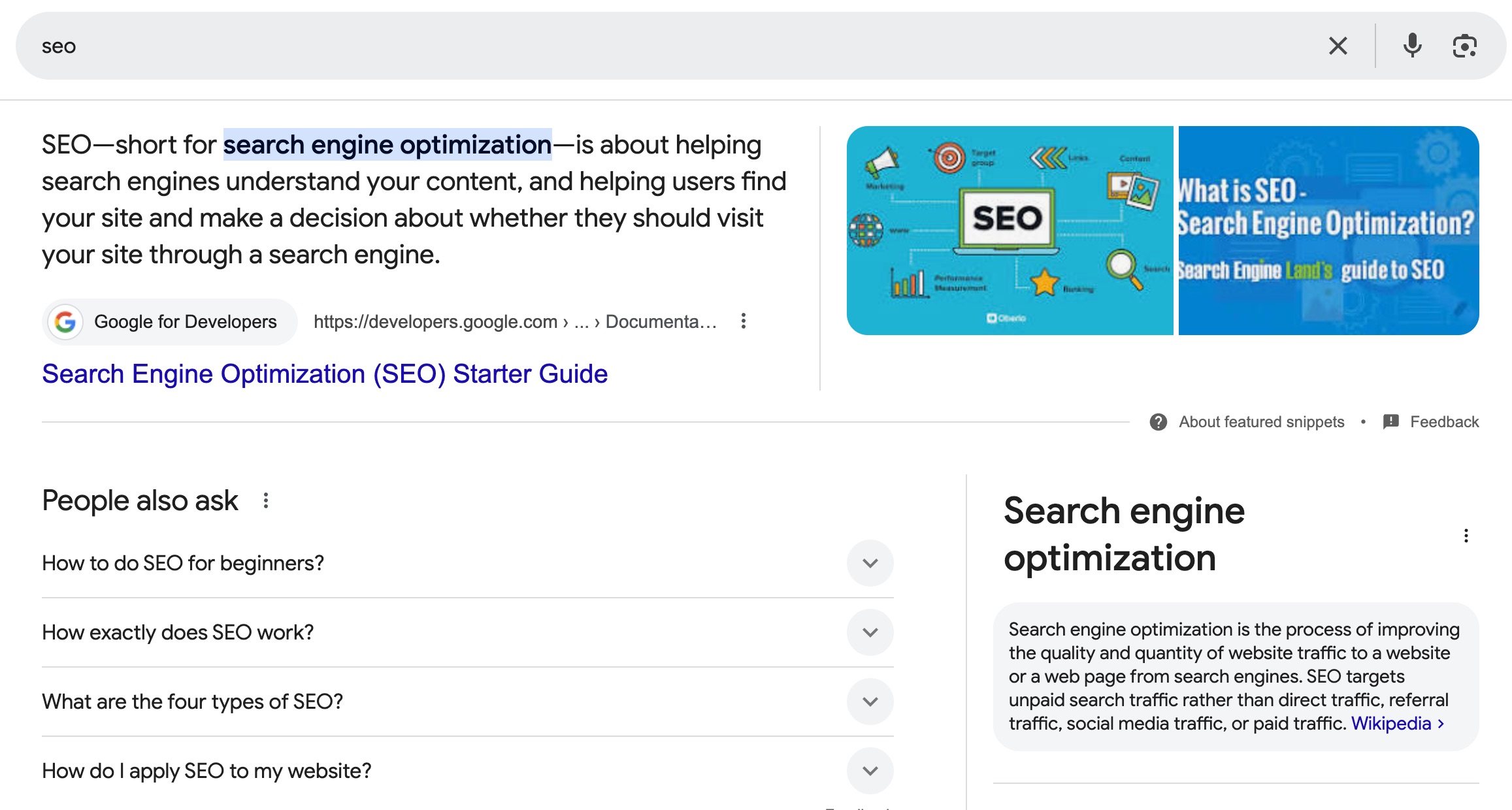
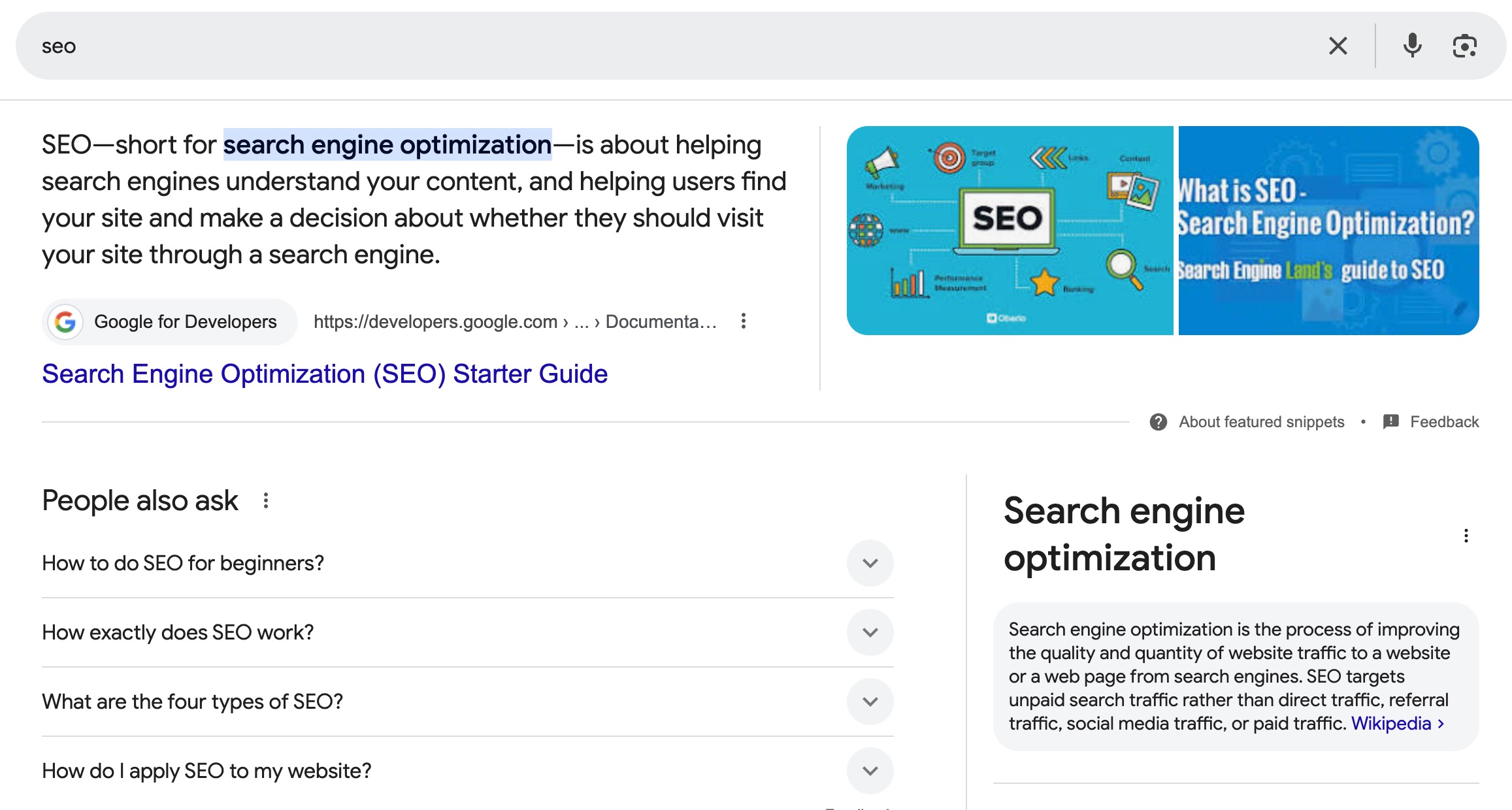
Screenshot displaying Google search results for the query "SEO".
Screenshot

We’ve already seen this with featured snippets, knowledge graphs, and ads taking up more space. Now, AI-powered Overviews are answering user queries directly on the results page, leaving organic listings pushed further down. 

This means less visibility for your content, making it harder to capture attention unless you adapt.

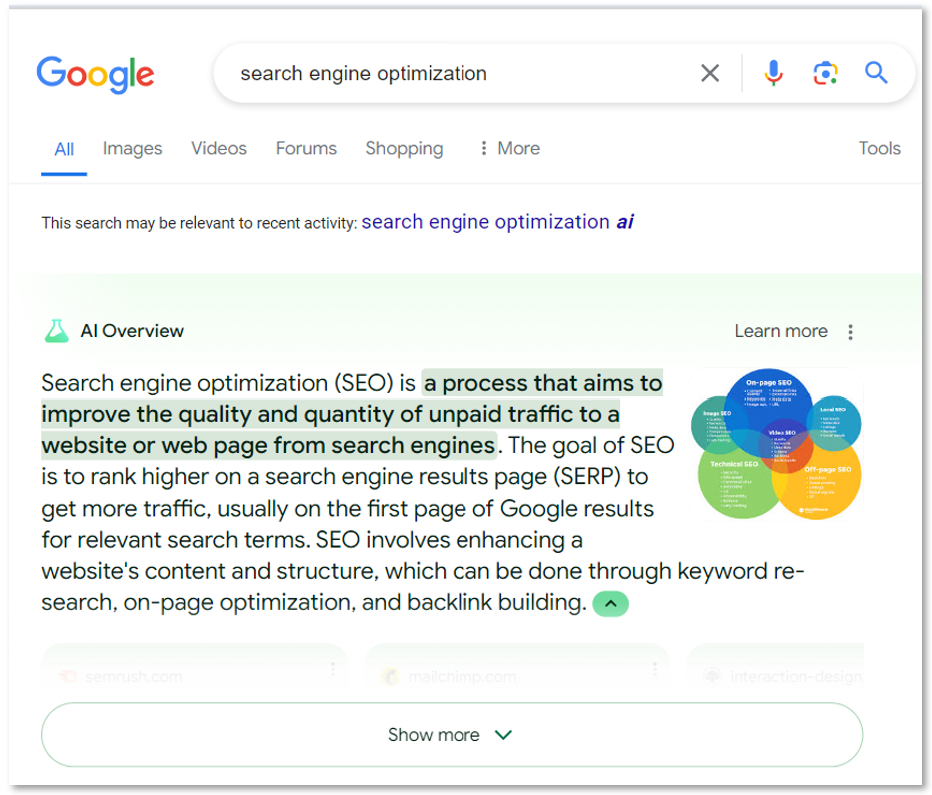
Look, even this very topic brings AI generated results.
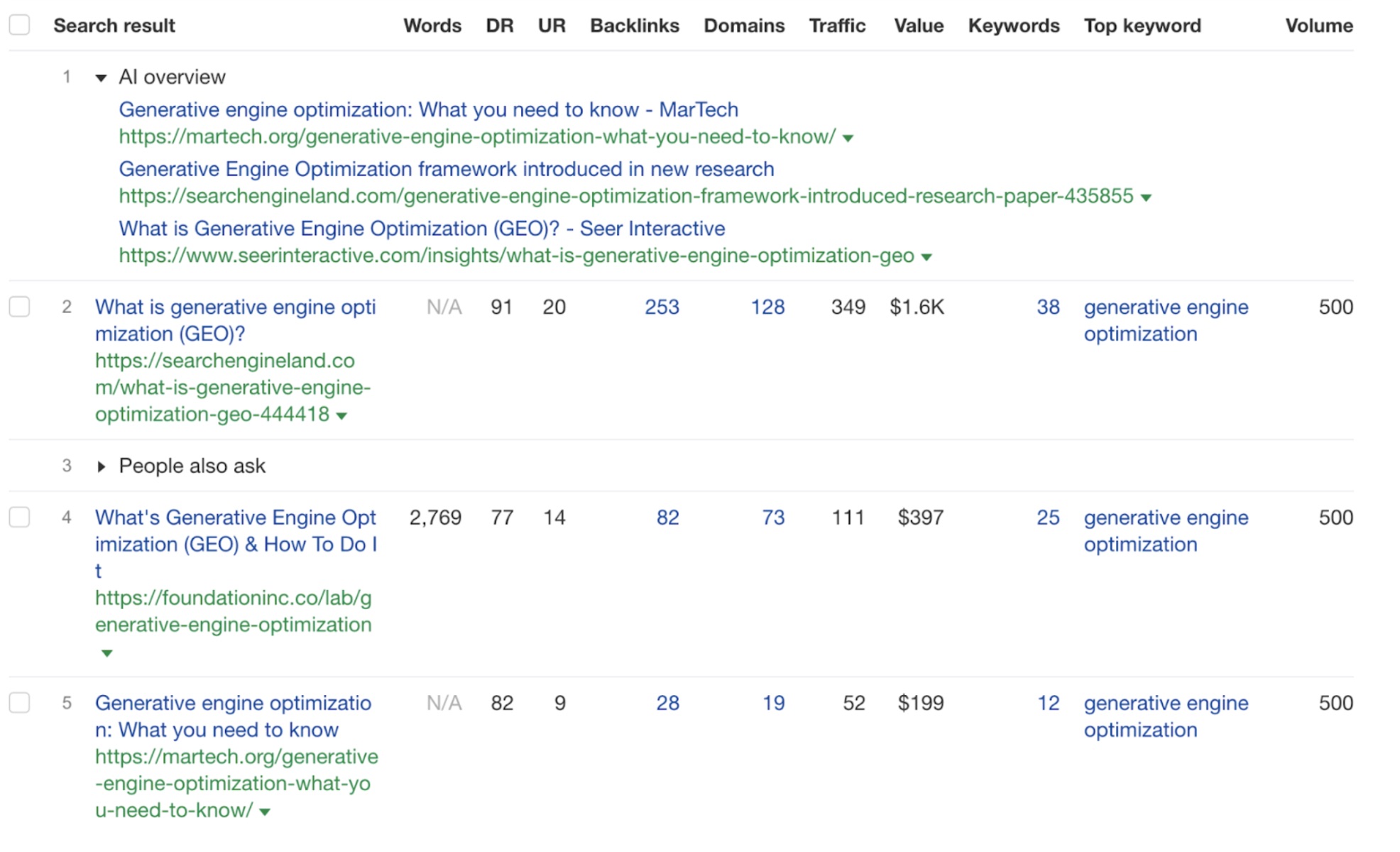
Screenshot displaying Google search results for the query "GEO".

So, first, thank you for clicking through! And second, let’s dive into what we can do about generative SEO.

This shift isn’t random; it’s part of Google’s broader strategy to maximize user engagement on its platform. The longer users stay on Google, the more ad revenue it generates and the more opportunities it has to steer users toward services like Maps, YouTube, and Shopping. 

What’s different now is how AI is making this possible by delivering instant, conversational answers that reduce the need to click away even more.

As marketers, it’s clear that sticking to traditional SEO strategies isn’t enough. To stay competitive, the answer lies in embracing generative engine optimization (GEO). Only by aligning our content with how AI interprets and prioritizes information, will we be able to maintain visibility and ensure our message is part of this new search landscape. 

Let’s see what GEO is all about, and how to adapt your AI and SEO game in 2025.

What is Generative Engine Optimization (GEO)?
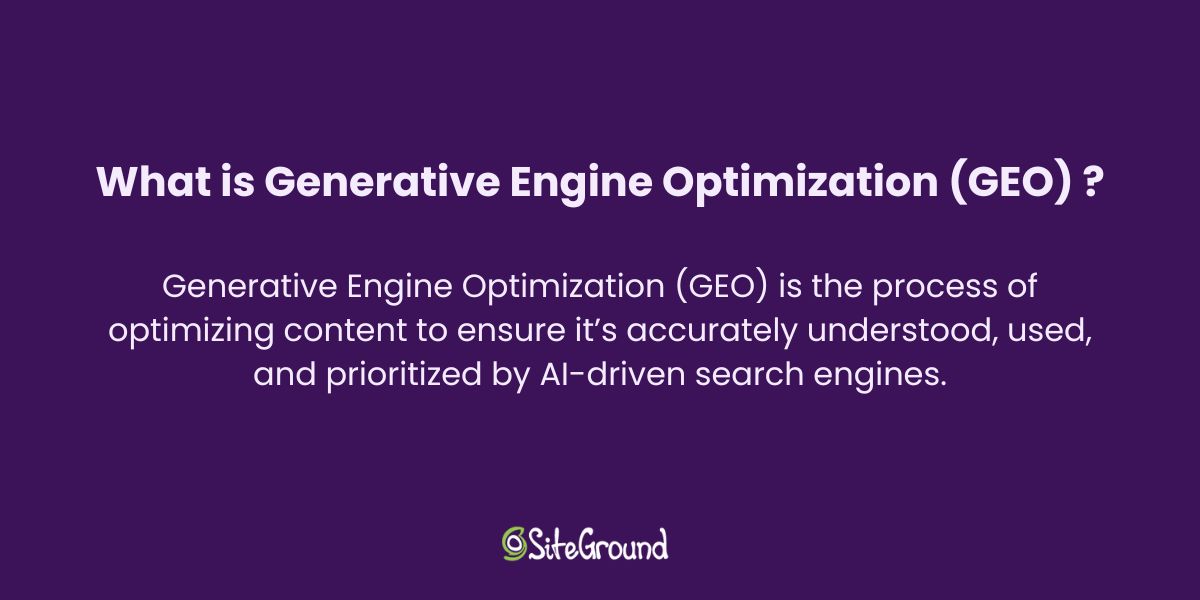
Image containing the definition of generative engine optimization (GEO), explaining its purpose and key features.

Generative engine optimization (GEO) is the process of optimizing content to make sure it’s accurately understood, used, and prioritized by AI-driven search engines. Instead of solely aiming to rank on traditional search engine results pages, GEO focuses on creating content that feeds into the conversational and synthesized answers generated by AI models.

In simple terms, GEO—also called generative search optimization or generative SEO—is about helping AI provide better, more accurate responses that include your brand or message. 

It’s undoubtedly true AI is shaping the way we do SEO in 2025. So generative engine optimization comes as an extra step beyond traditional SEO, embracing the way generative AI interprets and delivers information to users.

GEO is not just about improving search engine visibility—it’s about positioning your content to be included in the curated, conversational responses these AI tools deliver, while also making sure your brand doesn’t fall behind. 

Differences Between SEO and GEO

As search technology evolves, so do the strategies behind optimizing content. While traditional SEO (search engine optimization) has long been the go-to method for improving a website’s ranking on search engine results pages (SERPs), the rise of AI-powered tools has introduced a new challenge for marketers: generative engine optimization (GEO). Let’s go through the key differences between SEO and GEO. 

SEO (Search Engine Optimization) VS GEO (Generative Engine Optimization)

SEO (Search Engine Optimization)GEO (Generative Engine Optimization)
Optimization EffortsTailoring content to traditional algorithmsCrafting content for AI engines to synthesize and present
Goal
Improve SERP rankings
Make content scrappable and usable by AI
OutputRanked list of sources on the SERPAI-generated summaries or conversational answers
ChallengesUsers tend to scan information from multiple sourcesUsers get direct answers without leaving Google’s interface

Optimization Efforts

Traditional SEO focuses on tailoring content to meet the criteria of search engine algorithms, such as keyword density and other on-page elements. The goal is to secure higher rankings on search engine results pages (SERPs) by aligning with established ranking factors.

Generative search optmization, on the other hand, shifts the focus to crafting content that AI engines can easily synthesize and present as part of their dynamic, conversational outputs. This involves prioritizing clarity, structure, and contextual depth to ensure AI tools understand and include your content in their generated answers. 
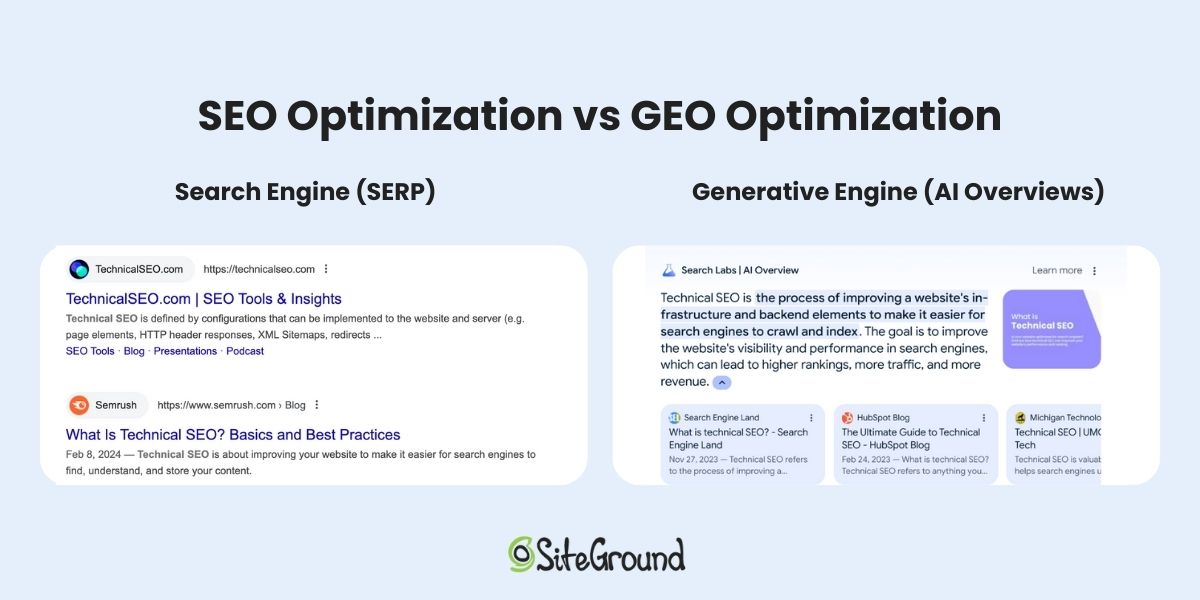
Comparison image showing Google search results page: one with the standard SERP without AI overview, and the other enhanced with a generative engine.

Goal

SEO is centered on improving rankings on search engine results pages (SERPs), making it easier for users to find and click on your content among a list of sources. The primary aim is to drive traffic to your website by adhering to traditional ranking factors.

GEO, however, takes a different approach. Its goal is to make content scrappable and usable by AI engines, enabling it to be synthesized into the concise, conversational responses that users increasingly rely on. 

Output 

With SEO, the typical result is a ranked list of sources on the SERP, but it also includes additional content like featured snippets, knowledge graphs, image packs, and other rich results that provide users with more detailed information.

In contrast, GEO focuses on generating AI-powered summaries or conversational answers. Instead of directing users to various sources, AI synthesizes content into succinct, direct responses that aim to answer the query right within the search interface. 

Challenges

SEO isn’t easy. You have to share the space with a huge amount of URLs, so that makes it hard enough already for any website to stand out. But as if it wasn’t enough, you’re not only competing with other websites but also with Google’s features like snippets, knowledge graphs, and image packs, which take up valuable space on the SERP. This makes it harder to stand out and capture attention, even if you rank well.

However for GEO, the challenge is even bigger, so no wonder why 21 % of SEO experts fear generative search optimization. With AI producing direct answers within Google’s interface, users may not need to leave the platform to find what they’re looking for. So, yes, it will be hard to position your content in a way that AI engines will choose it as a trusted source for their summaries or responses, but the actual struggle will be to ensure users still want to click through for more in-depth information.
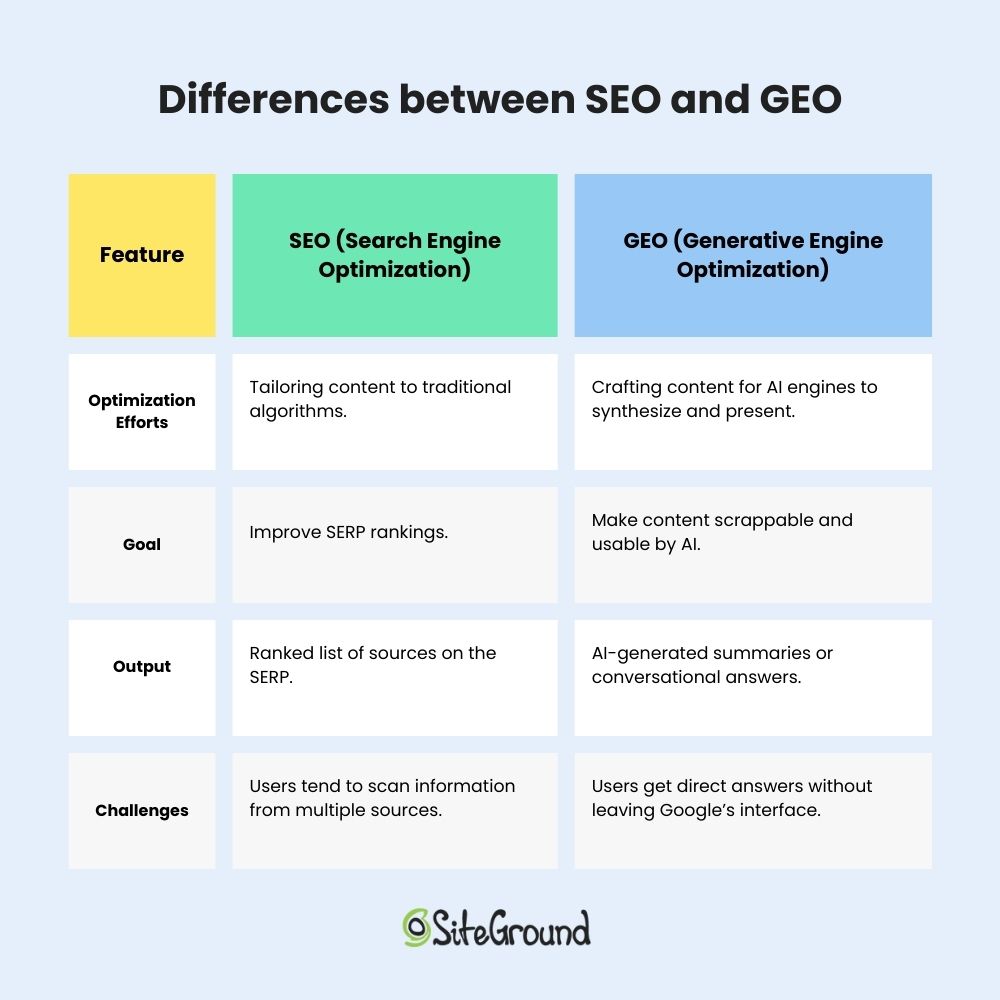
Comparison table displaying the differences between search engine optimization (SEO) and generative engine optimization (GEO).

How Does Generative AI Work? AKA the Science Behind GEO

Generative AI and answer engines have revolutionized the way information is delivered to users by synthesizing content in response to queries. These systems work by processing vast amounts of data, identifying patterns, and generating human-like answers that address the user’s needs without requiring them to visit multiple sources. Here’s a breakdown of how they work:

  1. Data Processing: Generative AI engines analyze large datasets, often pulling information from a variety of sources—articles, websites, books, and more. The AI is trained to recognize context, intent, and relevance to better understand what the user is asking. And not only in text, but it’s also able to pull information from images, videos, etc.
  2. Natural Language Understanding (NLU): When a user submits a query, the AI engine first interprets the question by understanding the context, intent, and specific information the user is seeking. It identifies key terms and determines what the user really wants to know, going beyond simple keyword matching to really understanding the meaning behind the question. .
  3. Content Synthesis: Once the query is understood, the engine generates a response by synthesizing information from the sources it’s processed. This could be a short summary, a direct answer, or a more in-depth explanation, depending on the complexity of the query. What’s important is that instead of simply listing sources, the AI presents a summary or direct answer, combining insights from multiple sources into one cohesive response. If available, generative AI can also leverage personal data, such as user preferences or conversation history. This allows the system to tailor responses more effectively, providing customized or context-aware answers based on past interactions, preferences, or geographic location.
  4. Continuous Learning: As users interact with AI-powered systems, the AI engine learns and improves. What’s really impactful, though, is that it also adapts to new information, refining its responses to provide more relevant answers over time. This means AI-generated answers are constantly being updated and refined in real-time, making it harder to secure a consistent placement. The answers can change frequently, so content that ranks today might not hold its position tomorrow. This constant shift makes it even more challenging to maintain a stable spot, adding another layer of complexity for marketers and content creators.

8 Strategies to Adapt to Generative Engine Optimization

Now that we’ve explored what generative engine optimization (GEO) is and how it works, it’s time to dive into the strategies that will help you adapt and thrive in 2025. 

Believe me, I’ve been struggling with GEO myself. So I’ve been researching a lot. I mean, A LOT. 

Over time, I’ve learned through trial and error what really works when it comes to optimizing content for AI-driven search results. So In this section, I’ll go through 8 GEO strategies to help you optimize your content for AI-driven search, meeting the needs of both users and search engines. 

Disclaimer: If you’ve been researching generative search optimization, I’m sure you’ve come across this paper at some point. Seriously, everyone’s talking about it. And all the articles ranking on SERP (as of today) cite it as a source. 

While it’s great to see that research is being done, the truth is not everyone is satisfied with its take-aways (check out the conversation here). As Reddit users point out “ a lot of key details are missing”.

So I’ve taken the time to test and experiment with some other strategies myself, and what I’m sharing here are the insights that have worked after hands-on application (at least for me).

I hope these strategies will give you the edge you need to make your content more discoverable and relevant, ensuring your content is loved by AI systems and users alike.

Let’s take a closer look at what truly makes a difference.

1. Do Not Replicate SEO 

Traditional SEO methods do not directly apply to AI-generated results, and here’s why. 

Unlike search engines, which primarily rely on keyword matching to rank content, generative engines use sophisticated language models to process source documents and generate responses. These AI models don’t just match keywords—they analyze the nuances of text and better understand both the content and user queries. 

That means sticking to old SEO tactics won’t cut it anymore. To stay ahead, we need to develop new techniques tailored specifically to the way AI engines understand and present content. That’s truly what AI optimization stands for. 

2. Choose Your Queries Smartly 

Not every query will trigger AI-generated answers, so not all queries require special optimization for GEO SEO. 

As a general rule of thumb, focusing on informative keywords is a solid starting point for your GEO search strategy. Informative queries, such as “what,” “how,” “when,” and “why,” are ideal for GEO, as generative engines excel at providing clear, direct answers to these types of questions.

It doesn’t come as a surprise that long-tail keywords, natural language queries, and conversational phrases are becoming increasingly common for AI generated responses, as users expect more direct and personalized content. 

However, I’ve experienced that Generative SEO doesn’t make much sense for local queries, as Google tends to prioritize map results. The same goes for transactional queries, since Google typically directs users to Google Shopping results.

If you’re working on an ongoing project and notice a loss of clicks to AI overviews, start by targeting those keywords that are seeing AI-generated results. That will be a great starting point. 

3. Test Content That’s Already Ranking on the SERP

If your content is already ranking well on the traditional SERP, then you’re off to particularly a good start for GEO optimization. 

Being visible in search results gives you a strong foundation to optimize for AI engines. However, just because you’re ranking doesn’t mean you’ll automatically appear in AI-generated answers. 

Generative engines look for specific qualities—like clarity, structure, and relevance to user queries—that might not always align with traditional SEO ranking factors. So, even if you’re high on the SERP, you still need to adjust and optimize your content to meet the unique demands of AI engines.

4. Make Your Content Relevant

The more relevant your content is to a specific user query, the more likely it is to appear in AI-generated answers.

This goes against the trend of creating long, all-encompassing articles that try to cover every angle of a topic, as old SEO required for. 

Instead, focus on creating concise, targeted content that addresses specific questions or problems from a very particular angle. By narrowing your scope and providing highly valuable, focused information, you increase your chances of being selected by AI engines, as they prioritize content that is specific, clear, and directly aligned with user intent. 

Additionally, study the topics, response structures, and sources that trigger AI-generated overviews. Look at which formats—whether paragraphs, lists, videos, or tables—are preferred by AI engines. Identifying these trends will allow you to tailor your content to match the most effective formats.

5. Use an Easy-to-Scan Structure

Make sure your content is scannable. The text that gets picked up is typically concise and easy to digest. 

Besides, from what experts have observed, AI engines tend to take the content they scrap from the beginning of the article. 

One key strategy that seems to be working is including a summary or key takeaways in the first paragraph. This increases the chances of your content being chosen by AI engines because it quickly provides clear information right at the start. 

So, structure your articles with this in mind to make it more likely for your content to be included in AI-generated answers.

6. Focus on Quality and Originality 

Generative AI models are trained on vast datasets, allowing them to identify and prioritize high-quality, original content. To stand out, your content must go beyond the basics and offer something unique. 

In-depth, well-researched articles that provide fresh insights or a unique perspective are more likely to get recognized by AI engines. Quality and originality aren’t just buzzwords—they are key factors that help ensure your content is valued and selected for AI-generated summaries. 

When you focus on providing real value to users, you increase your chances of being picked up by AI engines over competing, generic content.

7. Demonstrate Experience and Expertise

To stand out in the world of generative search optimization, it’s crucial to showcase firsthand experience and credibility in your content. AI engines are more likely to prioritize content that demonstrates genuine expertise. 

Content creators should ensure that their work is written or reviewed by individuals who have real-world experience on the subject matter. This could mean incorporating personal stories, case studies, and original images or videos that show deep knowledge and firsthand involvement in the topic.

Alongside this, detailed author bios are essential. Create bios that highlight the author’s background, credentials, and achievements. This not only helps build trust with your audience but also with AI optimization systems, which may prioritize content from authoritative sources. 

On the same note, establishing your site as a reliable resource requires citing reputable sources, incorporating expert quotes, and backing up claims with insightful statistics and data. 

8. Submit for Reindexing 

As we mentioned earlier, AI overviews are constantly being updated in real-time, making them more dynamic and ever-changing. While this presents a challenge, it also creates an opportunity. 

By submitting your content for reindexing after you optimize it for GEO, you give search engines the chance to pick up any new updates or improvements you’ve made, increasing the likelihood that your content will be recognized and selected for AI-generated summaries. 

Reindexing your pages signals Google that your content remains fresh and relevant, giving it a better shot at appearing in those AI overviews.

Needless to say, constant monitoring is key to ensuring that your content doesn’t get outranked. Keep an eye on whether your articles are still being featured in AI overviews, and track your rankings regularly. If you notice that your content is being pushed down by newer, more relevant content or updates, it’s time to optimize again. 
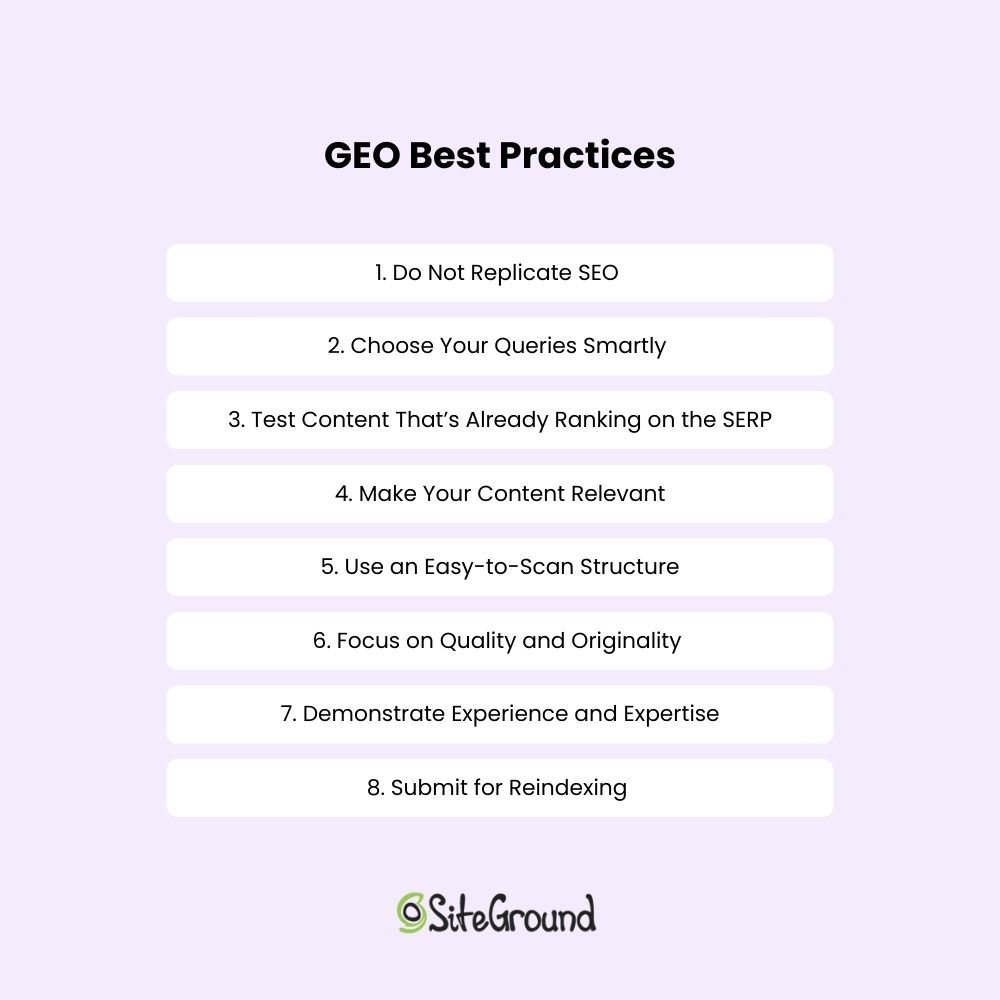
Checklist of best practices for generative engine optimization (GEO).

SEO Is Now GEO

As the digital landscape evolves, SEO is no longer the sole strategy to drive visibility and traffic. With the rise of generative engine optimization (GEO), marketers and content creators must adapt to a new paradigm where AI-driven responses are slowly increasing in popularity.

Embrace GEO, and you’ll be better positioned to thrive in this new era of search. Stay updated!

AI and SEO: What’s Next for the Future of Search

The way we approach SEO is changing rapidly, thanks to the growing impact of AI. This shift is challenging many of the strategies we’ve relied on for years, forcing us to think differently about how we create and optimize content. It’s no longer just about ranking high—it’s about staying relevant and getting clicked. 

In this guide, I’ll walk you through how AI is reshaping SEO and share practical tips to help you adapt. Together, we’ll explore ways to align with these changes and ensure your content continues to stand out, connect with your audience, and meet the demands of tomorrow’s search engines.

[41]

AI Impact on SEO

Let’s begin by addressing the question on everyone’s mind: how will AI impact SEO?

AI is reshaping everything we thought we knew about SEO. 

From transforming content creation to changing the way we approach marketing, artificial intelligence is redefining the landscape of organic search and optimization. 

Let’s be honest. SEO was never easy. In the past, users would have a big amount of URLs to choose from, making it difficult for any website to stand out. 

As if this wasn’t enough, SEO professionals had to start competing not just with other websites, but also with Google’s features like snippets, knowledge graphs, and image packs, which dominate more space on the search engine results page (SERP).

Google search results page displaying a featured image snippet and a paragraph snippet for an SEO search query.
Screenshot

But AI gave us hope—well, at least for a minute. It enabled brands to produce content at a faster pace with less resources and need for investment. 

So we are all somewhat guilty. Without realizing, we have been contributing to an oversaturation of results on the SERP. And Google is determined to fight back. 

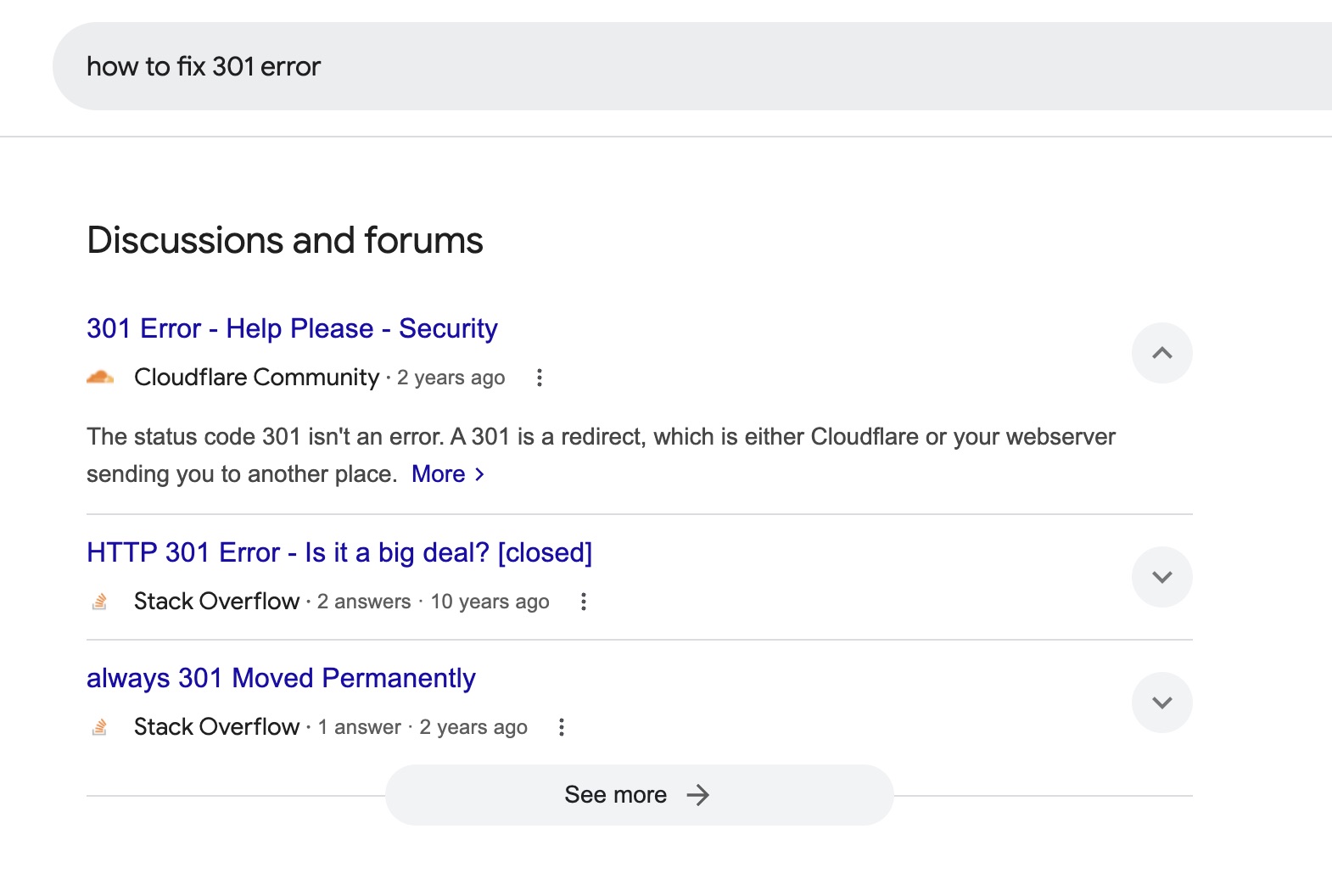
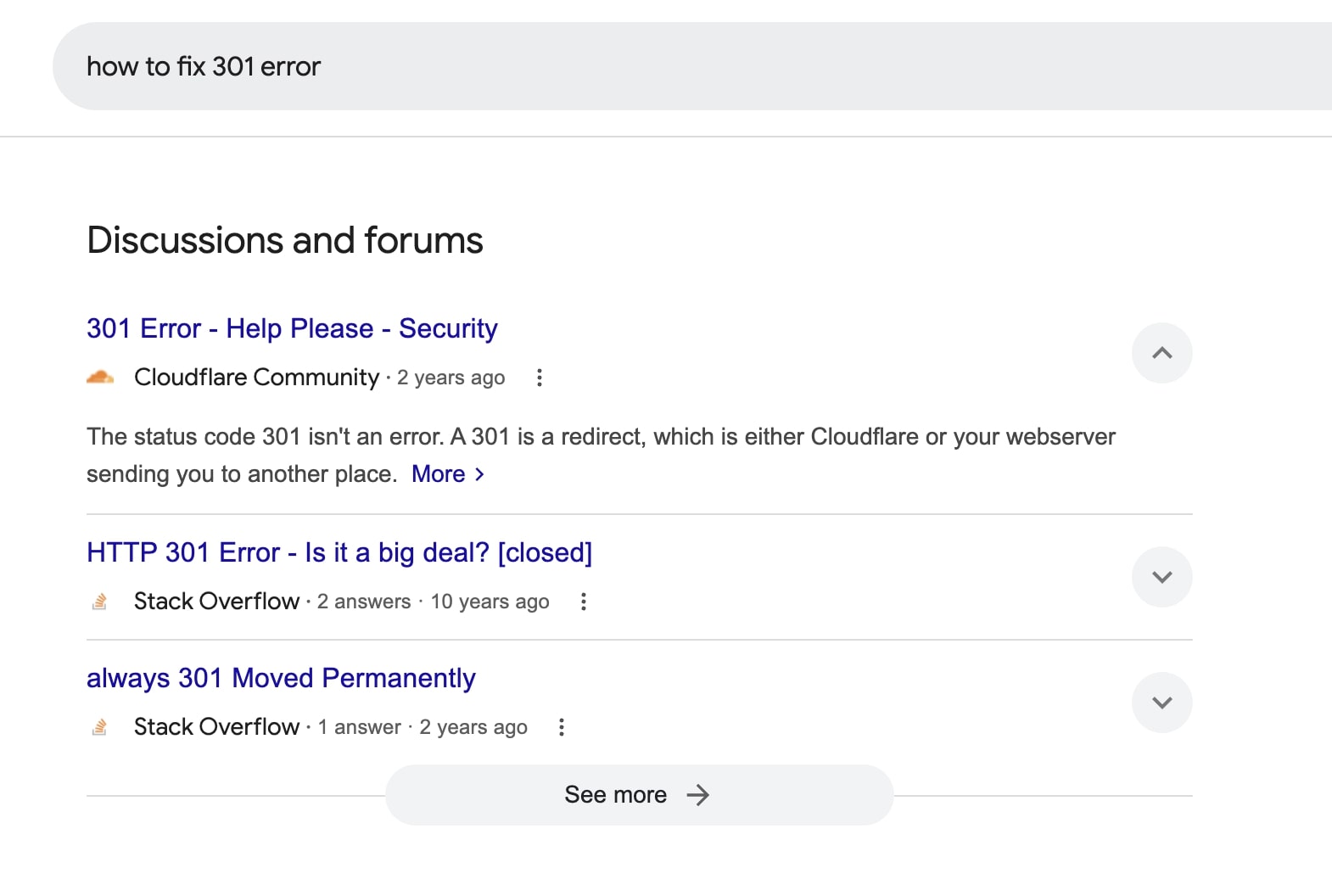
On one hand, latest SEO trends suggest that Google is increasingly prioritizing user-generated content, as users seek more authentic and genuine insights. Platforms like Reddit, Quora, and niche communities are now dominating the search results because they offer room for genuine discussions, trusted recommendations, and practical advice.

"How to fix 301 error" query results showing user-generated content from Reddit, Quora, and niche communities.

But also, Google is taking even more space on the SERP with the so called AI Overviews. And this shift isn’t random—it’s part of Google’s larger strategy to keep users engaged within its ecosystem. The longer users stay on Google, the more ad revenue it generates and the more opportunities it has to drive traffic to services like YouTube, Maps, and Shopping. 

So with these AI-powered overviews, Google powers instant, conversational answers, reducing the need for users to click away from the search page altogether. As a result, organic listings are being pushed further down the page, making it harder to capture attention and visibility unless we start to adjust our approach.

For marketers, it’s clear that sticking to traditional SEO strategies just isn’t enough anymore.

So what do we do now?

What’s Next for the Future of SEO: 5 Facts You Need to Know

First of all, no need to panic. 

After doing plenty of research, here’s a breakdown of what’s changing in the world of AI and SEO. 

In this section, I’ll walk you through everything we know about AI’s impact on SEO and what’s coming next: key developments, trends, and insights shaping the future of SEO. 

We’ll explore how these shifts are reshaping search engine strategies and what you need to know to stay ahead. Let’s get started! 

1. Expertise and Authority Will Be Valued for Users and Engines Alike

As a consequence of this content overload, search engines prioritize pages that reflect genuine credibility and firsthand knowledge. This shift emphasizes the need for content creators to highlight real-world experience through personal stories, case studies, and original insights that demonstrate subject-matter expertise.

As you can see, transparency is essential. The more you demonstrate that your content is created by true experts with verifiable credentials, the better your chances of earning Google’s trust—and climbing the rankings.

What’s more, Google’s algorithms are increasingly designed to reward brands that clearly display their creators’ expertise and achievements. So a key part of this strategy is crafting detailed author bios that showcase an author’s authority, background, and accomplishments. Not only does this build trust with your audience, but it also sends a signal to AI-driven optimization systems. 

2. No Fluff—Just Genuine Informative Content

It’s not just about who delivers the message—but also about the value of the message itself. As AI continues to shape the future of SEO, the demand for content that provides truly insightful answers is growing. 

Generative AI models, trained on massive datasets, are designed to prioritize high-quality, original content. This means your content needs to go beyond surface-level information and offer something unique. In-depth, well-researched pieces that bring fresh insights or a distinctive perspective are far more likely to catch the attention of AI engines.

Quality and originality are no longer optional—they’re critical. AI-powered systems favor content that genuinely serves users’ needs, making it essential to focus on delivering real value. 

3. SERP Becomes More Dynamic

Google is always refining its results to better align with search intent, and now these updates are happening even more often, especially in AI-generated overviews. This presents both a challenge and an opportunity: staying visible means consistently updating your content to keep it fresh and relevant. The upside? Doing so boosts your chances of being featured.

Frequent monitoring is just as important. Keep an eye on whether your content is holding its position in AI summaries and rankings. If you notice a drop in visibility due to newer or more relevant updates, take it as a sign to revisit and optimize your content.

4. Informative Queries Result in AI Overviews More Frequently 

AI-generated overviews are not triggered by every query, meaning not all keywords require AI SEO optimization.

For now, informative queries—those beginning with “what,” “how,” “when,” or “why”—are the sweet spot for AI Overviews. Generative engines excel at delivering concise, direct answers, making these types of questions a prime target when it comes to SEO for AI.

Long-tail keywords, conversational phrases, and natural language queries are also increasingly shaping AI responses, as users seek personalized, straightforward content. 

However, AI-generated results are less prominent for local searches, where map results dominate, or for transactional queries, which typically lead to Google Shopping listings.

If your project is losing traffic to AI overviews, start by identifying which keywords are generating these summaries and focus your optimization efforts there. 

5. GEO Is Here to Stay

Already ranking on the traditional SERP? That’s a solid foundation, but it doesn’t guarantee inclusion in AI-generated answers.

AI engines prioritize clarity, structure, and relevance, qualities that may differ from traditional SEO factors. To ensure visibility in generative responses, you’ll need to refine your content with these specific requirements in mind, even if you’re performing well in standard search results. 

Here’s where Generative Engine Optimization (GEO) comes in. 

Generative engine optimization focuses on crafting content that aligns with how AI engines evaluate, understand, and present information. 

These engines don’t just rank content—they synthesize it, creating concise answers that draw from multiple sources. They prioritize content that’s clear, well-structured, and directly relevant to user queries. 

That means you’ll need to go beyond traditional SEO tactics. As GEO reshapes the way content is discovered and consumed, adapting your strategy is no longer optional—it’s a must to maintain visibility and relevance in an AI-driven search ecosystem.

SEO and AI: How to Adapt

Alright. We’ve explored the facts and the shifts AI is bringing to SEO, but understanding the changes is only half the battle. The real challenge lies in adapting your strategy.

It’s time to move beyond theory and focus on actionable steps. Here’s how to align your SEO efforts with the demands of an AI.

1. Draft Your Content Plan Around Topic Clusters

To position your brand as a trusted authority in your niche, a well-structured content plan is essential. Instead of treating keywords and topics as standalone elements, focus on creating interconnected topic clusters. This approach allows for comprehensive coverage of your niche while signaling to Google that your site offers in-depth, credible insights.

Start by mapping out your content based on your niche’s main themes, branching into subtopics, keywords, and common queries from every angle. Each piece of content should connect seamlessly to others, creating a web of information that demonstrates expertise.

When drafting your plan, organize your content according to the customer journey. From top-of-funnel awareness to bottom-of-funnel decision-making, ensure your pieces address the needs of users at every stage. 

Covering all possible queries related to your niche allows for your content to become the go-to resource, increasing both user trust and AI recognition.

Don’t forget to highlight your expertise by incorporating case studies, expert quotes, and unique perspectives that add depth and value. Remember, it’s not just about quantity but quality. 

2. Determine Keywords for SEO vs. GEO

Now that your content funnel is mapped out, it’s time to categorize your keywords. Not all keywords require the same optimization strategy—some will align better with traditional SEO, while others are prime candidates for AI SEO or GEO.

The key is to align each piece of content with the user intent behind the keyword. Informational queries should be optimized for AI by focusing on clarity, structure, and actionable insights that AI can synthesize. Transactional or navigational keywords, on the other hand, should probably follow SEO traditional best practices, as we want these results to be placed on the regular SERP. 

3. Choose an Easy-to-Scan Structure: It’s the Key to AI and SEO Optimization

If you want your content to stand out in AI-generated responses, creating a user-friendly structure is non-negotiable. AI prioritizes content that’s not only keyword rich but also incredibly easy to scan and process. Here’s how to make your content AI-ready:

  1. Prioritize Intent
    Start by aligning your content with user intent, ensuring each section answers specific queries clearly and concisely. But don’t stop there—how you present the information matters just as much.
  2. Optimize for Readability
    Use headings, subheadings, bullet points, and short paragraphs to make your content digestible. Think of your structure as a roadmap that guides both users and AI through the key points effortlessly.
  3. Add Structured Data
    Incorporate Schema markup to define your page elements—such as product details, reviews, FAQs, or articles. Structured data acts like a blueprint for search engines, helping them categorize and feature your content more effectively in AI overviews.
  4. Improve Website Performance
    A fast-loading site isn’t just good for user experience; it’s essential for AI prioritization. Compress images, streamline your code, and ensure your website is responsive across devices. Slow-loading pages risk being bypassed entirely.

 4. Make Your Content Relevant: 

Relevance is the new cornerstone of AI-driven SEO. Unlike traditional SEO strategies that favored lengthy, all-encompassing articles, AI engines prioritize content that is concise, targeted, and directly aligned with specific user queries.

So instead of trying to address every possible angle in one article, create multiple pieces of focused content that answer particular questions or solve specific problems. This approach not only increases your chances of being featured in AI-generated overviews but also better serves users searching for direct answers.

5. Always Keep Your Content Fresh and Up to Date

Staying relevant also means keeping your content fresh and up-to-date. AI prioritizes content that reflects the latest information, trends, and insights. 

As we said, AI overviews update in real-time, often favoring newer, more valuable content. If your articles are outdated, they risk being overshadowed by fresher content from competitors. 

That’s why you should review your content periodically: Refresh outdated statistics, replace old examples with newer ones, and expand sections with new developments in your industry.

Especially if you notice a decline in traffic or rankings, revisit that piece and optimize it!

SEO in the Future: What Can We Expect?

The evolution of SEO caused by AI is undeniable. 

In the future, we can expect SEO to become increasingly dynamic, demanding a balance between technical precision and authentic, user-focused storytelling. Expertise, relevance, and adaptability will be the pillars of success. 

Businesses that embrace these principles—while staying agile in response to AI innovations—will not only survive but thrive in the ever-changing world of search.

SEO’s future isn’t about gaming the system; it’s about building trust, meeting user needs, and crafting content that stands out for both humans and AI. The question isn’t just how to rank but how to remain relevant. 

The opportunities are vast, and the potential is limitless for those ready to adapt.

The 2026 SEO Trends That Will Truly Define the Landscape

seo trends

SEO is always evolving, and what worked yesterday might not work today.

With constant updates and new trends emerging, it can feel like a never-ending game of catch-up. But today, we’re cutting through the noise. 

No more talking about mobile optimizations or video trends that everyone keeps repeating. We’re diving into the real changes—six major SEO trends that are reshaping the game in 2025 and beyond.

If you’re not paying attention to these, you’re already behind. Let’s jump in!

[41]

What’s new in SEO? Latest 2025 SEO predictions

AI is the game-changer of SEO in 2025. AI isn’t just influencing SEO; it’s accelerating its evolution. Every trend and development we’re about to cover ties back to this shift, as AI reshapes how Google organizes and delivers search results. But don’t worry—change doesn’t have to be a bad thing. 

We will be sharing strategies to help you fight back and adapt to modern SEO, ensuring you stay relevant and competitive. 

1. AI Overviews and Zero-Click Searches 

Have you noticed organic click-through rates (CTR) dropping? Well, that’s the general current trend and it’s expected to keep decreasing in the future. Google is now answering user queries directly on the search results page with AI Overviews. As a result, organic listings are pushed farther down the page, which means less visibility for your content.

This is part of Google’s bigger strategy to keep users on its platform longer. That’s not new. More time on Google means more ad revenue and more opportunities to engage users with services like Maps, YouTube, and Shopping. What’s changing now is how Google is achieving this.

If you want to understand how SEO will develop in the future, understand Google’s ultimate goal.

This is your best bet to predict future SEO trends. 

What’s interesting is that Google’s Search Generative Experience (SGE) creates these detailed answers by pulling info from various online sources. It even links to those sources, which can actually drive free traffic to your site, despite the drop in overall clicks.

seo trends 2025 ai overview

So, how do you fight back?

  1. Focus on content that’s clear, concise, and easy to scan—so that AI can take the right info from it. AI is designed to extract relevant information quickly, so if your content is too long, too wordy, or not focused, it might not get picked up. Keep your sentences short and to the point —directly answer the question/query— and break up text into smaller chunks—headings, bullet points, and paragraphs help make your content scannable. This way, AI can easily pull out the most important details from your pages.
  2. Optimize your website performance: Slow sites frustrate users and search engines alike. Compress images, clean up code, and make sure your website loads quickly on all devices. 
  3. Add structured data: This is like a map for search engines. Use structured data (like Schema markup) to clearly define elements on your pages—like product details, reviews, or articles. This helps Google better understand and categorize your content, making it easier to get featured in those AI overviews.

Pro Tip: Simplify your images. While Google is improving at interpreting visuals—even without alt text—it still struggles with overly complex or cluttered images, like those generated by AI with intricate elements. Use clear, straightforward visuals and always include descriptive alt text for better SEO and accessibility.

When all of this is in place, Google is more likely to trust your site, pick your content for AI-generated answers, and rank you higher—because your content is both user-friendly and machine-readable. 

So that’s how you can adapt to these SEO trends today.

2. UGC (User-Generated Content) and Forums

On the other hand, as AI-generated content becomes more prevalent in search results, people are craving real, authentic insights from actual users. 

That’s why by 2025, SEO experts predict search engines will prioritize platforms like Reddit, Quora, and niche communities. Why? Because these sites offer genuine discussions, honest recommendations, and practical advice that users trust more than AI content.

seo trends 2025 user generated content forums and discussions

To stay ahead of the curve, you need to:

  1. Encourage user-generated reviews and comments. Whether it’s on your website, product pages, or social media, make it easy for users to share their thoughts. Respond to reviews, ask for feedback, invest in off-page SEO, and create spaces where your audience can engage with your brand. The more real, authentic conversations you can spark, the better for modern SEO.
  2. Focus on long-tail keywords and user questions—these will be the key to attracting organic traffic. Instead of just targeting broad keywords, think about the specific questions your audience is asking. Long-tail keywords—phrases that are more detailed and less competitive—are perfect for capturing users in the research phase. For example, instead of just “best running shoes,” try something like “best running shoes for flat feet.” These are the kinds of searches that people make when they’re looking for real, practical answers.
  3. Leverage video content: And here’s something else to keep in mind: video content, especially on platforms like YouTube, is expected to grow. Videos feel more personal, and users trust them more. So, if you’re not already incorporating video into your strategy, now’s the time to start as it is one of the current SEO trends more valued by end users.

3. NEEAT

If you are up to date on the latest SEO developments, you’ve most likely heard of EAT or even EEAT. Now, in 2025 you will be hearing a new term: “N-E-E-A-T”, which stands for Notability, Experience, Expertise, Authoritativeness, and Trustworthiness 

With the rise of AI-generated content, Google has upped its game with NEEAT. They now want to see that the people creating content are true experts with real, recognizable credentials. So that’s where that new N comes into place.

So, what does that mean for you? SEO predictions claim that Google is rewarding brands that clearly highlight their authors’ expertise and achievements. It’s not just about having good content—it’s about showing you’ve got the right people behind it. To succeed, make sure to:

  1. Feature detailed author bios, credentials, and any relevant achievements.
  2. Use author schema markups to help Google recognize who’s behind your content.
  3. Be transparent about who’s creating the content—trust is key.

The more you can prove your authors’ authority and expertise, the better your chances of earning Google’s trust and ranking higher.

Pro Tip: Expertise will become essential throughout 2025, but impactful content will still be a must. Rather than replicating competitor designs and rephrasing their text, develop original, value-driven content that demonstrates a deep understanding of your audience’s needs and challenges.

4. Topic clusters

Thanks to AI, creating content has become so effortless that many websites are churning out countless new pages in the hopes of gaining a few extra clicks. 

However, Google rewards websites that stick to a unified, brand-focused message. That’s because it helps Google understand your authority in a specific area. If your content is all over the place, it becomes harder for search engines to know what you really specialize in.

If you want to succeed at modern SEO, a great way to organize your content is by using content clusters or keyword universes. This doesn’t simply mean internal linking but crafting content that is contextually connected and expands on specific aspects of a broader topic. 

Group related content together around key topics. But be sure to focus on content around topics that align with your brand’s core expertise. For example, if you’re an expert in email marketing, create clusters around subject lines, email design, email campaigns, etc. This signals to Google that you’re an authority in that niche –while maintaining relevance to the overarching topic.

5. Crawling and Indexing Frequency

As mentioned earlier, AI generates vast amounts of content, and to curb its misuse, Google has recently started reducing the frequency with which it crawls and indexes websites.

This means Google is now crawling sites less frequently, which can impact how quickly your content gets updated in search results. Why are they doing that? They’re optimizing their algorithms to save resources. 

Unlike Bing and Yandex, which use systems like IndexNow to detect and add new content quickly, Google hasn’t adopted anything like that yet, but it could be something we will see in the near future. We’ll have to stay tuned for these kinds of SEO developments, which are likely to happen sooner or later. 

For now, how do you fight back?

  1. Update your content regularly. Fresh SEO-optimized content signals to Google that your site is active and up-to-date. It’s a great way to keep your pages relevant.
  2. Invest in technical SEO to make sure your site is easy for Google to crawl efficiently. As we’ve said before: ensure your pages load quickly, use structured data to clearly define content, and make sure your site is mobile-friendly. 
  3. Leverage internal links: Internal links are the links that connect one page on your website to another. When you link relevant pages together, it helps Google navigate your site more easily. Google can discover new pages faster and understand how your content is connected as well as its hierarchy. 

Internal links also help pass on “link juice”—the value passed through links—across your website. This boosts the authority of your most important pages and helps them rank better. To make this work, focus on linking your key pages together naturally and logically, making sure your most important pages are just a few clicks away from the homepage.

6. First-Party Data & Privacy

SEO is no longer just about driving traffic—it’s about driving conversions. 

With the phase-out of third-party cookies and growing concerns over data privacy, leveraging first-party data is becoming essential as part of your SEO strategy. 

First-party data is the information you collect directly from your own users—things like email sign-ups, surveys, and customer feedback. As opposed to third party data, where the data comes from a domain different from yours. Third-party cookies are most frequently used for online advertising. 

But what does it have to do with SEO trends? Well, Google is favoring privacy-friendly approaches, so keeping your site compliant with privacy laws like GDPR, CCPA, and others is critical. Not only does it protect your users’ data, but it also helps avoid potential penalties and builds trust with your audience.

As we’ve seen, SEO in 2025 is all about adapting to a landscape that’s increasingly influenced by AI. 

The good news? These SEO trends are also opportunities. By staying proactive—creating scannable, AI-friendly content, building trust with N-E-E-A-T standards, and prioritizing user-generated engagement—you can not only keep up but thrive in this new environment.

The key takeaway? Stay flexible, focus on quality, and never stop learning. SEO is a constantly evolving field, and those who adapt will stay ahead of the curve.